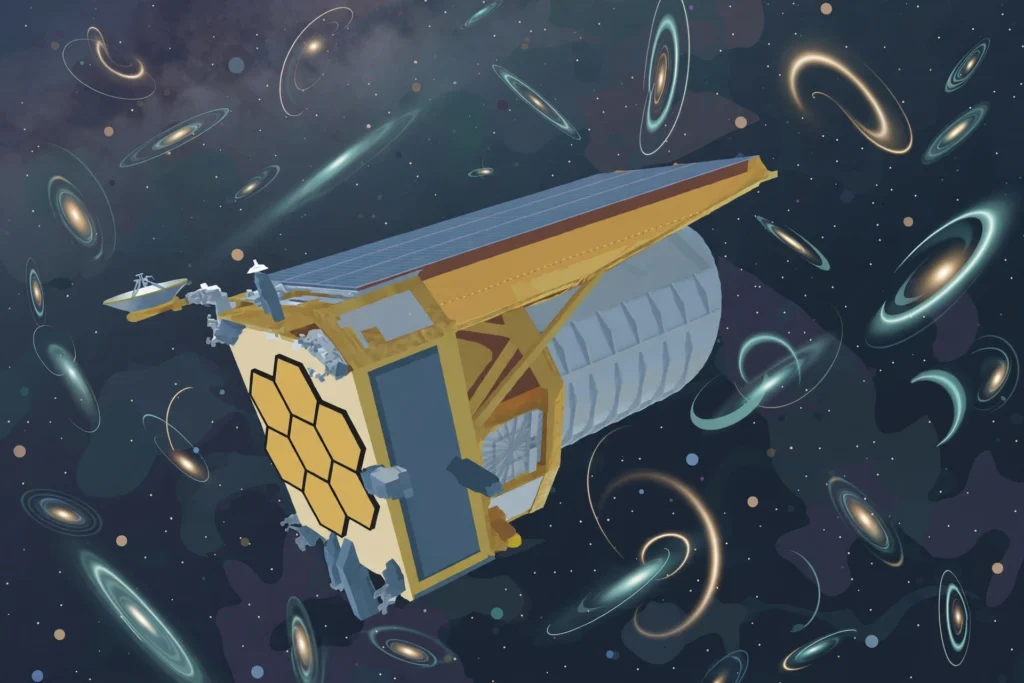
The European Space Agency’s Euclid space telescope has turned up 15,000 new examples of one of astronomy’s rarest sights: galaxies bent into glowing arcs by the gravity of other galaxies.
The haul comes from Euclid’s first major data release, published on November 12. The new catalogue of strong gravitational lenses is the largest ever assembled, bigger than all previous collections combined. Before Euclid, astronomers had confirmed fewer than 1,000.
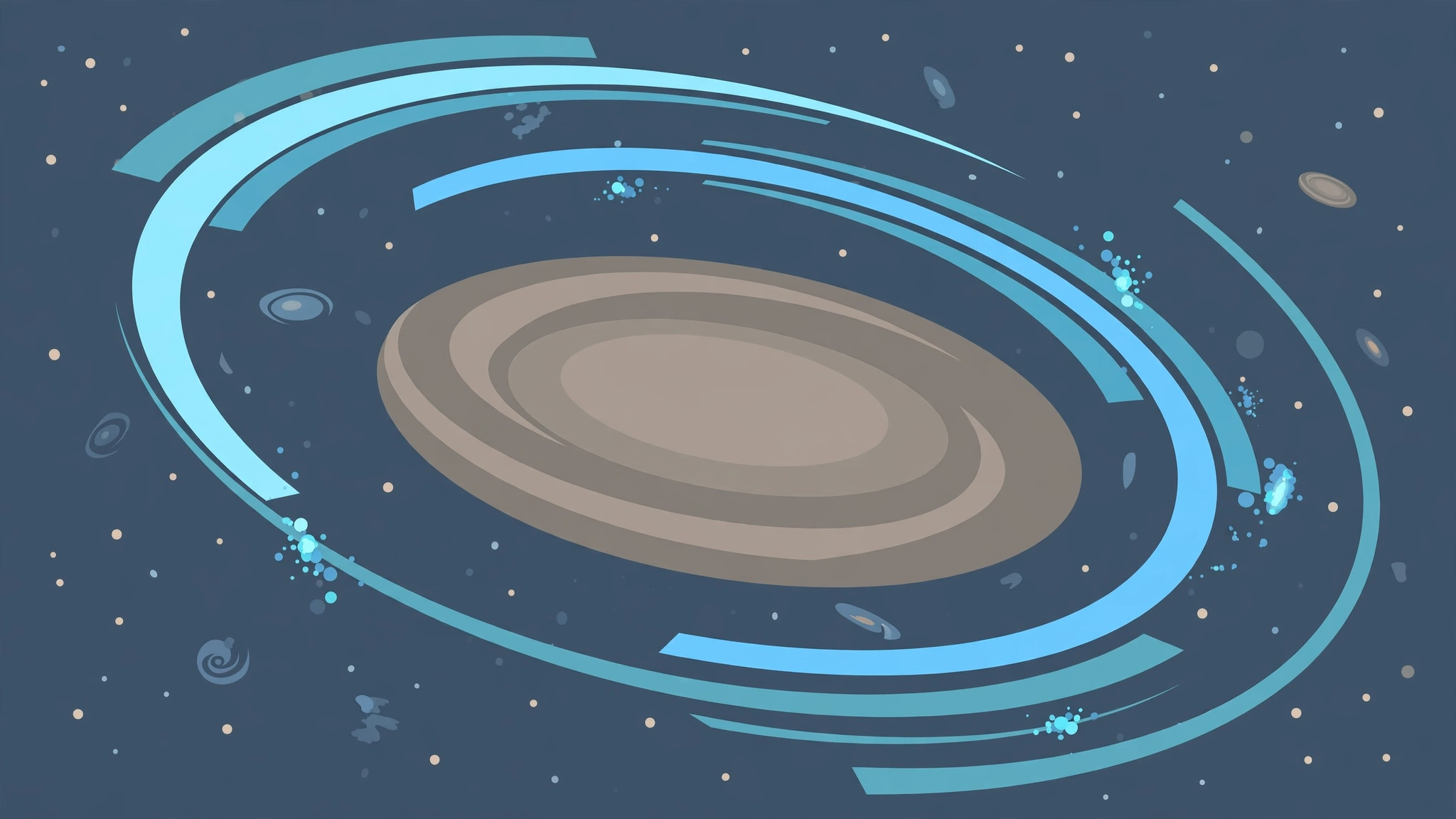
A strong lens forms when a massive galaxy lines up in front of a more distant one. Its gravity bends the background galaxy’s light into arcs or rings, acting like a cosmic magnifying glass. The odds of finding one are about one in 10,000, according to Hrishabh Srivastava, a doctoral student at the University of British Columbia who co-authored the research.
“Before Euclid, we had fewer than 1,000 confirmed strong lenses. Now we have 15,000 new candidates,” Srivastava said.
The release holds far more than lenses. It catalogues more than 900 million galaxies and 60 million quasars, with spectra from more than 160 million sources, drawn from 13 months of observations and 1.7 million gigabytes of data.
Euclid launched in July 2023 at a cost of more than $1 billion. Its six-year mission is to map more than a third of the sky and build a three-dimensional map of the universe, to pin down the properties of dark matter and dark energy. The data released so far covers about 14 per cent of the area it plans to survey. The findings are described in 26 papers submitted to the journal Astronomy and Astrophysics.
Source: Phys.org