Astronomers have found new clues that some black holes are born in silence, when a massive star collapses without exploding.
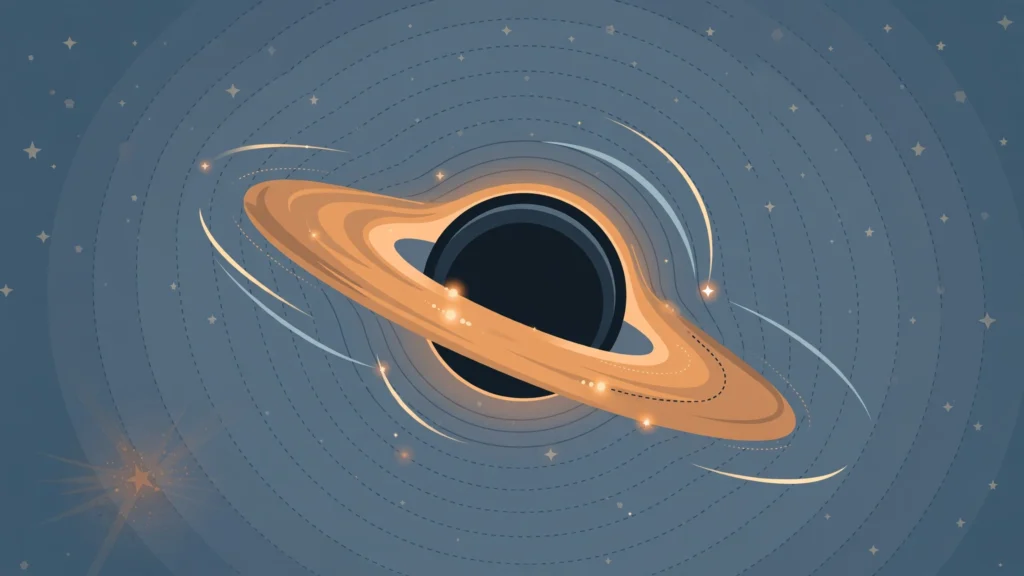
A Caltech-led team studied 257 black hole mergers recorded by the LIGO-Virgo-KAGRA gravitational wave observatories over the past decade. The pattern they found points to a distinct group of black holes that may share a single origin: stars that failed to go supernova.
Most of the merging black holes in the sample weighed about 10 times as much as the Sun. Roughly three quarters of all the mergers involved black holes clustered around that mass. At the same time, the researchers found almost no black holes weighing between 12 and 16 solar masses.
The team, led by Caltech physicist Katerina Chatziioannou, says the gap fits a specific model. Stars weighing 12 to 14 times the Sun can have cores so compact that they collapse straight into a black hole, skipping the supernova blast. Those stars would reliably leave behind black holes of about 10 solar masses.
Lead author Isaac Legred, a postdoctoral researcher at the University of Illinois Urbana-Champaign, said the data are consistent with most binary black holes forming from this kind of failed supernova. The study, published in the journal Physical Review D, stops short of proof. No failed supernova has been directly confirmed, and no single black hole has been traced back to a star that quietly vanished.
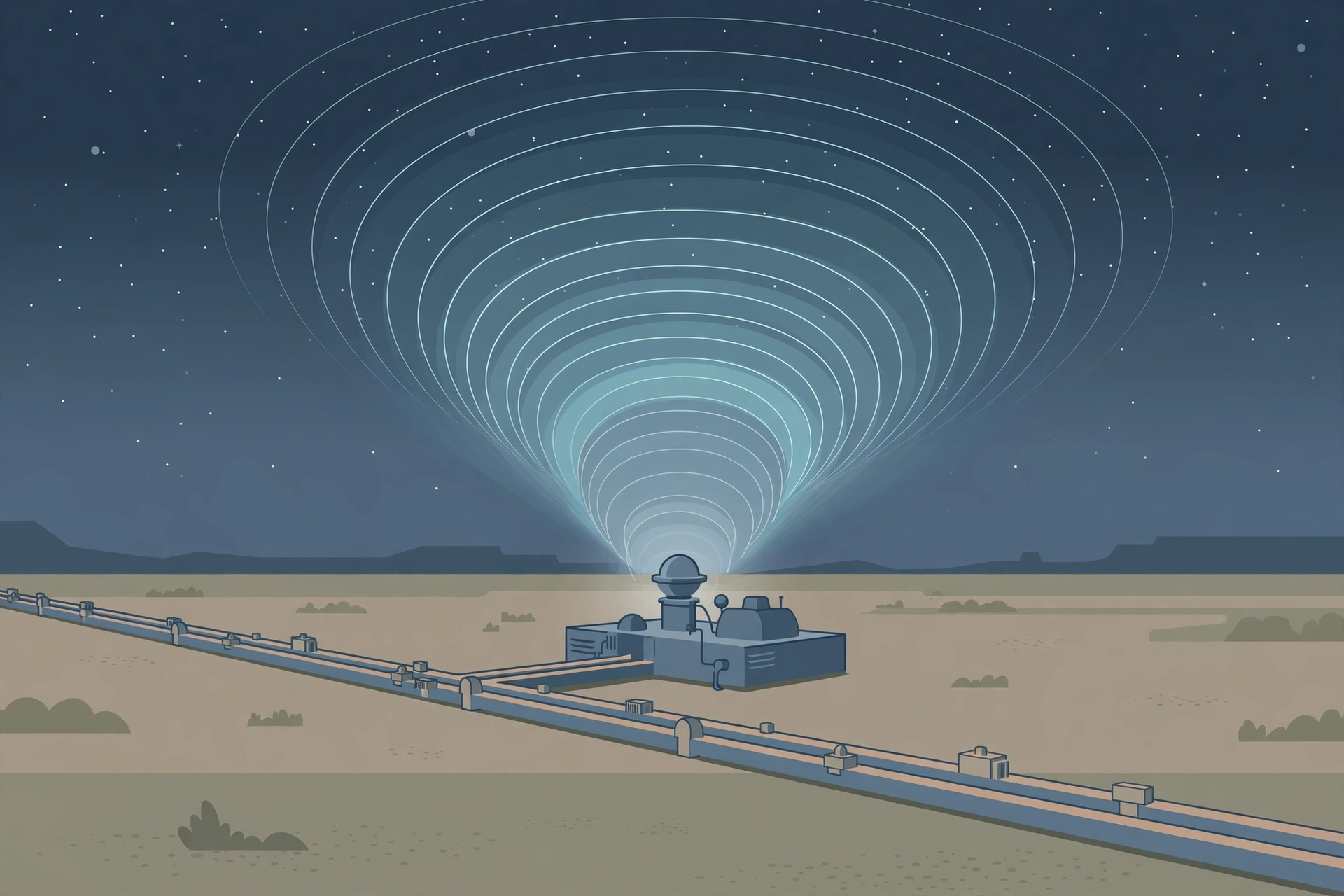
LIGO, which has detectors in Louisiana and Washington, made the first direct detection of gravitational waves in 2015.
Source: APS Physics