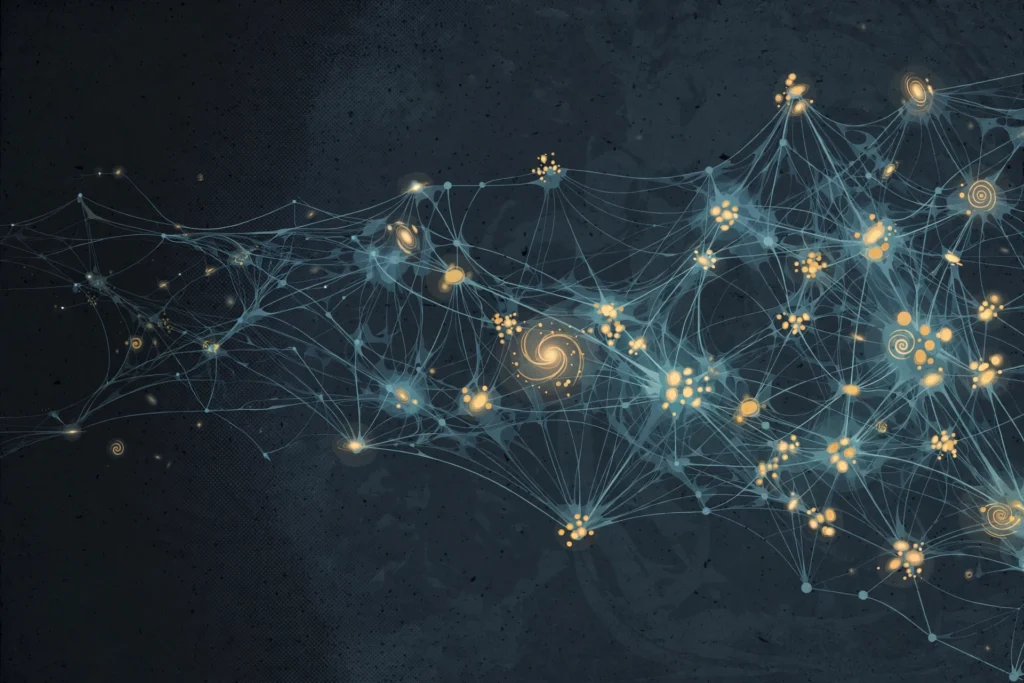
Scientists have built the largest simulation of the early universe ever attempted. Called Lumina, it follows the first two billion years of cosmic history and models a region of space more than 100 times larger than previous comparable simulations, according to researchers at the Center for Astrophysics, Harvard and Smithsonian.
The simulated cube measures roughly 1.5 billion light-years on each side, a scale comparable to what today’s most powerful telescopes can observe. Inside it, the model tracks how gas, dark matter and light interacted to form the first stars and galaxies.
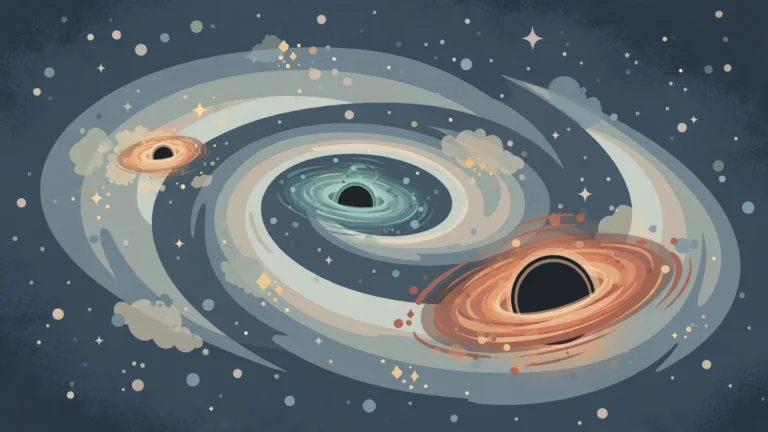
Lumina is also the first simulation of its kind to capture helium reionization as it happened, letting the heat from that process feed back into how later galaxies formed, rather than adding it in afterwards. Hydrogen reionization, the earlier clearing of the cosmic fog, was driven mainly by light from early galaxies and stars, while helium reionization was fuelled by energetic supermassive black holes, the team reported.
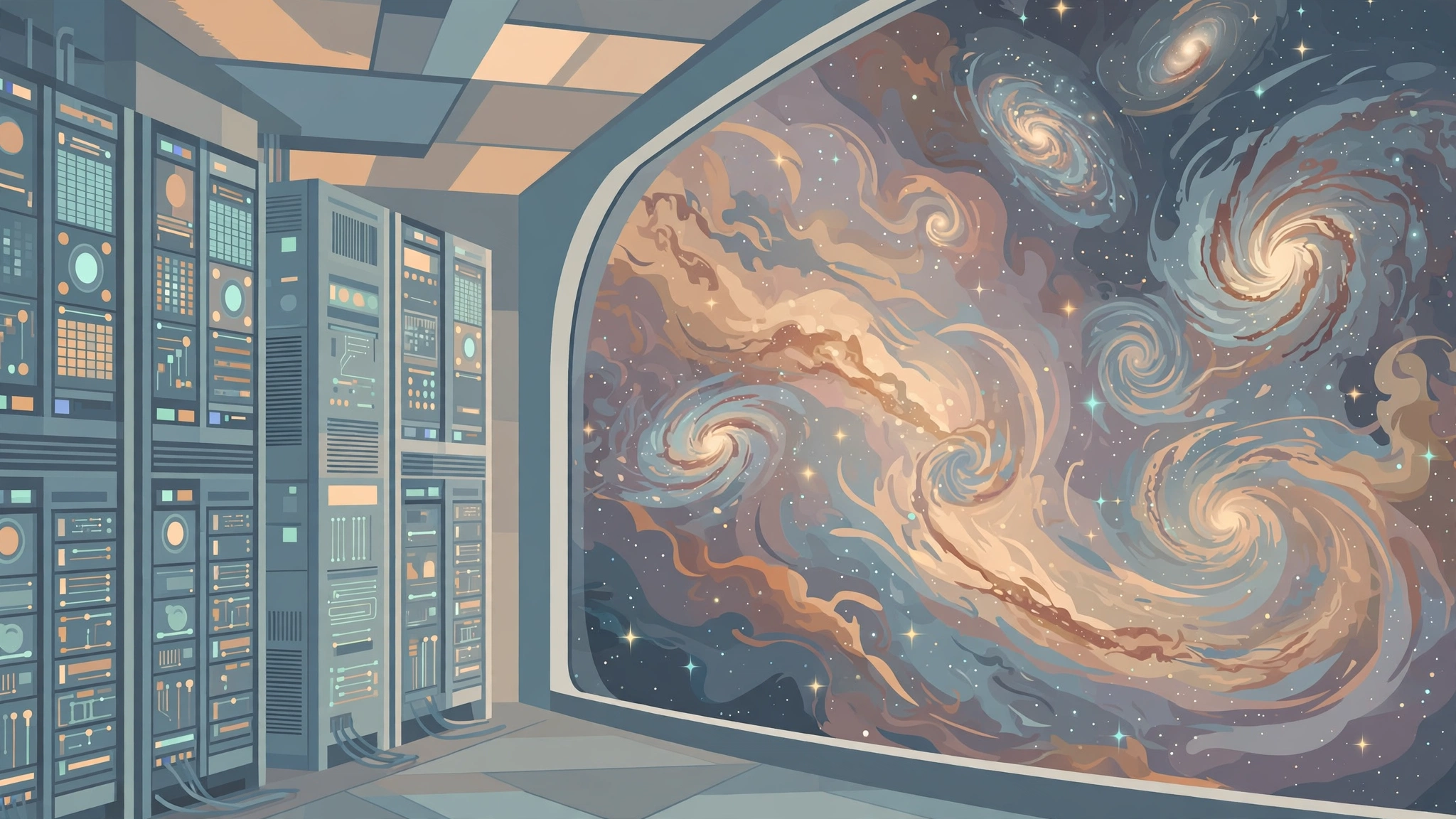
Building it took more than 15,000 graphics processing units running on Frontier, one of the world’s fastest supercomputers, at Oak Ridge National Laboratory in Tennessee. The team designed Lumina as a tool for interpreting observations from NASA’s James Webb Space Telescope and the upcoming Nancy Grace Roman Space Telescope, and they plan to make it available to the wider scientific community.
Source: Phys.org