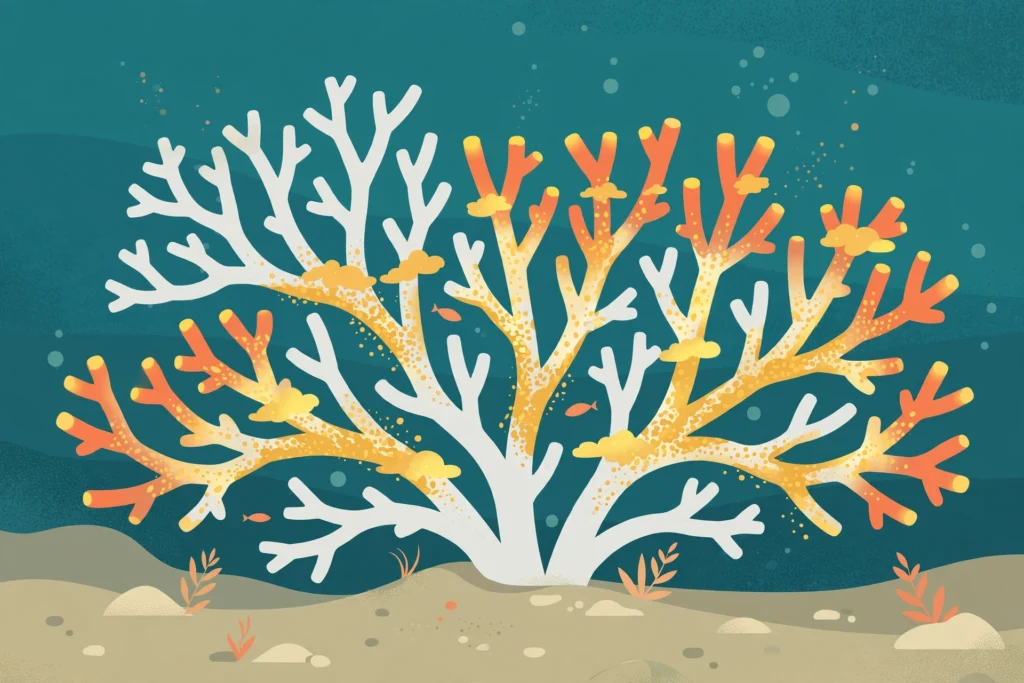
Ghostly white corals have been brought back to full health in a Stanford University laboratory in just seven weeks. Researchers call it the fastest documented recovery from coral bleaching to date, and the findings could open new ways to restore reefs battered by marine heat waves.
The study, published October 14 in the journal Science Advances, tested a strikingly simple idea. The team at the Stanford Doerr School of Sustainability paired bleached coral fragments with healthy clones taken from the same colony. When the two touched, their tissues fused within 36 to 48 hours, creating a channel for the healthy coral to pass along life-giving algae and nutrients. Lead author Danny Collins, an oceans doctoral student, said the recovery process kicked off in as little as three days of contact.
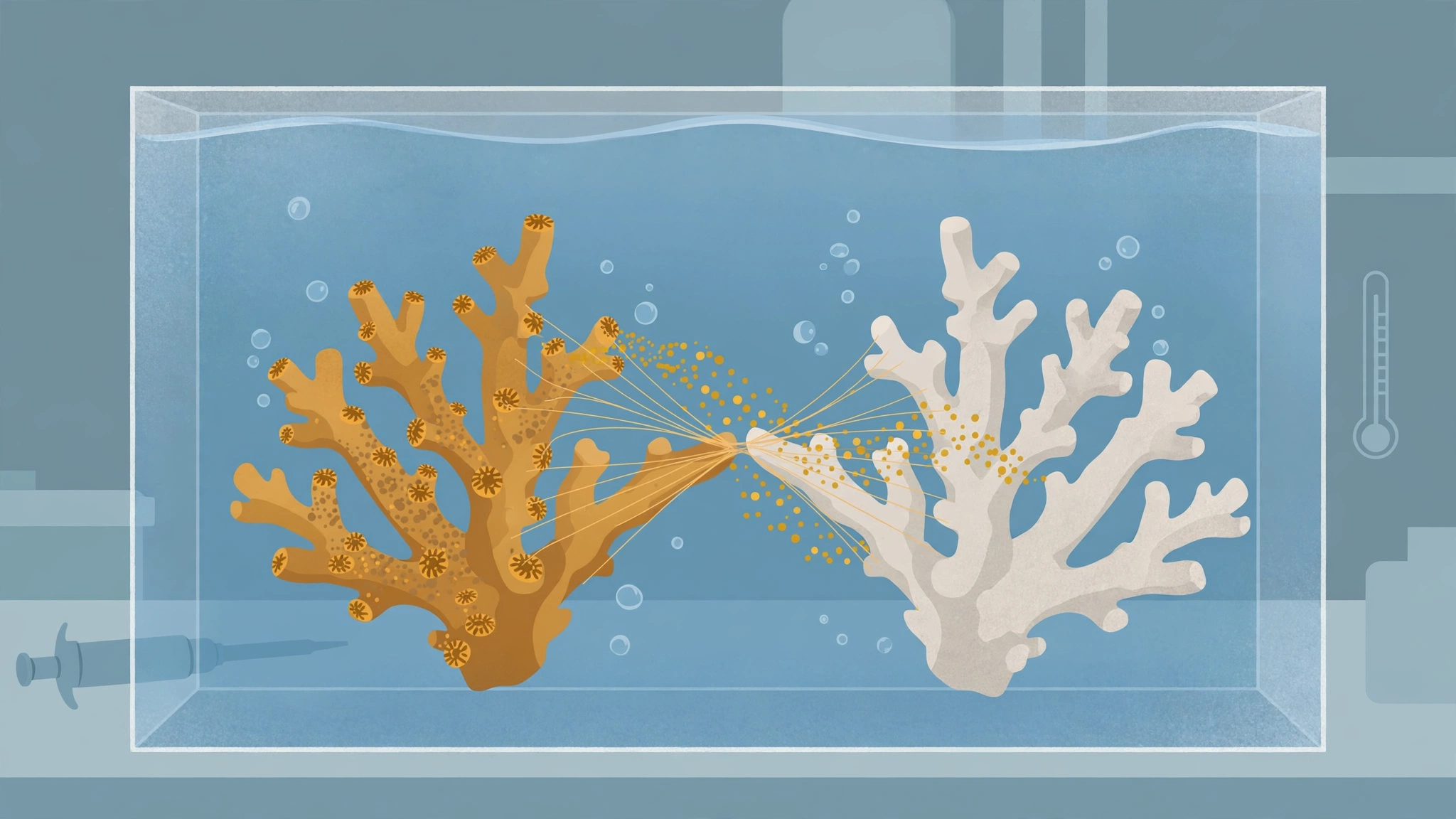
The discovery grew out of a lucky accident. In 2025, coauthor Steve Palumbi noticed that two coral fragments, one bleached and one healthy, had tipped over in a lab tank and ended up touching. Where they made contact, colour was returning to the bleached piece. Corals expel the beneficial algae living in their tissues when ocean waters warm, which leaves them pale, starving and vulnerable. Collins noted that while bleached corals may be dying, they are not dead yet, and the study asked what can be done once bleaching has set in.
The experiment used ten pairs of fragments of cauliflower coral, Pocillopora damicornis. Fragments placed just a few millimetres apart showed essentially no recovery. The rescue only worked between genetically identical corals in direct contact; pairings from different individuals triggered hostile responses. The authors caution that the method is not yet scalable for wild reefs, and are now investigating ways to extract and culture the beneficial algae for mass reintroduction.
Source: Good News Network