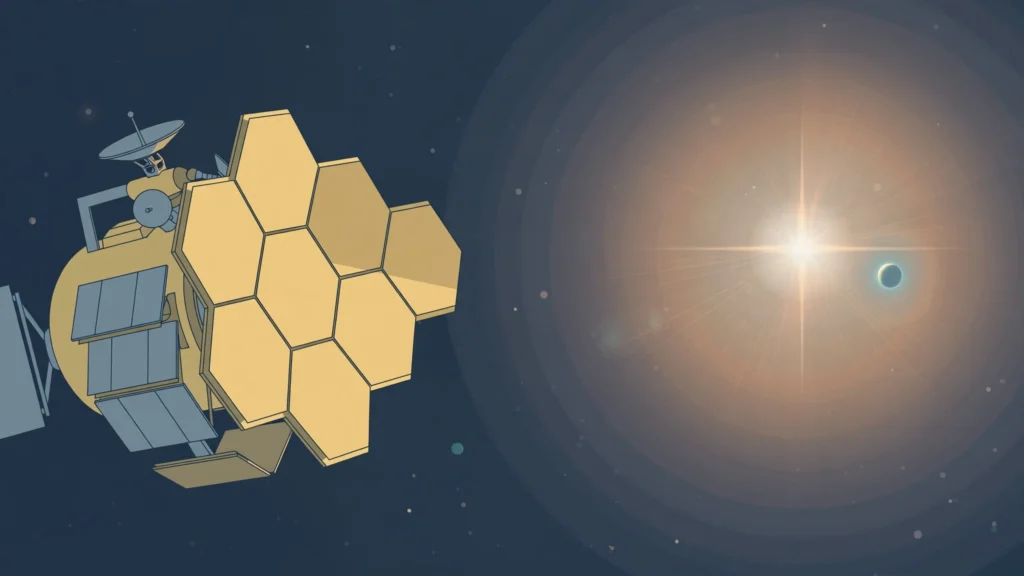
A new image-processing method has pulled the giant exoplanet 51 Eridani b out of two-year-old James Webb Space Telescope data that standard techniques could not read. The technique, called FLIP, was developed by a team led by Northwestern University and published in the journal Nature on 4 November.
FLIP builds a physics-based digital twin of the telescope and tunes millions of parameters until the model reproduces the starlight in an observation. The team then subtracts that simulated glare, which improved sensitivity to faint planets by 2 to 15 times in tests.

The planet had been found before by ground-based telescopes, but Webb’s own images buried its signal in leftover starlight. Carbon dioxide in the planet’s atmosphere also dimmed its signal at the infrared wavelength Webb observes.
The researchers say the method could ease stability requirements for future direct-imaging missions such as NASA’s planned Habitable Worlds Observatory, though further testing is needed to see how widely it applies.
Source: Phys.org