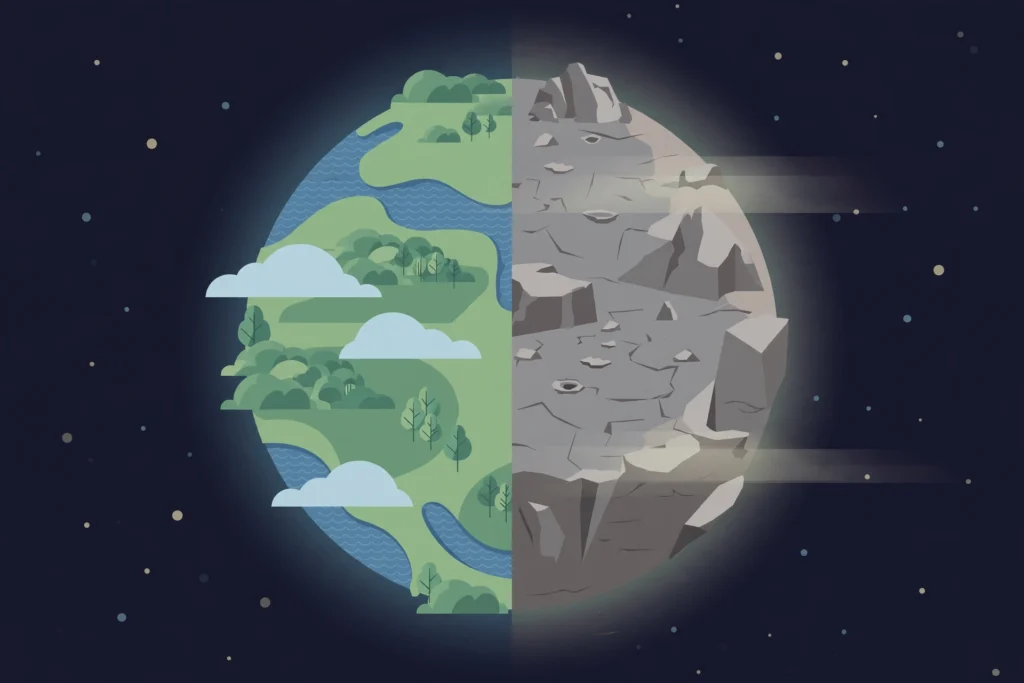
Researchers at the University of Washington have built a virtual Earth with one thing removed: life itself. The model ran the planet forward for five billion years, from its formation 4.5 billion years ago to around 500 million years into the future, and found that a lifeless Earth would still hold on to habitable temperatures.
The team, led by astrobiologist Samantha Gilbert-Janizek, tracked 19 planetary properties in the simulation, from heat leaking through the mantle to ocean chemistry and surface temperatures. The model matched all 19 against measurements of the real, pre-industrial Earth. The one big difference was oxygen. With no photosynthesis, the air of the lifeless Earth held almost none.
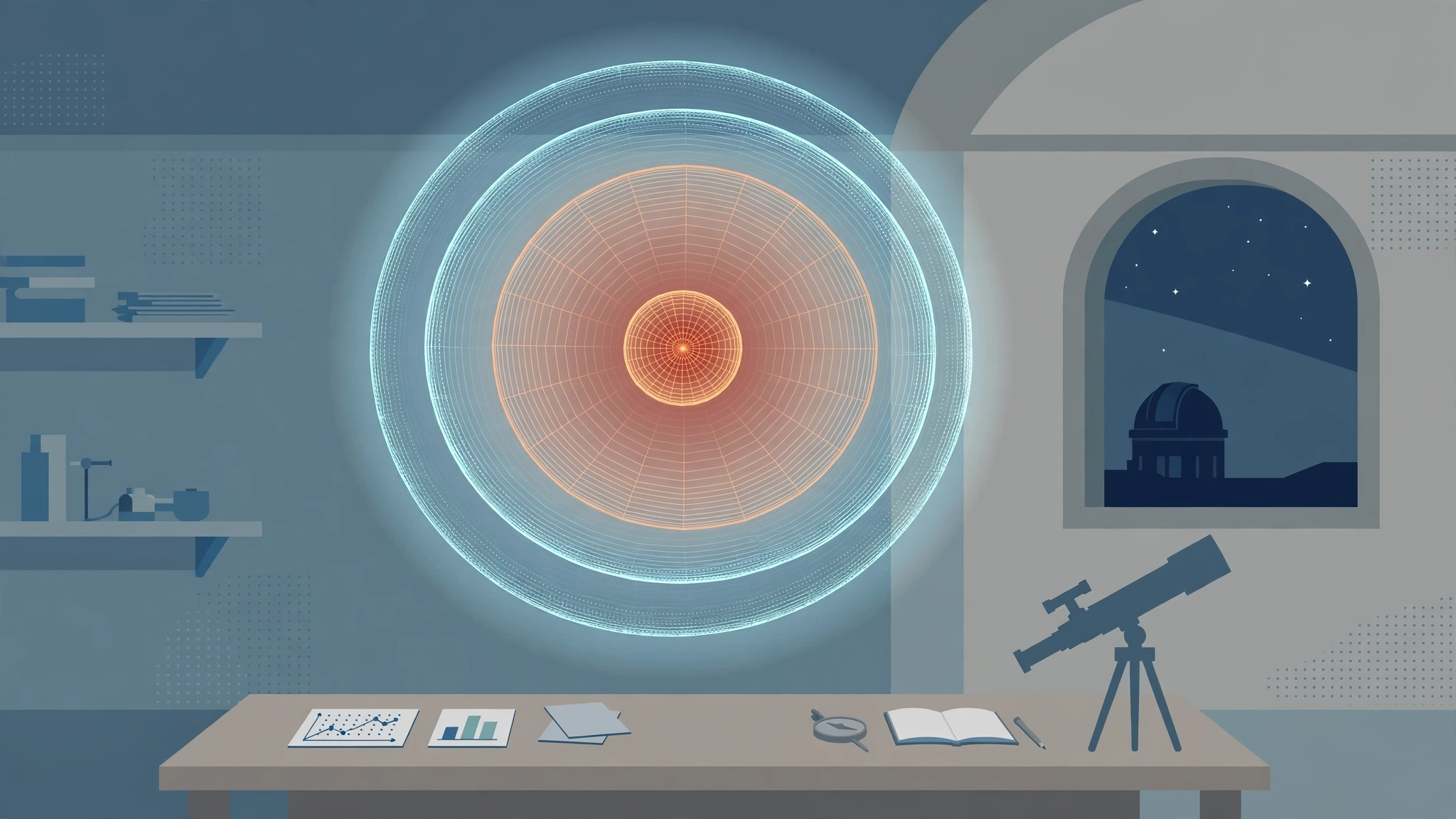
The work, published in The Planetary Science Journal, gives astronomers a baseline for the search for life on distant worlds. A rocky exoplanet can look habitable from light years away without anyone living on it, and the model shows which atmospheric signals need a biological explanation and which geology alone can produce.
Gilbert-Janizek and her colleagues are careful about the limits. The findings do not disprove the Gaia hypothesis, the idea that life helps keep Earth habitable, and the authors note they cannot rule out life playing a part in climate stability. The model is a first step, built for telescopes like the proposed Habitable Worlds Observatory, which will one day read the atmospheres of faraway planets.
Source: ScienceAlert