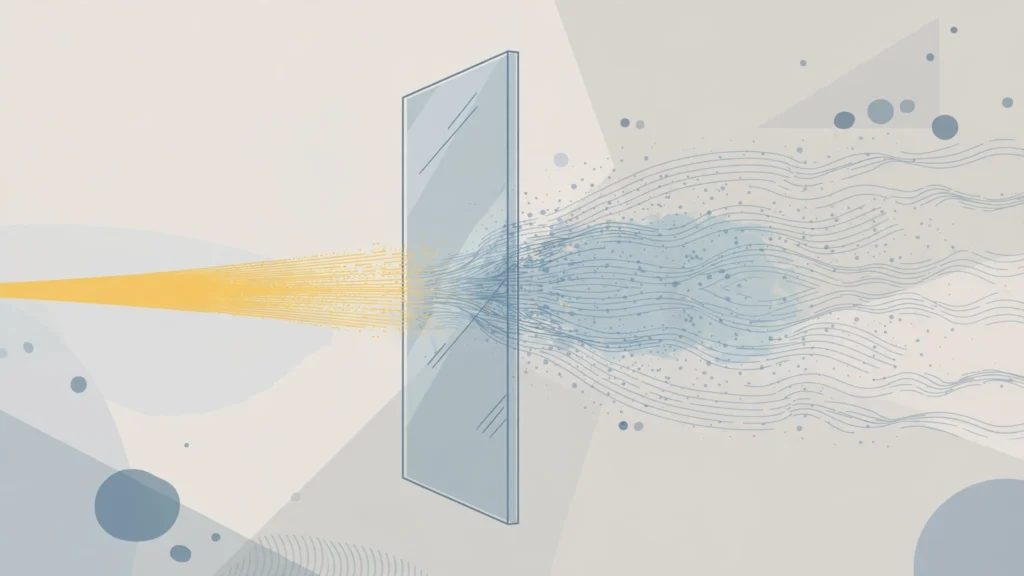
No material can ever be fully transparent, according to new work by three theoretical physicists. Light always loses a little energy as it passes through, because a quantum process turns some of it into sound.
Alberto Nicolis, Federico Piazza and Angelo Esposito posted their findings as a preprint on arXiv on October 8, Scientific American reported.

The team spent years studying strange quantum materials such as superfluid helium, a liquid that forms when helium is cooled to a few degrees above absolute zero. Liquid helium is astonishingly clear, and scientists have not been able to measure any effect on visible light.
Even so, the physicists argue the loss is unavoidable. In their imagined perfect superfluid, light could cross the diameter of Earth before growing noticeably fainter. Given enough distance, it would still fade.
The finding sets a hard limit on a long-running goal in materials science. Ivan Smalyukh’s lab at the University of Colorado Boulder has made gels that bend light almost as little as air, making them clearer than glass. The new work says even the cleverest engineering cannot close the last gap.
The loss can be very small, the researchers note, so the practical impact on windows, lenses and optical materials stays limited.
Source: Scientific American