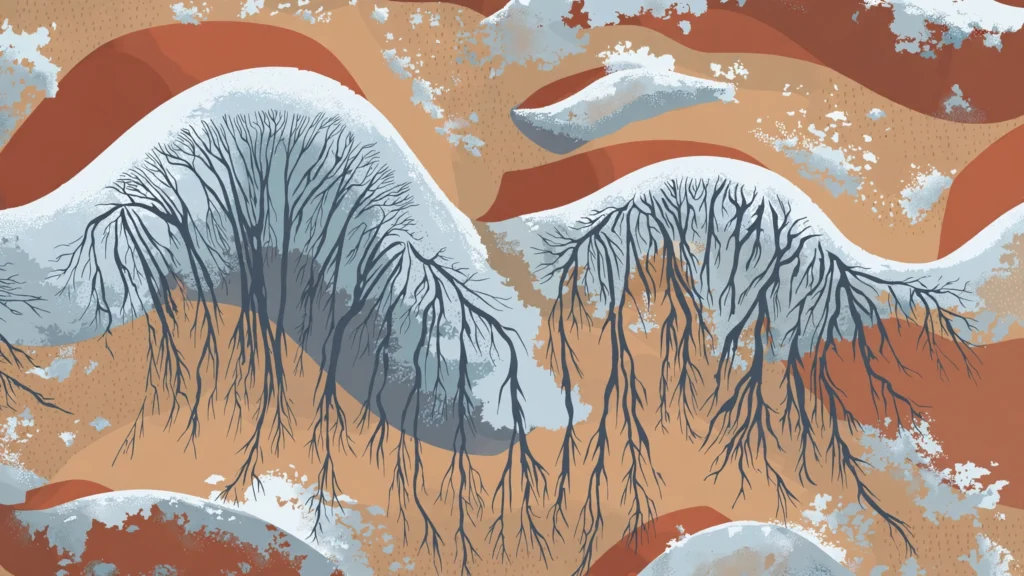
A photograph taken by NASA’s Mars Reconnaissance Orbiter shows what looks like a forest of dark trees standing on the frozen dunes near the Martian north pole. Nothing grows there. The trees are sand.
The orbiter’s HiRISE camera took the image in 2008. Flip it upside down and the illusion breaks. The long, branch-like streaks are dark sand that tumbled down the steep sides of the dunes.
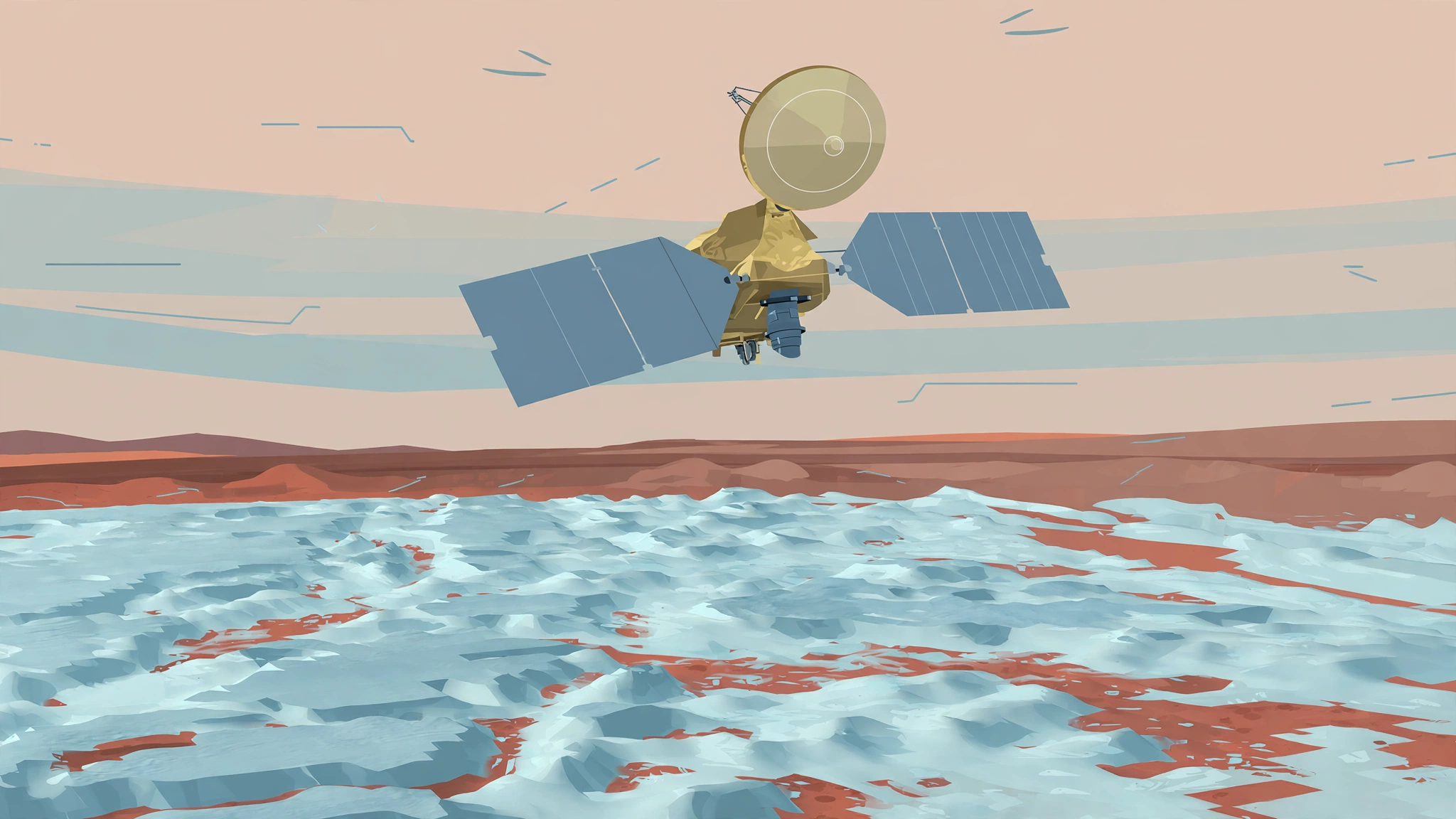
Mars runs on seasons, like Earth, but its winters freeze carbon dioxide out of the air instead of water. The gas settles as dry ice over the polar dunes. When spring comes, the ice turns straight back into gas without melting. Sunlight warms the ice from below, gas builds up and bursts out, carrying sand with it.
The sand cascades down the dune slopes and leaves the dark streaks behind. In the 2008 image, HiRISE caught a small cloud of dust kicked up by material sliding down a dune.
Planetary scientist Candice Hansen-Koharcheck and her colleagues tracked the same dunes across successive Martian years. In a 2011 study, they found the lower edges of five dune slopes advanced between 2.2 and 4.7 metres in a single Martian year.
When winter returns, the dunes freeze over again and the cycle starts over. Each spring brings another fleeting forest, and each one vanishes by summer.
Source: ScienceAlert