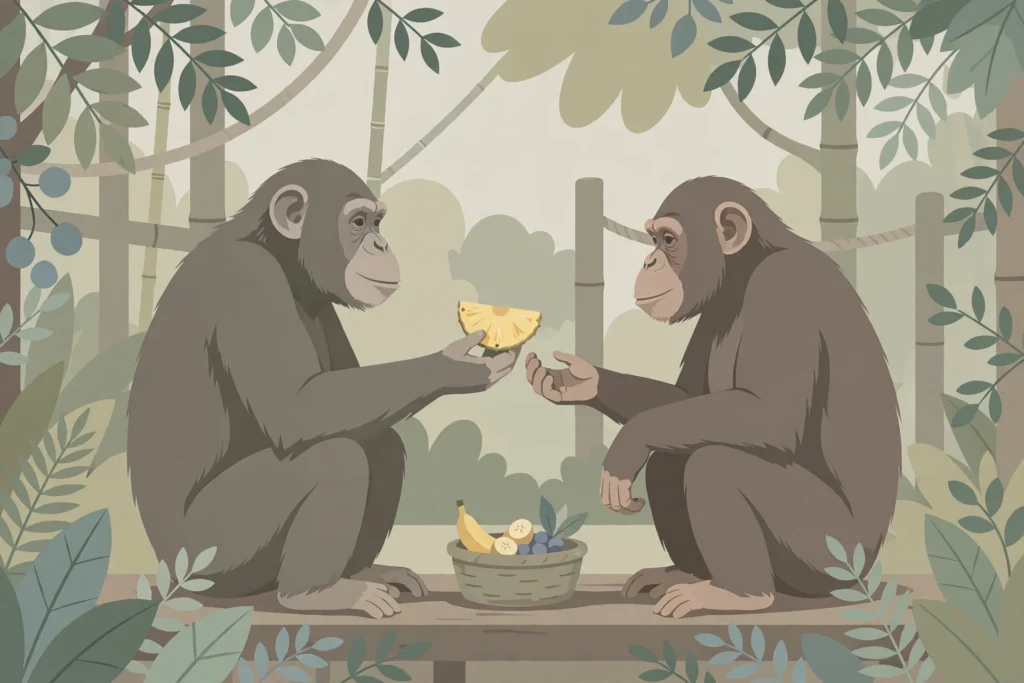
Chimpanzees steal less food from their friends than from other chimpanzees, even when the prize is pineapple, researchers at the University of California, Berkeley found.
Across 138 trials, the animals took the pineapple in 70 percent of trials involving non-friends, compared with 61 percent when the other animal was a friend, according to the study.
The team worked with 26 chimpanzees at the Ngamba Island Chimpanzee Sanctuary in Uganda. Researchers first spent more than 800 hours mapping which animals were closely bonded, based on grooming patterns and how often they stayed close together.
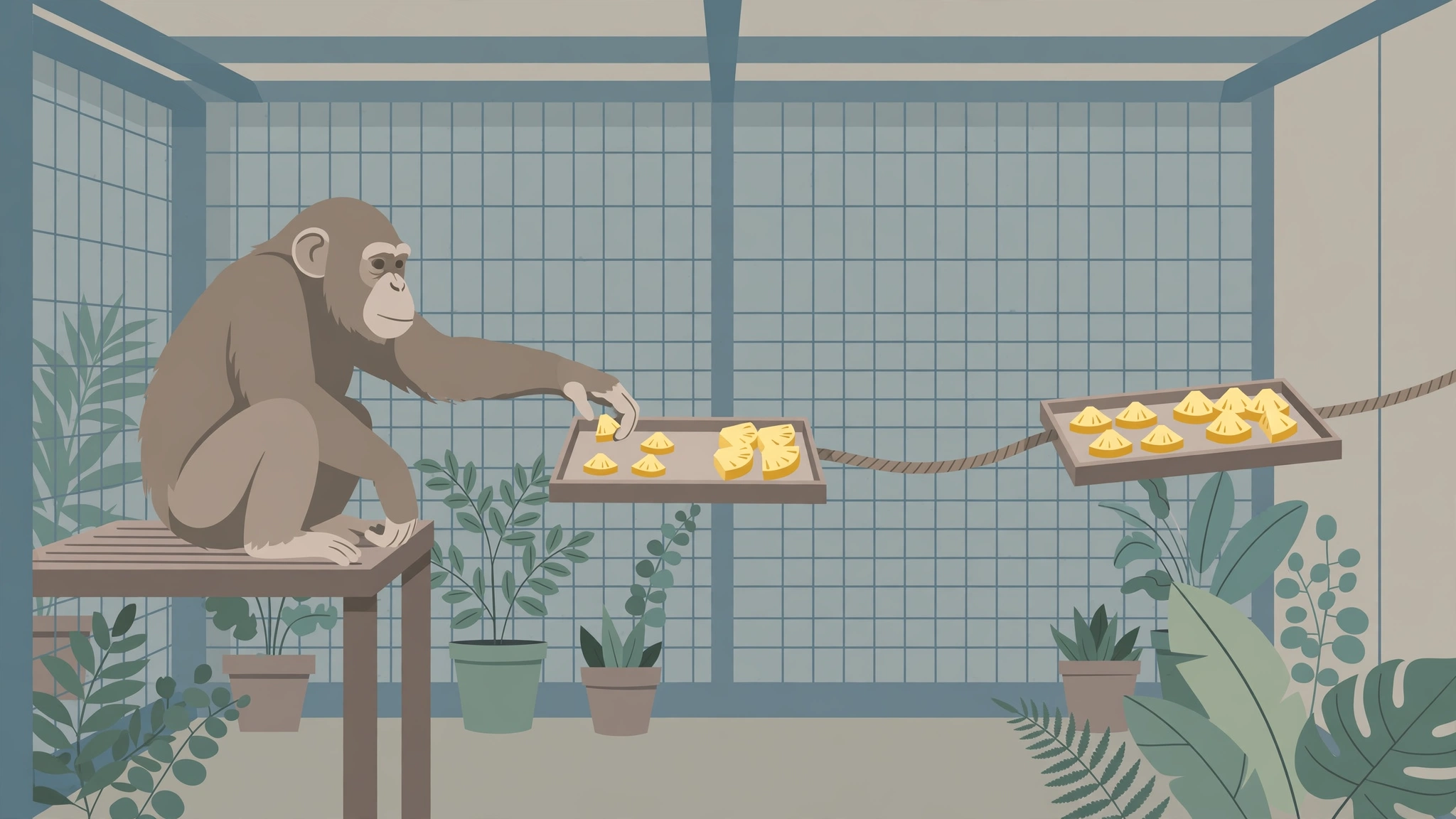
They then set up a simple test. One chimpanzee sat in a room with three trays of pineapple pieces, while a second chimpanzee in the next room could pull a rope to drag the trays toward itself and take the fruit.
The same animals faced both friends and non-friends in the test, which gave the researchers more confidence that the relationship itself drove the difference, rather than individual temperament. Higher-ranking victims were also less likely to lose their food, the researchers found.
Victims calmed down faster when the thief was a friend, and thieves showed less hostility when stealing from a bonded partner than from a non-friend, according to the researchers.
“Ours is the first study to show that they’re able to hold back antisocial behavior with their friends,” said Oded Ritov, the paper’s first author and a Berkeley psychology doctoral student. The paper appears in the journal Evolution and Human Behavior.
Source: UC Berkeley News