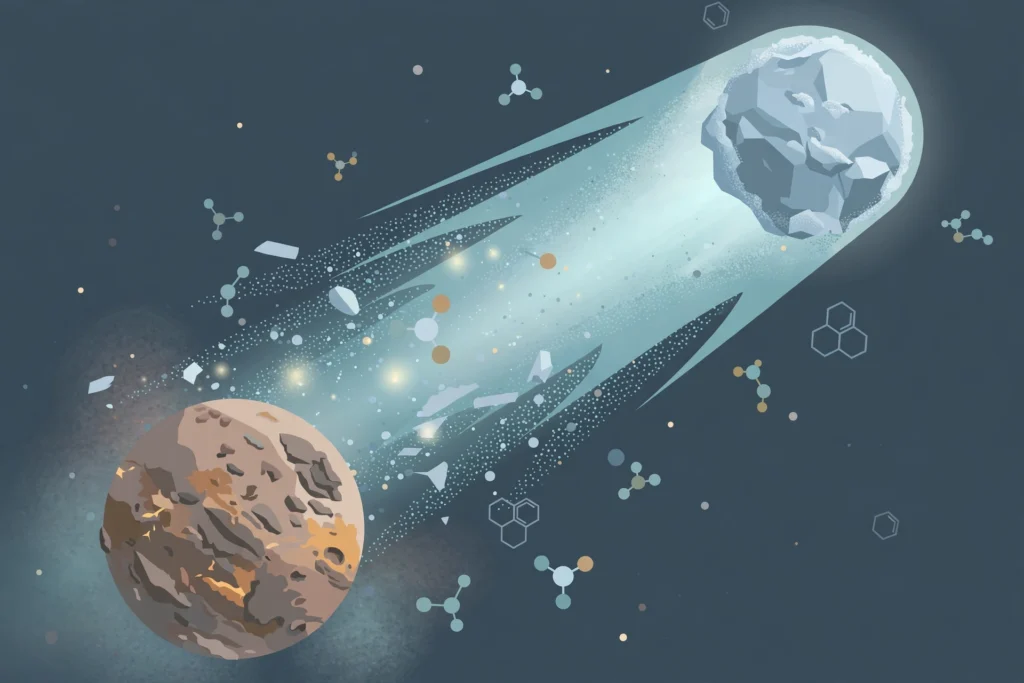
A century-old idea about how life began on Earth has taken a hit. A new study led by researchers at the University of Cambridge found that comets probably did not deliver the molecular building blocks for life to our planet, because the fragile molecules would almost certainly vaporise on impact.
Comets carry carbon-bearing and nitrogen-bearing molecules, and scientists have long theorised that comet impacts during Earth’s early history seeded the planet with the raw materials for life. The new work tested that idea with computer modelling, according to Phys.org. The researchers found that comets travel too fast and strike at too steep an angle for the molecules to survive the journey to the surface. At best, the team said, successful delivery would have been a one-off fluke, not the steady rain of prebiotic molecules the theory imagined.
The team focused on hydrogen cyanide, a molecule found on comets that matters for prebiotic chemistry. Even in the rare cases where it survived an impact, the simulations showed that impacts delivering a useful concentration were extremely uncommon, Phys.org reported. The results are published in the journal Scientific Reports.
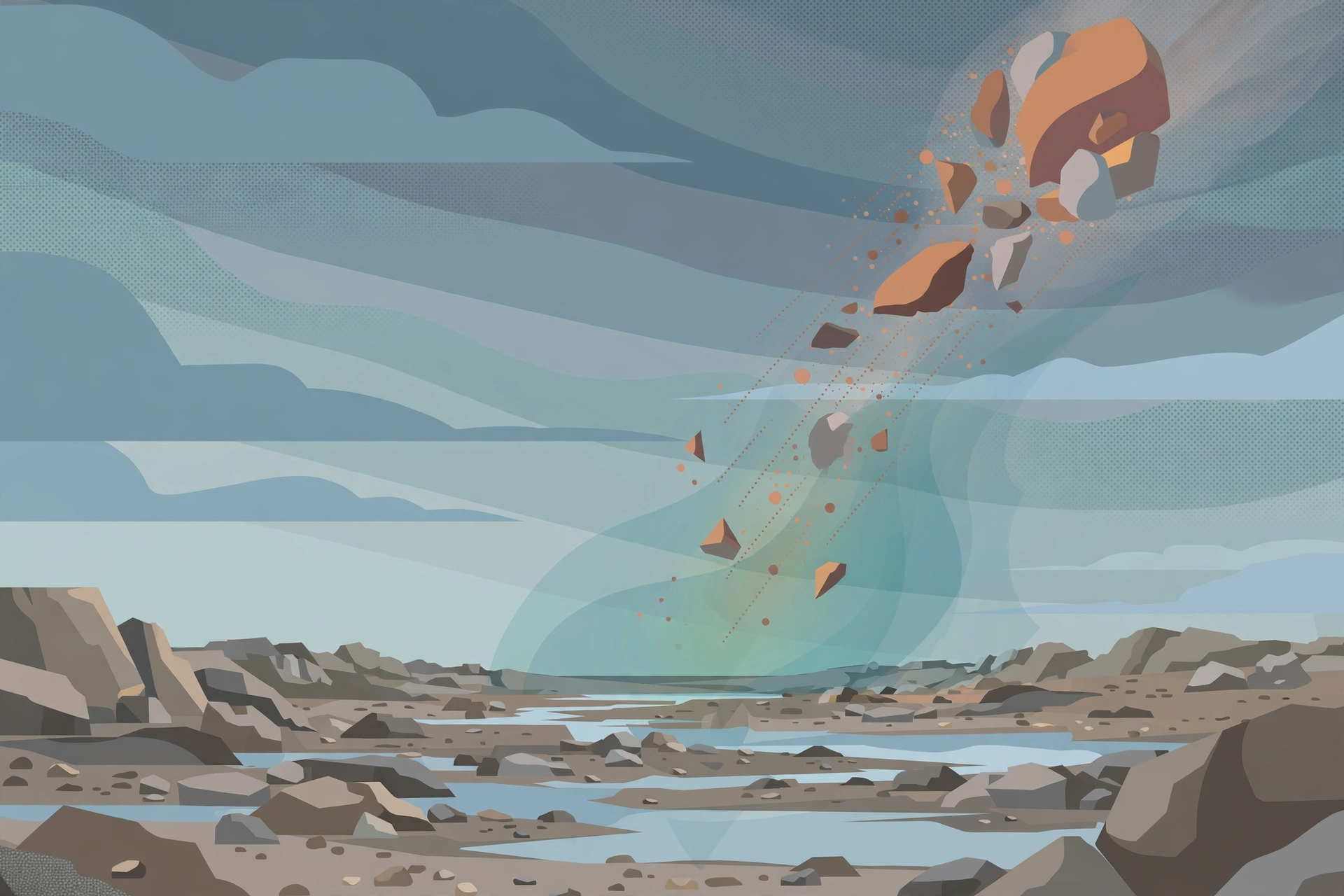
Mars, the researchers found, could have been a slightly more promising target for cometary delivery, although that outcome is still highly unlikely, according to the study. Lead author Dr Richard Anslow, from Cambridge’s Institute of Astronomy, said the idea of comets as a ready-made delivery service for life’s ingredients now looks highly unlikely.
Source: Phys.org