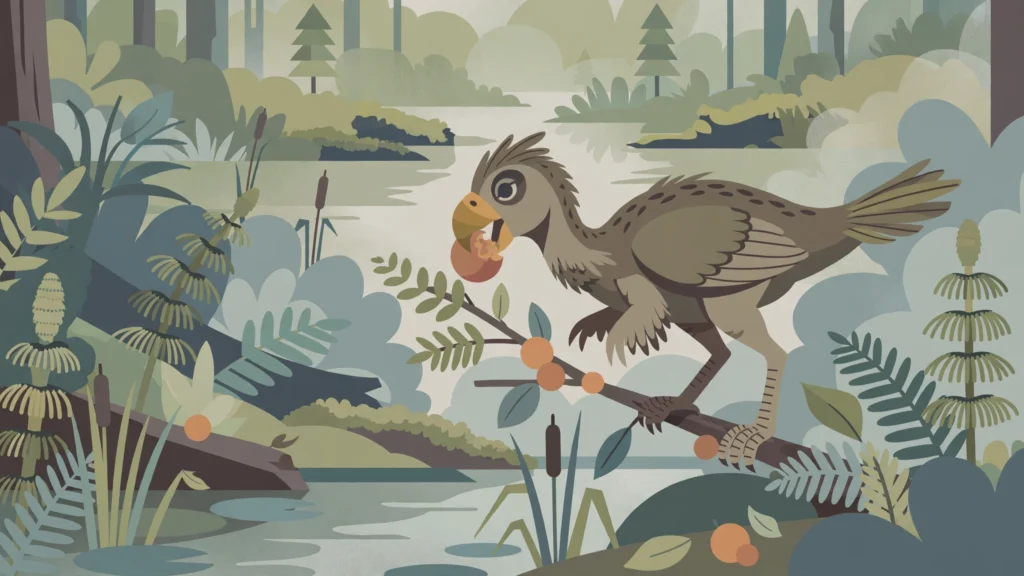
Scientists have identified the first known fruit-eating dinosaur, a turkey-sized, toothless creature with a parrot-like head that lived about 66 million years ago. Researchers named it Infernogallus jamesi, which means “hell chicken,” after the Hell Creek rock formation where its fossils were found.
The fossils came from Montana and North Dakota and included one nearly complete skeleton plus isolated bones from a jaw and palate. Three features pointed to a fruit diet, lead author Greg Funston of Stony Brook University said: jaw muscles arranged for back-and-forth chewing, a mobile joint that let the jaw slide forward, and ridges and grooves on the beak for mashing soft plants like fruit.
Infernogallus measured about 5 feet long and weighed around 25 pounds. The fossils did not reveal feathers, but researchers believe it was covered in them, based on fossils of close relatives. It lived in a subtropical coastal floodplain alongside Tyrannosaurus, Triceratops and Ankylosaurus.
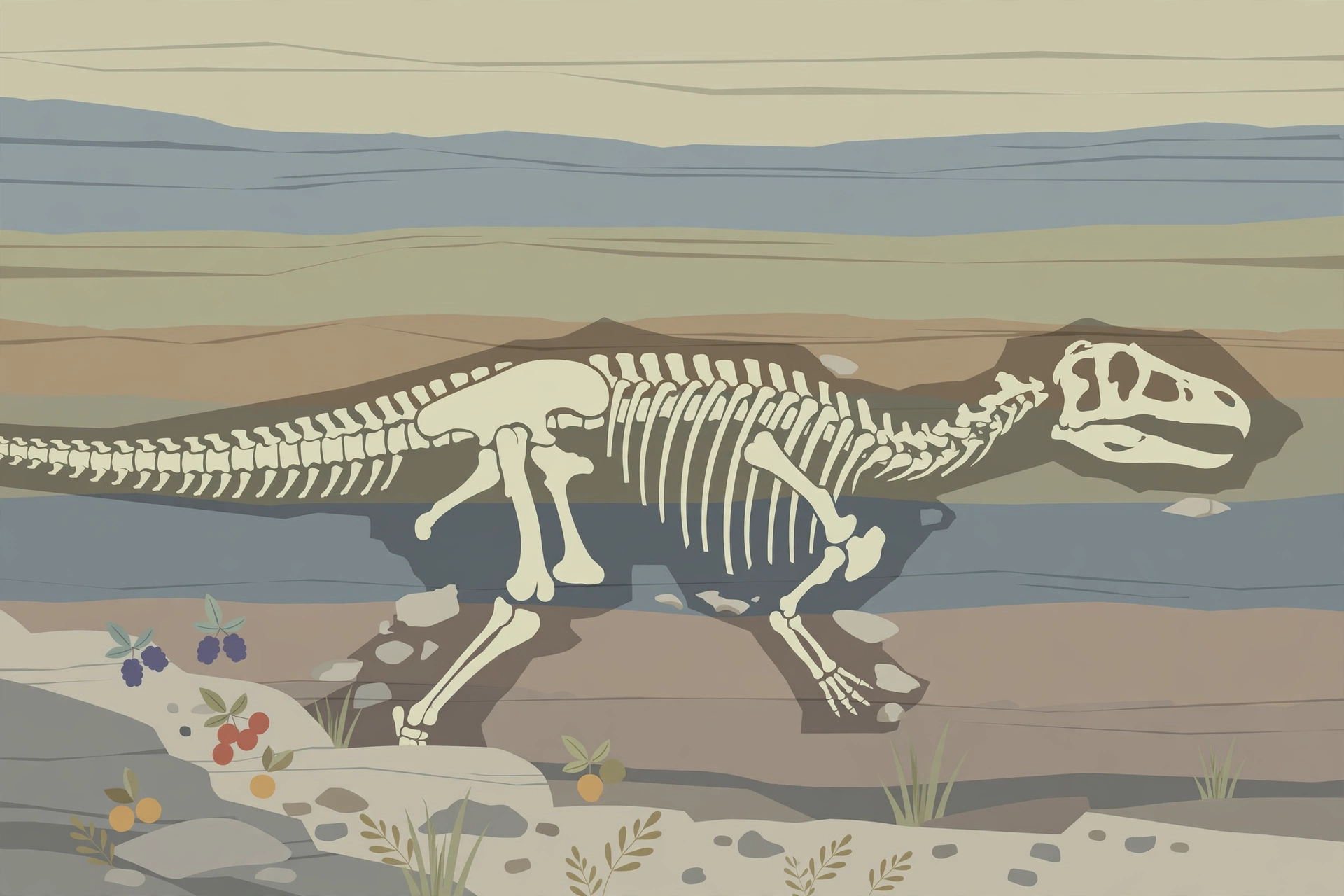
The animal belonged to the theropods, the group that includes T. rex and all meat-eating dinosaurs, as well as some plant eaters and the entire bird lineage. The research, published in the journal Nature Communications, shows some dinosaurs had a close ecological relationship with flowering plants, whose reproductive structures are fruits.
Until now, no dinosaur had been shown to specialise in eating fruit. Infernogallus fills that gap at the very end of the age of dinosaurs, in the Cretaceous Period.
Source: Reuters