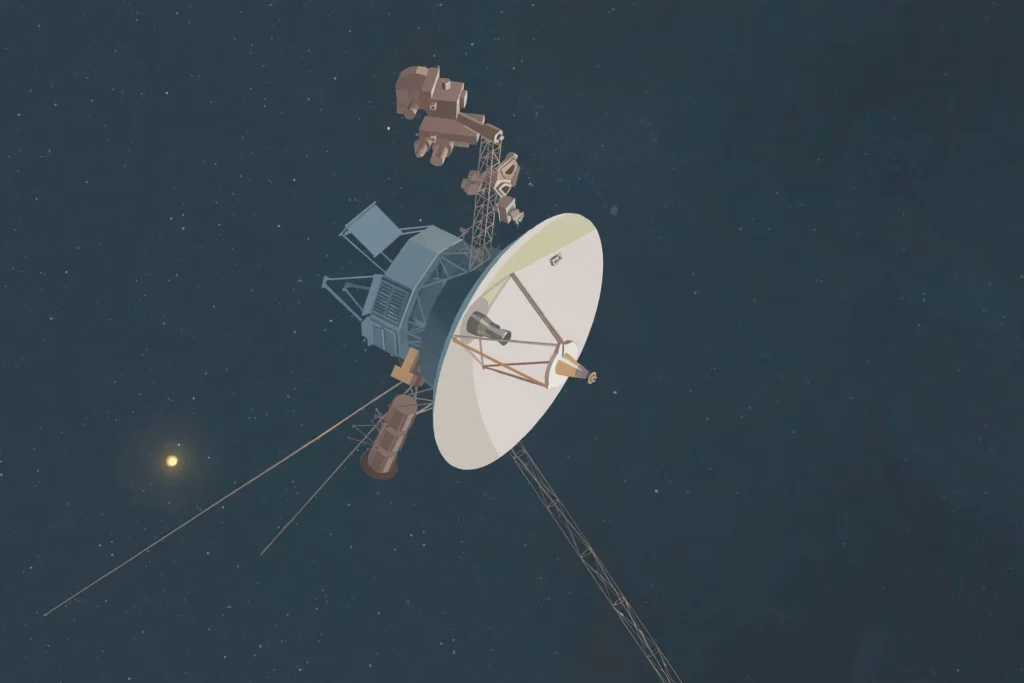
NASA says its Voyager 1 spacecraft is back in contact with Earth after a brief and unexplained loss of communication in interstellar space. The signal vanished during two scheduled contacts on October 18 and 19, then reappeared on October 20, and the team has stayed in contact with the probe since then.
The agency announced the episode on October 29, alongside news of a months-long effort to stretch the spacecraft’s fading power supply. Engineers completed that work, nicknamed the “Big Bang”, in September, swapping three devices for lower-power alternatives so the remaining science instruments can keep running longer.
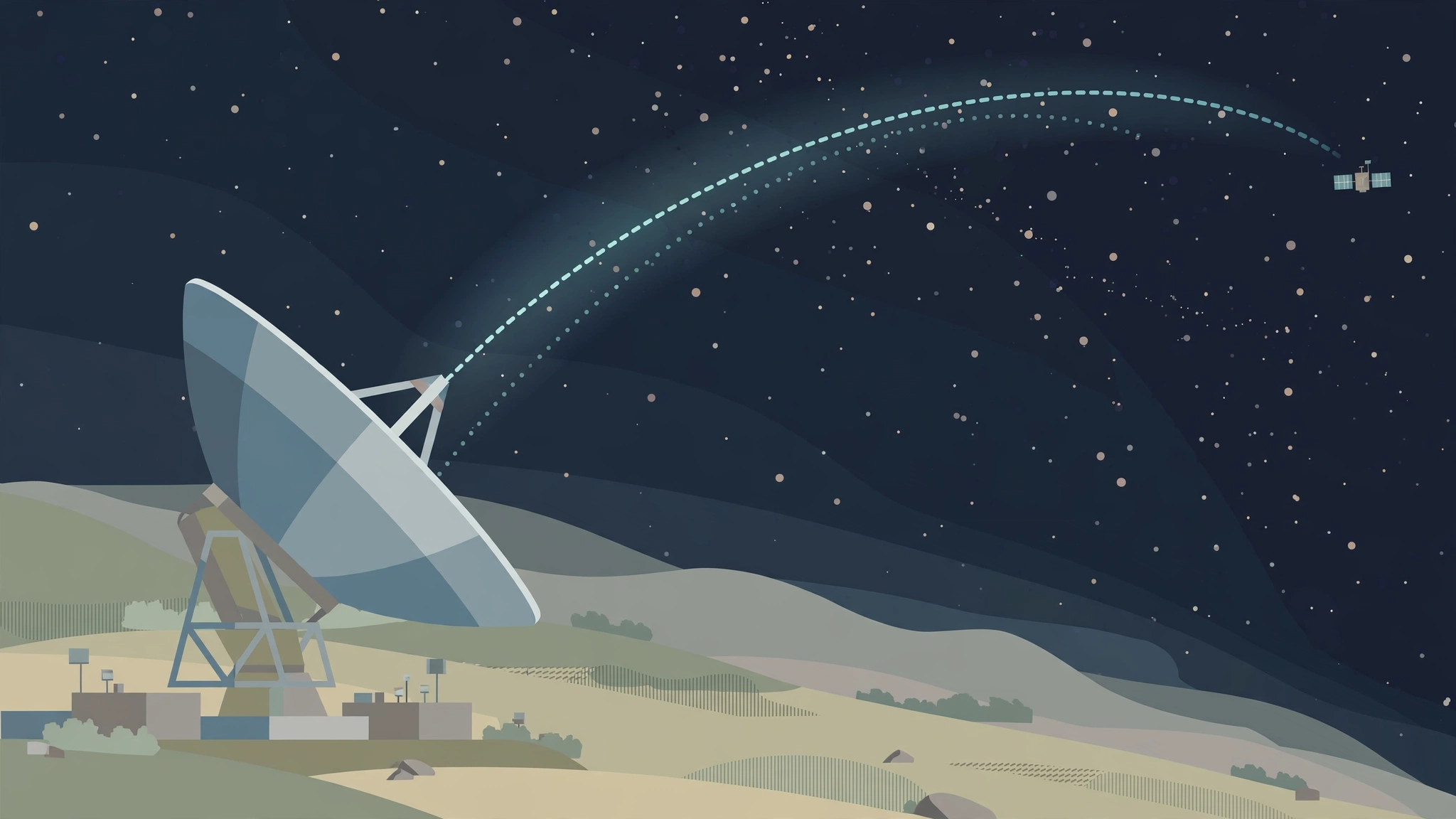
NASA’s Deep Space Network, the global array of large antennas used to talk to distant spacecraft, could not detect a radio signal from Voyager 1 during two attempts 24 hours apart. The probe sits about 16 billion miles from Earth and travels at roughly 38,000 miles per hour, making it the most distant human-made object.
Engineers have so far determined that one group of thrusters went offline and its backups switched on, according to NASA. The swap happens automatically when the onboard computers detect a problem, putting the spacecraft into a stable configuration and pausing normal operations while engineers diagnose the issue. The cause of the original signal loss remains under investigation.
“This is the first time we’ve seen the spacecraft do something like this, but we are also at a point in the mission where we have to expect the unexpected,” said Kareem Badaruddin, Voyager mission manager at NASA’s Jet Propulsion Laboratory. He added that the team was relieved to be back in contact and eager to understand what happened.
Voyager 1 reaches another milestone on November 18, when it will sit 16.09 billion miles from Earth, the equivalent of one light-day. At that distance, a radio signal takes a full 24 hours to travel one way.
Source: NASA