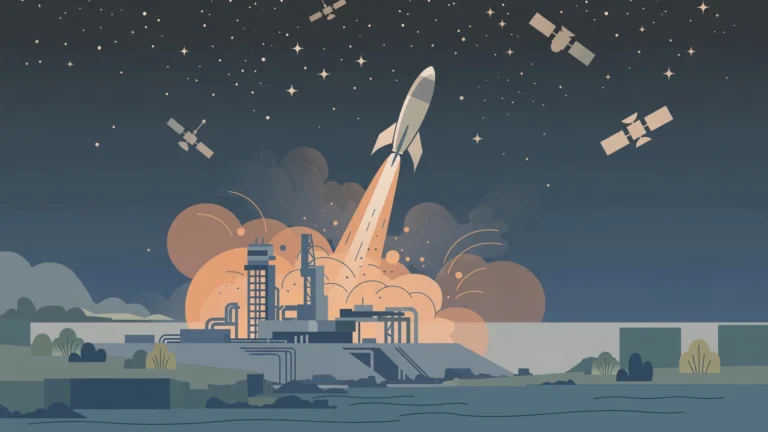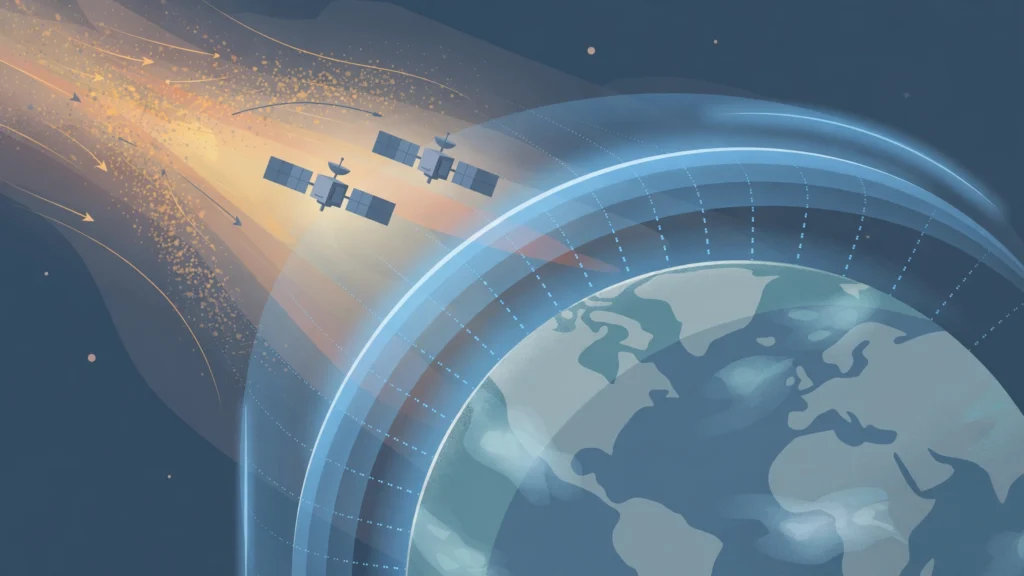
NASA’s twin TRACERS satellites have delivered their first results on magnetic reconnection, the explosive process that lets energy from the Sun’s solar wind enter Earth’s magnetic shield. Researchers published the findings in the Journal of Geophysical Research: Space Physics after analysing initial observations from the mission’s first year.
The data suggest reconnection varies more from place to place than over time. In other words, where reconnection happens moves around, rather than the process simply changing in pace at a fixed spot. The result is preliminary, and the team says future measurements will test whether it holds.
TRACERS stands for Tandem Reconnection and Cusp Electrodynamics Reconnaissance Satellites. The two spacecraft fly one behind the other through the polar cusps, funnel-shaped regions over Earth’s magnetic poles where solar wind particles can slip into the upper atmosphere. Instruments called Analyzers for Cusp Ions measured the particle behaviour behind the new paper.
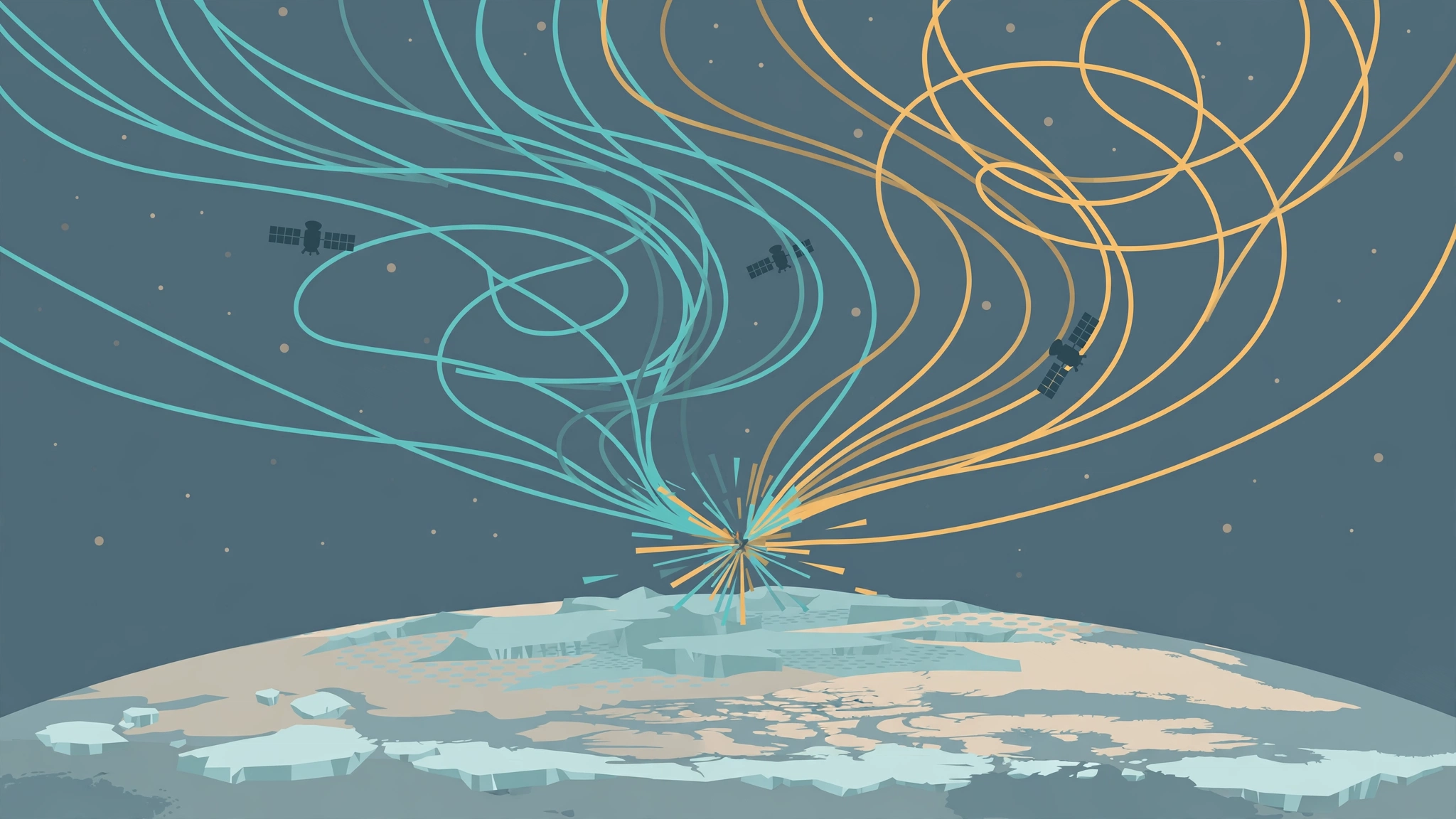
“Analyzing the data TRACERS collected gave our team a clearer view of solar wind particle behavior and how it connects to reconnection events,” said Stephen Fuselier, the mission’s deputy principal investigator and instrument lead at the Southwest Research Institute in San Antonio.
Magnetic reconnection happens when the Sun’s magnetic field, carried outward in a stream of charged particles called the solar wind, collides with Earth’s magnetosphere. The process can drive space weather, including geomagnetic storms that threaten satellites and power grids, so understanding it matters for forecasting.
NASA approved a prime mission extension in September, keeping the spacecraft at work into spring 2027. The satellites now observe the southern cusp several times a day, building the larger data set the team needs to confirm the first result.
Source: NASA