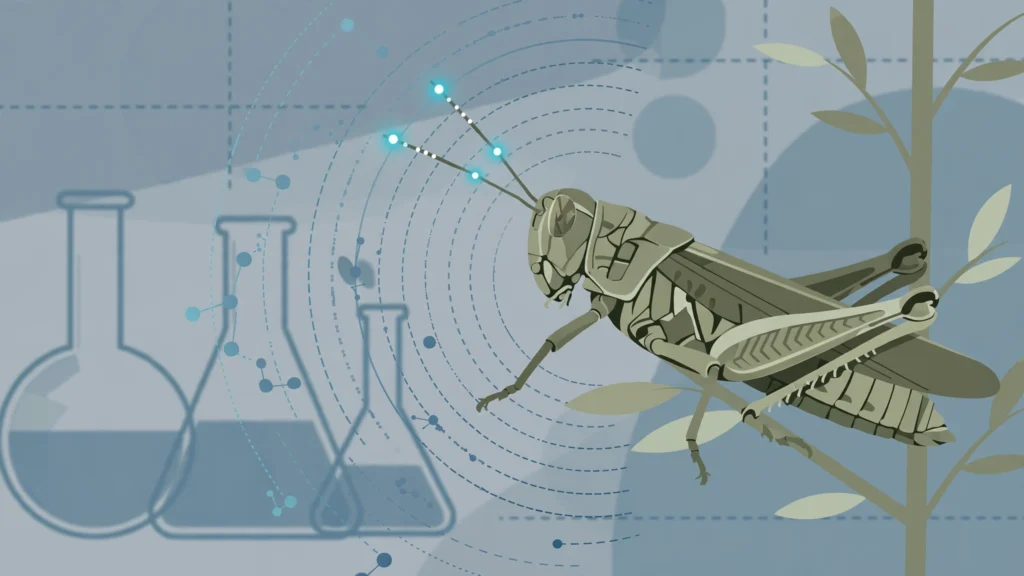
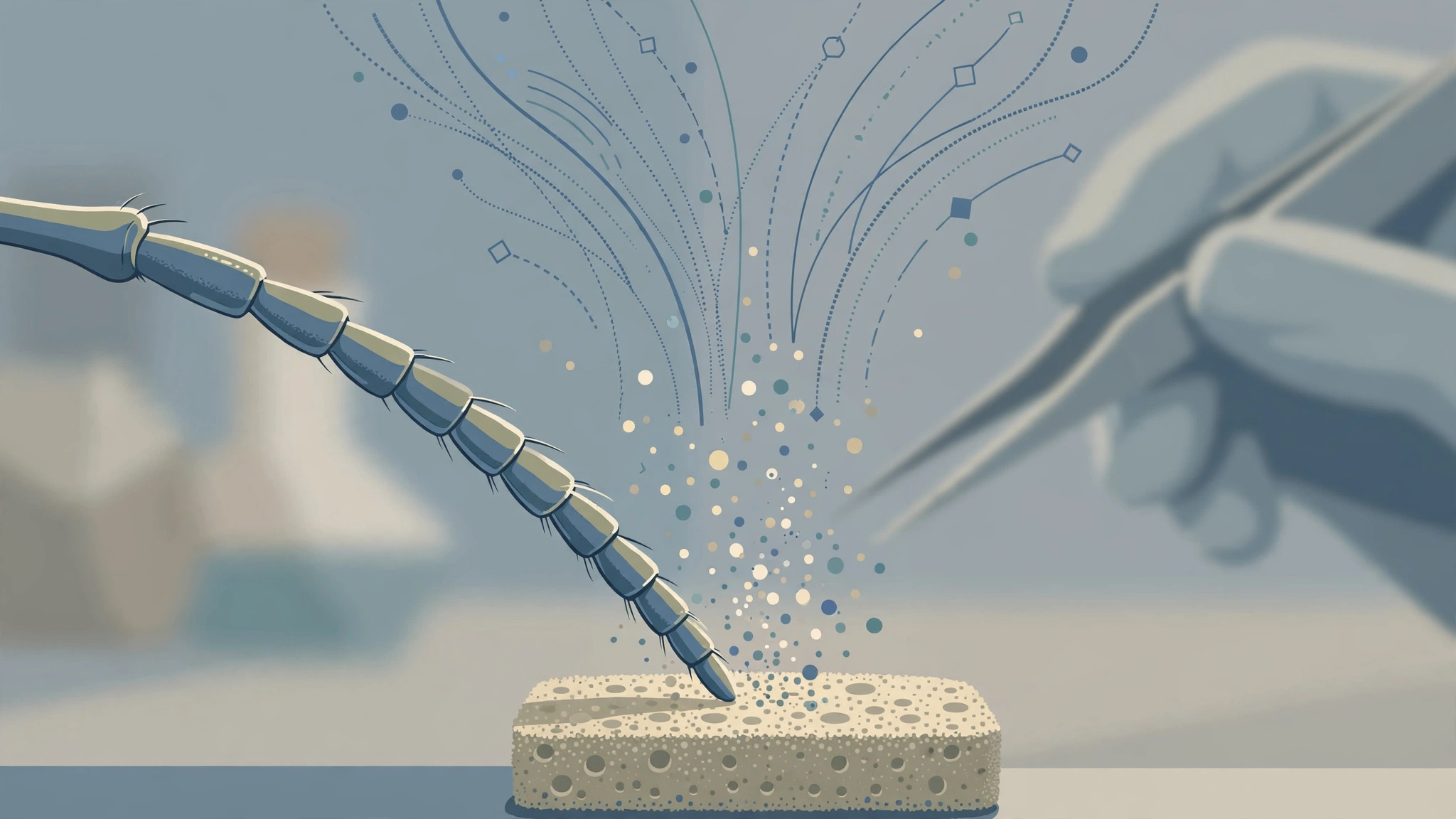
Researchers at Washington University in St. Louis have fitted a locust antenna with collagen foam carrying nanomaterials, turning the insect’s own sense of smell into a tool for collecting and identifying trace chemicals. The study was published in the journal Advanced Materials.
The antenna picks up chemical signatures in the air, while the foam traps the compounds so researchers can identify them precisely, according to Technology Org, which reported the university’s research. The approach pairs biological sensing with synthetic collection, rather than replacing one with the other.
Barani Raman, professor of biomedical engineering at the university’s McKelvey School of Engineering, and Srikanth Singamaneni, professor of mechanical engineering and materials science, led the work as senior authors.
Scientists have long explored using insects as field agents in places where people cannot easily go, the report said. This system moves that idea closer to practical use, since the foam gives researchers a physical sample to work with after the antenna has done the sensing.
Source: Technology Org