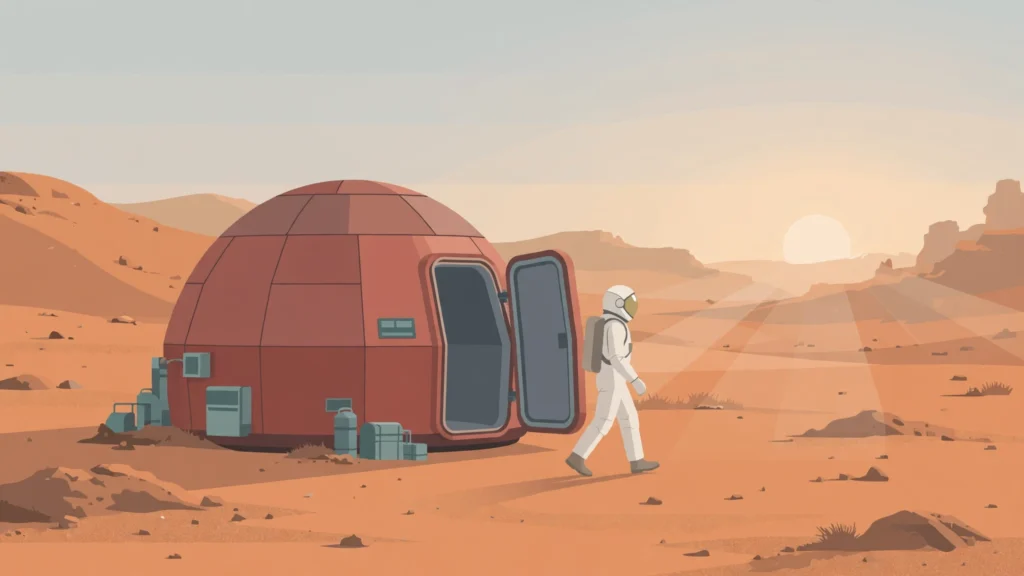
Four volunteers stepped out of a sealed habitat at NASA’s Johnson Space Center in Houston on October 31, ending 378 days of simulated life on Mars. The crew of CHAPEA Mission 2, the agency’s second yearlong Mars simulation, entered the 1,700-square-foot, 3D-printed habitat on October 19, 2025.
NASA named the crew as commander Ross Elder, flight engineer James Spicer, medical officer Ellen Ellis and science officer Matthew Montgomery. Johnson Space Center director Vanessa Wyche and astronaut Jack Hathaway spoke at the exit ceremony, which NASA streamed live.

Inside the habitat, the crew ran simulated spacewalks, grew crops, maintained their quarters and worked through communication delays of up to 22 minutes, the kind of lag a real Mars crew would face. NASA said they also dealt with limited resources, equipment failures and a simulated two-week blackout.
The point of the exercise was data. CHAPEA, short for Crew Health and Performance Exploration Analog, tracks how isolation, stress and tight supplies affect a small crew over time. NASA said the findings will feed into planning for future Moon and Mars missions, where crews will operate with far less help from Earth.
The first CHAPEA crew completed the same 378-day run in July 2024, which gives researchers two comparable missions to study. NASA is already accepting applications for a broader Moon and Mars analog campaign, set to start no earlier than August 2027.
Source: NASA