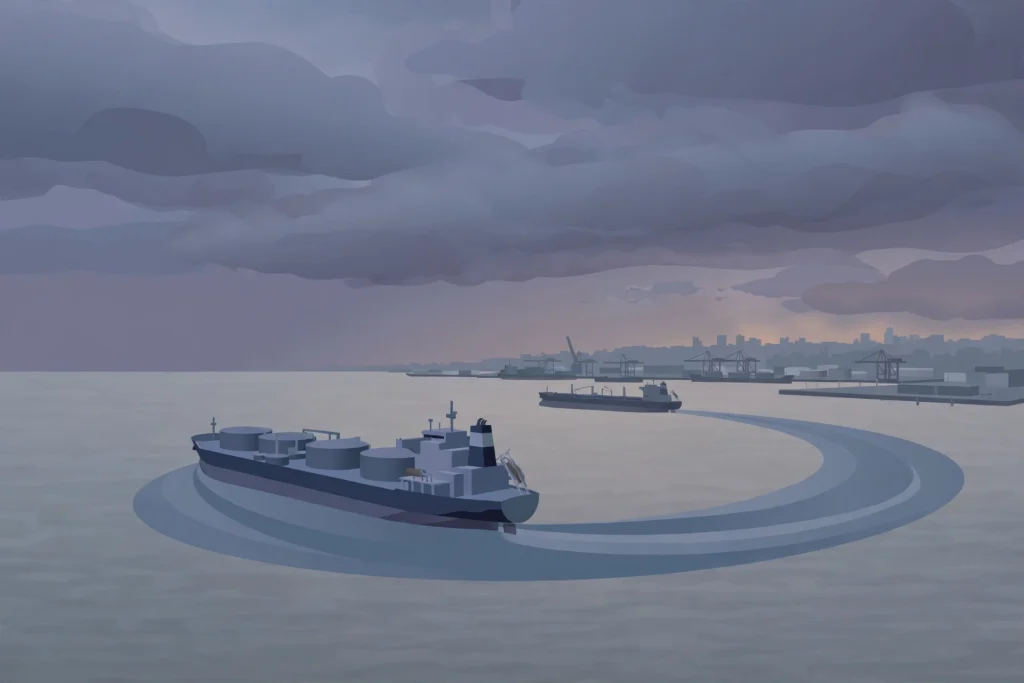
A White House deal to import Russian diesel into the United States is falling apart, with the tankers carrying the fuel turning away from American ports.
President Donald Trump announced the arrangement with Russian President Vladimir Putin in October, pitching it as relief from soaring diesel prices. Three tankers set out for the US East Coast. Ship tracking data now shows two have changed course and the third is waiting for orders.
The Malta-flagged Agioi Fanendes, carrying about 40,000 metric tons of diesel loaded at the Russian Baltic port of Primorsk, had listed New York as its destination. It now shows as waiting for orders. The Sierra Leone-flagged Leruo has diverted to Brazil, while the Russian-flagged Talisman has crossed into the Mediterranean and is idling off Algeria.
“None of them have been able to find a port that is willing to take them in and none of them have been able to find a buyer that is willing to take them,” said Eugene Goncharov, policy director for the American Coalition for Ukraine.
The deal ran into legal trouble from the start. The Treasury Department issued a temporary exemption on 9 October authorising the sale, delivery and import of Russian diesel through 7 April 2027. Critics in Congress say the 2022 law banning Russian energy imports still applies and cannot be set aside without Congress. Twelve senators from both parties had urged the president to drop the arrangement.
New Jersey Governor Mikie Sherrill warned port and terminal operators in her state on 2 November to turn away ships carrying the fuel.
The setback leaves diesel prices near record levels. The national average price of on-highway diesel was $6.29 a gallon in the week of 2 November, according to the Energy Information Administration, $2.54 higher than a year earlier. US diesel inventories have fallen below 100 million barrels for the first time in more than two decades, the Financial Times reported.
Trump had promised more than 300,000 tons of Russian diesel immediately, 500,000 tons in November and one million tons after that. Kremlin spokesman Dmitry Peskov dismissed reports that the tankers had diverted.
Source: Scripps News