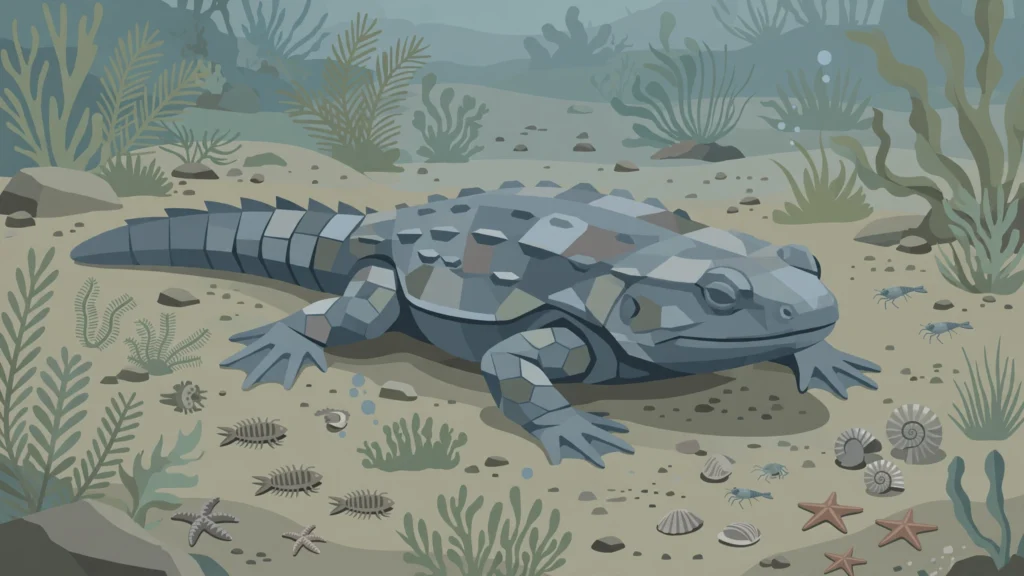
Two fossils found in China show that an armoured amphibian lived its whole life at sea about 237 million years ago, researchers report. The species, provisionally named Gerrothorax maritimus, is the first fully marine amphibian known from the fossil record.
The study, published on October 26 in Nature Ecology and Evolution, describes two nearly complete skeletons from Guizhou province. The site lay far from any landmass that existed in the Late Triassic, and the animals’ strontium isotope levels matched the seawater of the time.
Modern amphibians number more than 8,000 species, and none lives exclusively in a marine environment. The new find breaks that pattern. At 74 centimetres long, Gerrothorax maritimus had a flattened body almost completely covered in bony armour.
Co-author Ryosuke Motani, of the University of California, Davis, said the near-complete skeletons, fingers included, suggest the animals died near where they lived. Carcasses adrift at sea usually lose limbs before sinking, he said.
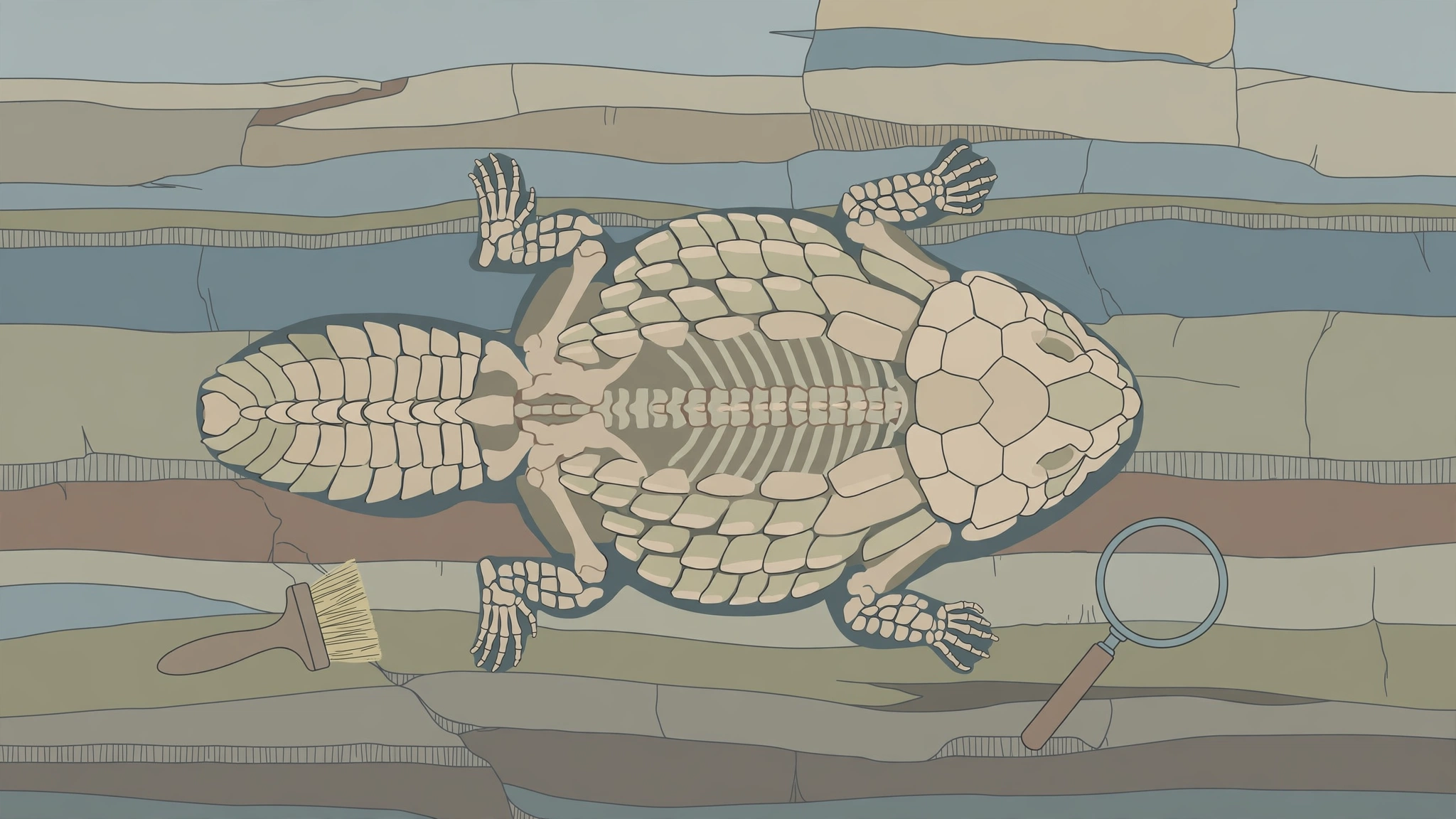
The researchers argue the armour helped the animal cope with salt water. It limited exchange through the skin, they write, and pushed the animal to rely on its gills and gut to manage salt. Its skull shape points to a bottom-dwelling suction feeder, waiting on the seafloor and drawing in passing prey.
Steve Brusatte, a palaeontologist at the University of Edinburgh, called the discovery potentially revolutionary. The team, drawn from UC Davis, Peking University and the Geological Museum of Guizhou, is still reconstructing the ecosystem the animal lived in, alongside marine reptiles and fish.
Source: Nature