Astronomers have watched a dying star swallow its companion for the first time. The event, published in Nature on Wednesday, gives scientists their first direct look at a process they have theorised about for decades.
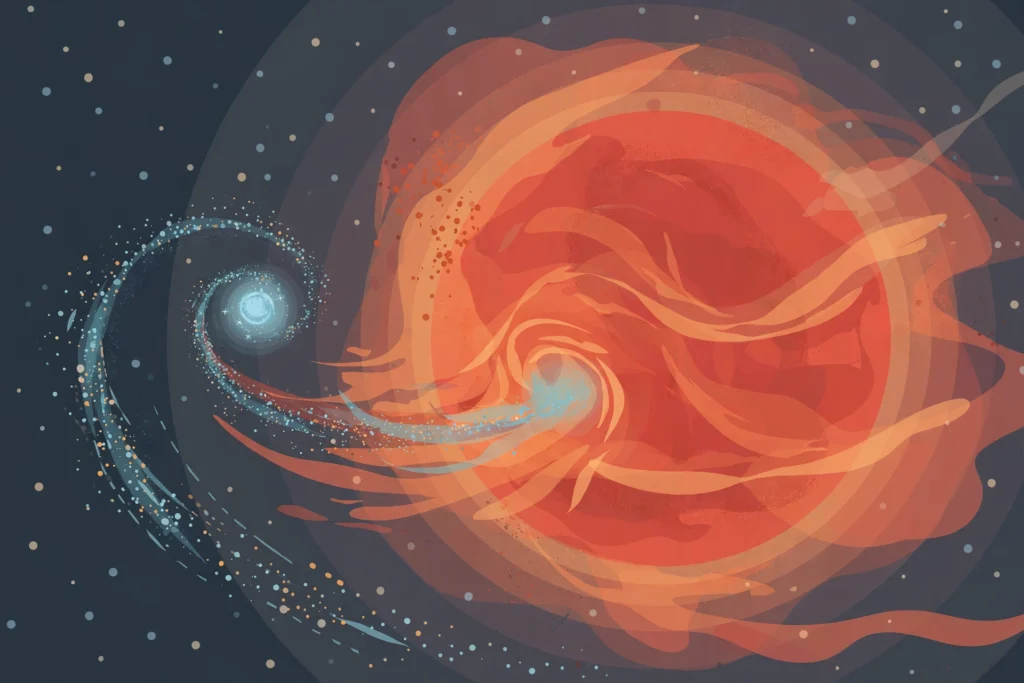
The pair sat in the Andromeda galaxy, about 2.5 million light-years from Earth. The larger star, a red giant nicknamed Big Bao, carried about seven times the mass of the Sun and had swollen to 350 times its width. Its smaller companion, Little Bao, weighed roughly 70 percent of the Sun.
The smaller star slipped into the giant’s outer layers in 2018 and spiralled inward over seven years. Near the end of 2025 the system erupted in a bright flash, spotted by amateur astronomer Koichi Itagaki on October 17. NASA’s James Webb Space Telescope observed the aftermath 47 days after the eruption peaked, the earliest follow-up of an event like this.
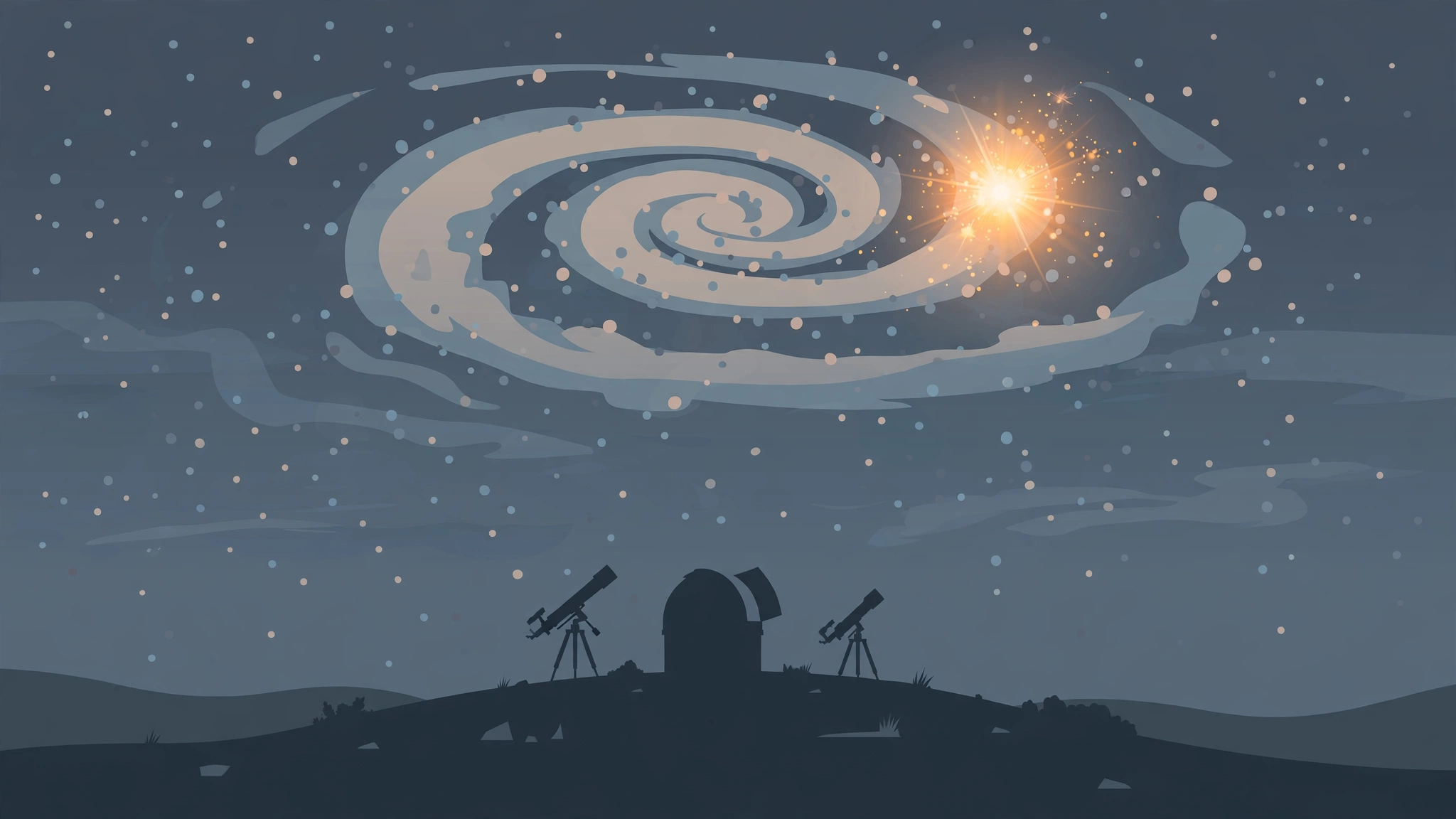
The blast threw out material equal to a tenth to a fifth of the Sun’s mass. Modelling by the team, led by Viraj Karambelkar of Columbia University, suggests the companion plunged into the giant’s core after only seven orbits.
The researchers stopped short of calling it a confirmed merger. Both stars may have survived in a tighter orbit, and they said further observations would settle the question. Either way, the data gives theorists their first real test of common-envelope evolution, the process that shapes close binary star systems.
Source: MIT Kavli Institute