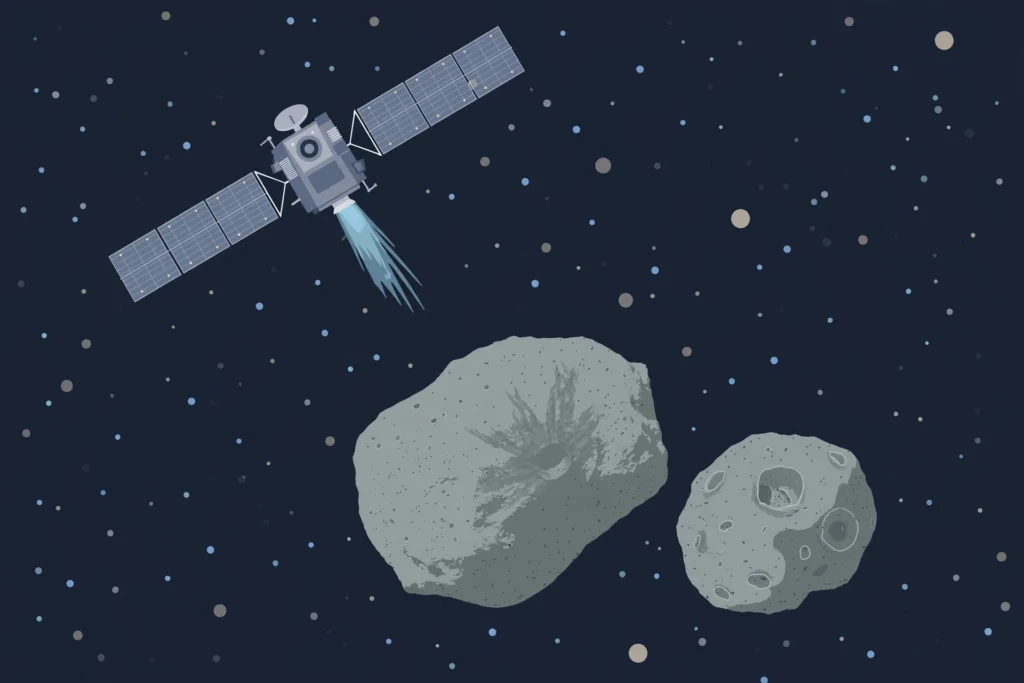
The European Space Agency’s Hera spacecraft is closing in on the asteroid pair where NASA deliberately crashed a probe four years ago, and it is about to start its work as a cosmic crime scene investigator.
Hera is executing a series of braking manoeuvres to match speed with the Didymos binary asteroid system. ESA says a second burn was scheduled for October 22, with three smaller burns later in the month bringing its relative velocity close to zero. The agency says Hera is on track to arrive in November 2026, a month earlier than originally planned.
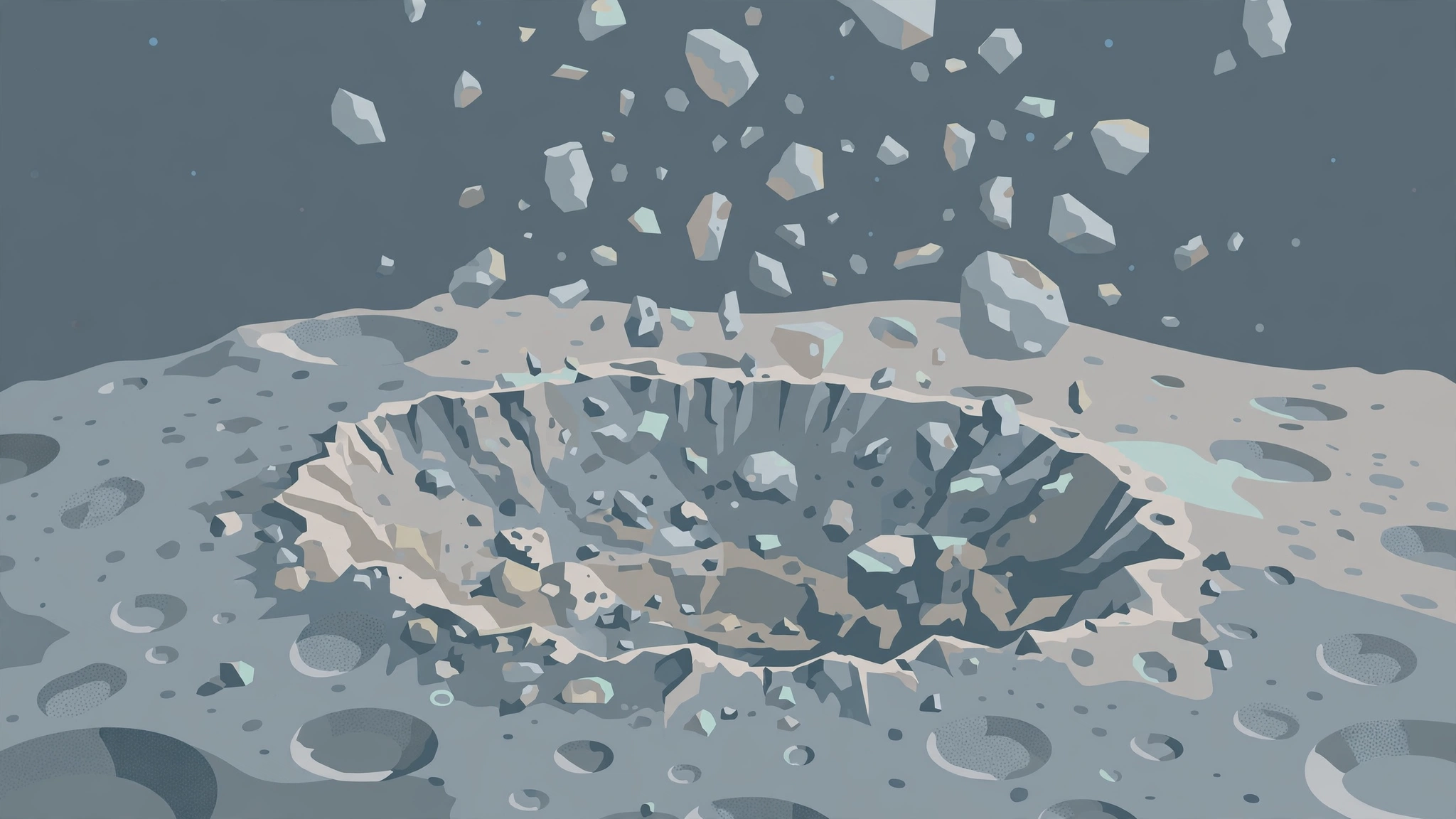
The target is Dimorphos, the 150-metre moonlet of the 780-metre asteroid Didymos. In September 2022, NASA’s DART spacecraft slammed into Dimorphos on purpose, in the first test of whether a kinetic impactor can deflect a hazardous asteroid. The collision shortened the moonlet’s orbit around Didymos, proving the technique works.
But nobody has seen the aftermath up close. Hera carries two CubeSats, Milani and Juventas, plus cameras and sensors to map both bodies. Its radio science experiment will measure the gravity field of the binary system, which gives scientists the mass of Dimorphos and therefore a clean measurement of how much momentum DART actually transferred, according to ESA.
The mission will spend at least six months surveying the system, gathering data meant to turn DART’s one-off hit into a well-understood and potentially repeatable planetary defence technique.
Exactly two years after launch, ESA released Hera’s first glimpse of Didymos: taken from about 236,500 kilometres away, the target is, in ESA’s words, “little more than a single bright point.”
Source: Gizmodo