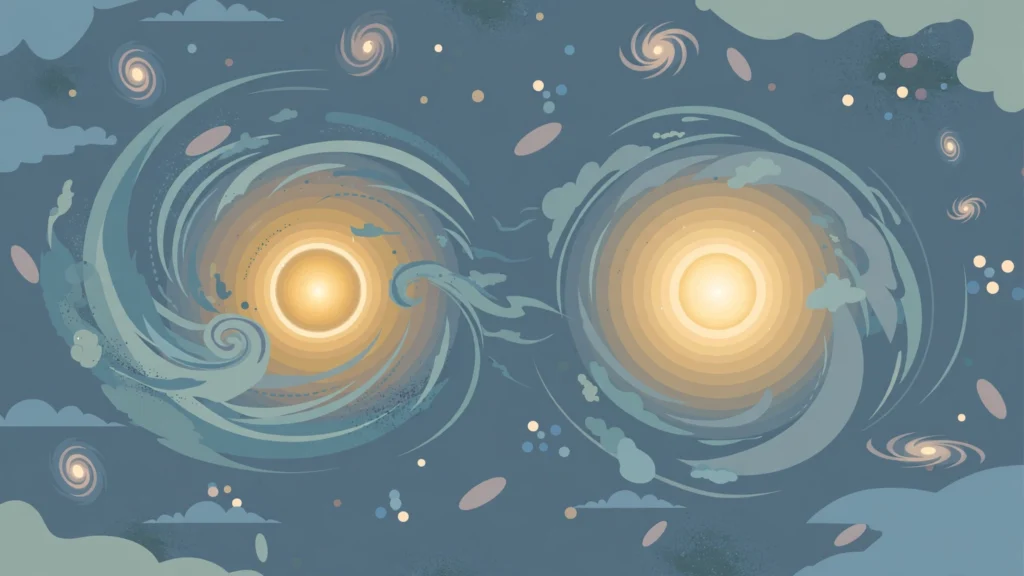
Astronomers have found the oldest pair of black hole-powered quasars ever seen, two brilliant beacons shining side by side just 900 million years after the Big Bang.
The pair, catalogued as J1602+4228AB and nicknamed Nāpōwawāʻenakaulua, sits about 18,100 light-years apart, roughly one-fifth the width of the Milky Way. The black holes at their hearts weigh 1.5 billion and 400 million times the mass of the Sun.
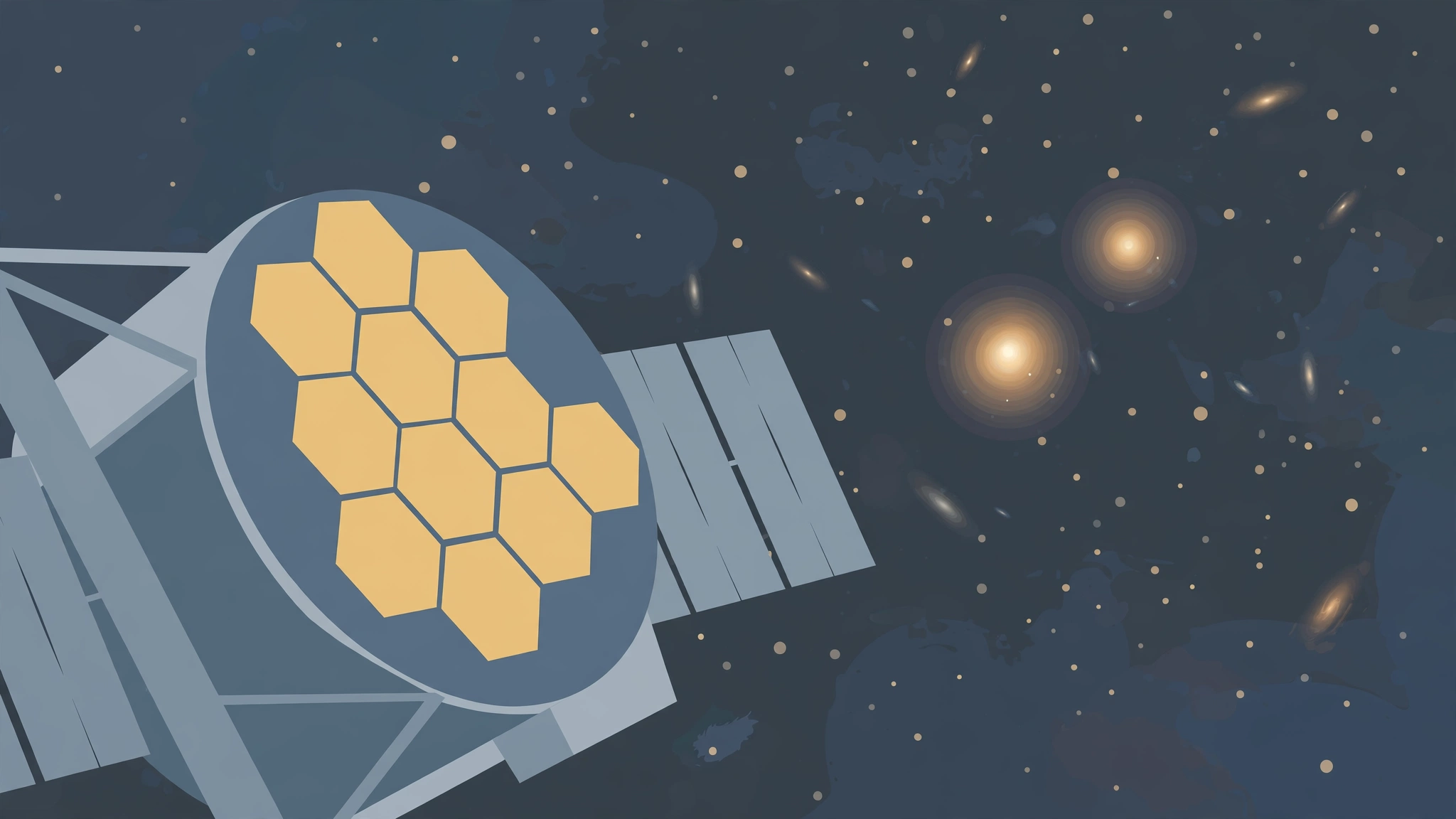
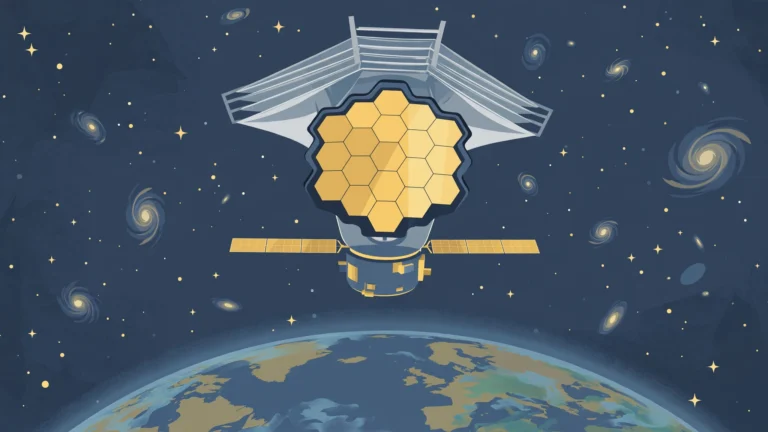
An international team led by Silvia Onorato of NSF NOIRLab spotted the pair in data from the James Webb Space Telescope’s Aether survey, which is taking a census of objects in the early universe. Follow-up observations with the Gemini North telescope in Hawaii confirmed that both objects are actively feeding black holes.
The discovery, published on November 10 in The Astrophysical Journal Letters, puzzles researchers. Current theories cannot explain how even one black hole grew so massive so early, let alone two of them together. It is only the third quasar pair ever found from cosmic dawn, and the most tightly packed.
The team notes one open question. A full lensing model is still needed to rule out the chance that a foreground object is bending the light to create a false double. For now, the researchers favour the pair interpretation.
Source: Sci.News