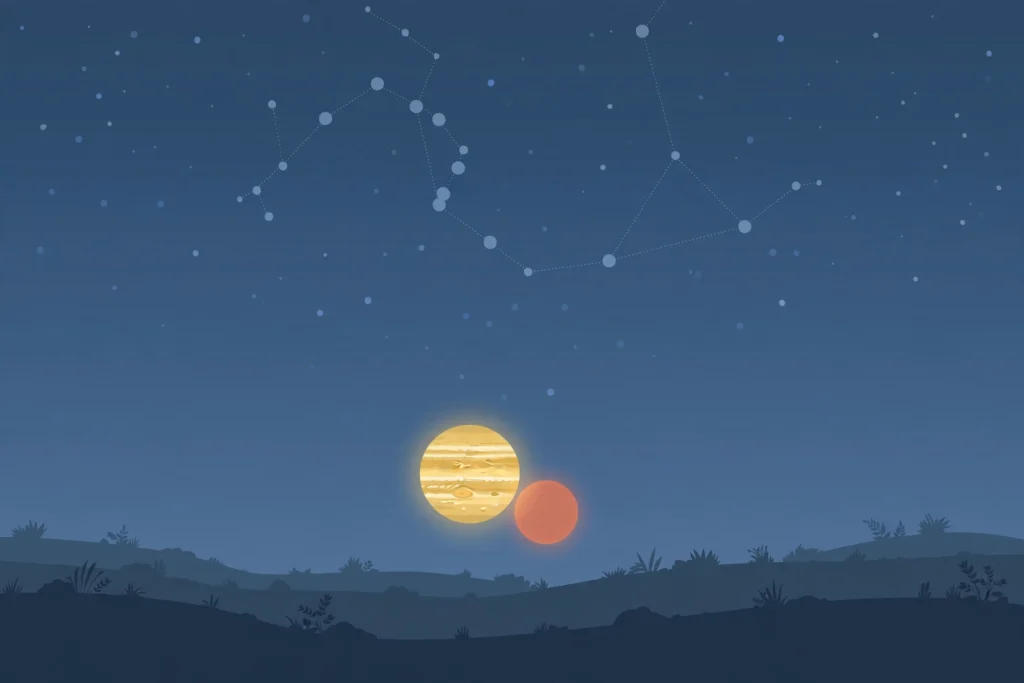
Jupiter and Mars stand closer together in the sky than they have in years, and the best view comes in the hours before dawn on Monday, November 16.
The two planets reach their closest apparent gap of about 1.2 degrees, roughly twice the width of a full moon, according to Space and Telescope. Jupiter sits just below Mars in the constellation Leo, near the bright star Regulus.
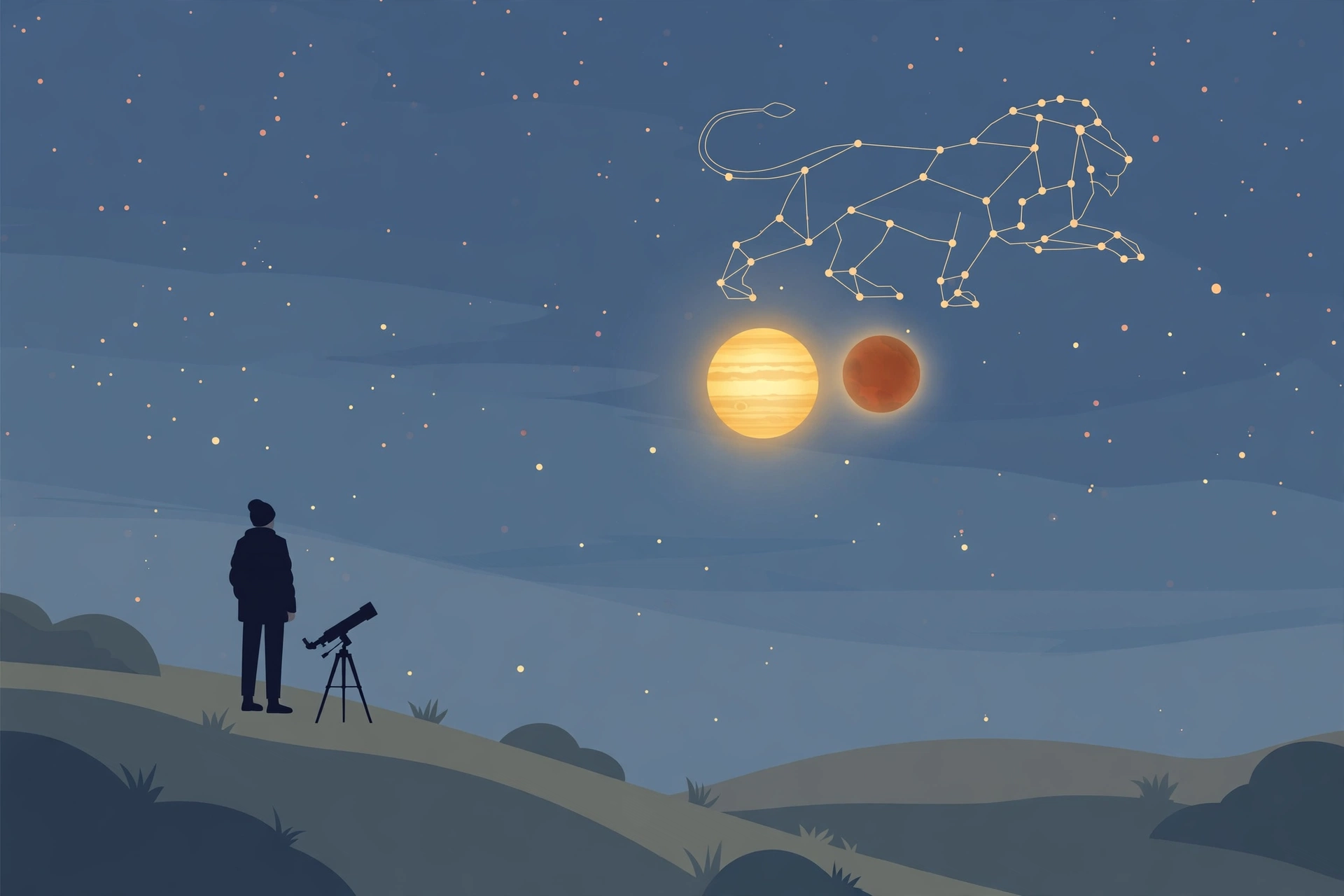
Jupiter does most of the work for skywatchers. It shines at magnitude -2.0 and outshines every star in the sky, while Mars glows a dimmer reddish orange at magnitude +0.7. No telescope is needed. A pair of binoculars frames both planets at once, Space.com reported.
The pair rises in the east around midnight local time across the United States and climbs through the night. They drift apart over the following weeks and will not look this close again until July 2029, according to Space.com.
Early risers get a bonus. The Leonid meteor shower peaks on the night of November 17 into 18, and its meteors appear to radiate from the same part of Leo. The International Meteor Organization puts the peak rate at about 15 meteors an hour under a dark sky.
Source: Space and Telescope