Physicists at CERN have found evidence of a particle decay so rare it happens roughly once in every ten billion cases, closing a search that began in the early 1980s.
The LHCb collaboration announced the result at a seminar at CERN on Tuesday, 3 November 2026. The team became the first to find evidence of the decay using data from a single experiment.
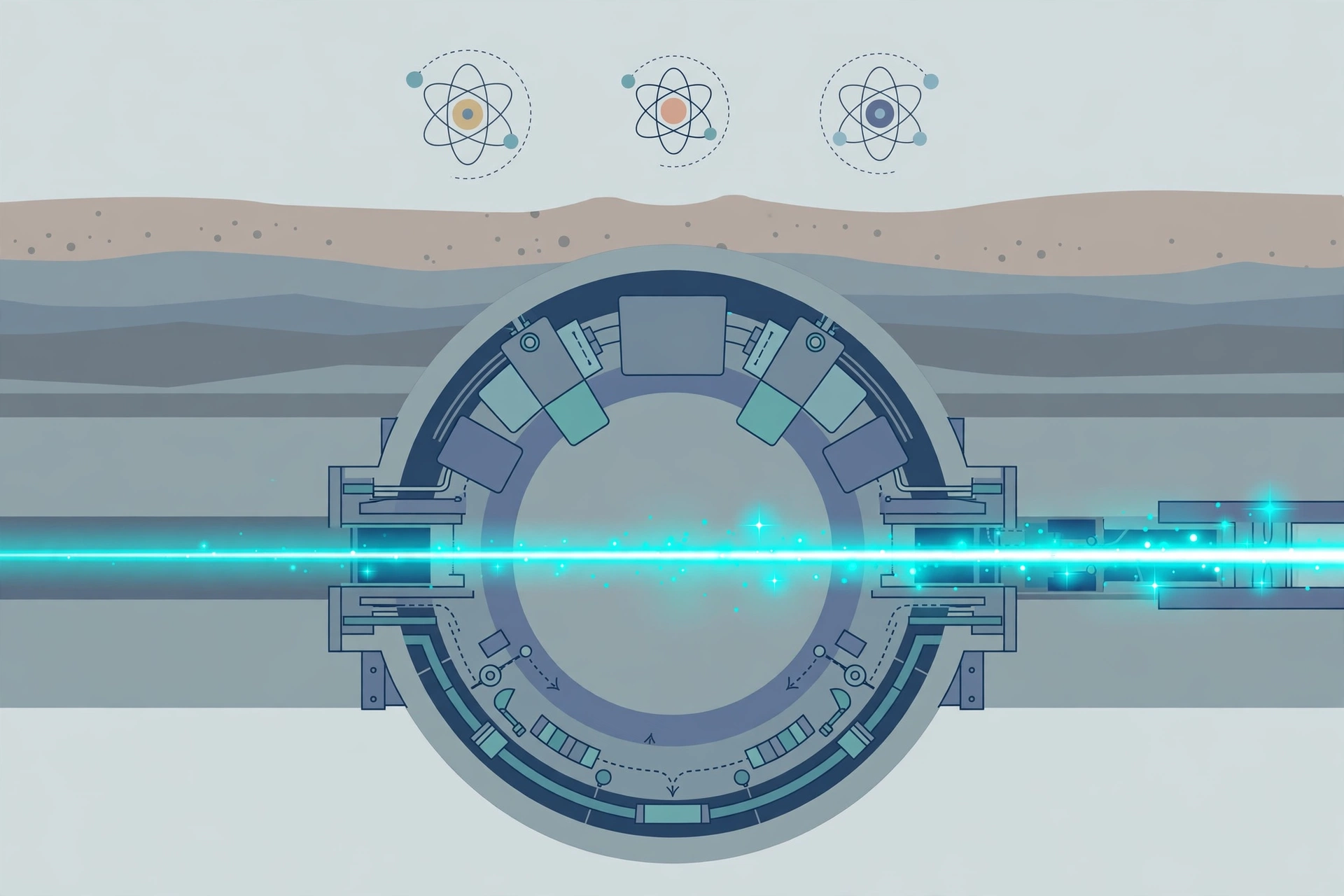
The decay involves a B0 meson, a particle made of a beauty quark and a down antiquark, breaking apart into a pair of muons. Quantum physics describes how other particles influence this process, so measuring the decay precisely could reveal signs of new particles. The rarer a decay, the more sensitive it is to that influence.
The signal reached a statistical significance of 3.2 standard deviations, which means there is about a one-in-1,500 chance it comes from a fluctuation in the background. The result matches the prediction of the Standard Model of particle physics.
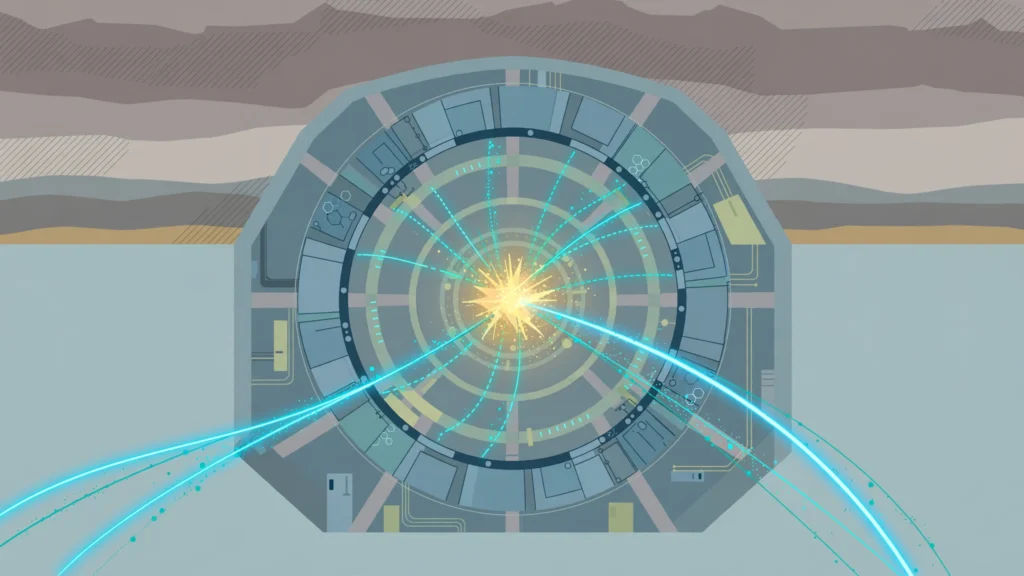
LHCb records hundreds of millions of proton collisions per second, a data flow of 4 terabytes per second. A major upgrade in 2022 let the experiment collect data at five times the collision rate of its predecessor, and a future upgrade is set to raise the data collection rate by a factor of ten over the next decade.
Researchers on the team said the result opens new ways to probe physics beyond the direct reach of the LHC, since the upgraded detector should observe many more of these decays and sharpen the search for undiscovered particles.
Source: INFN