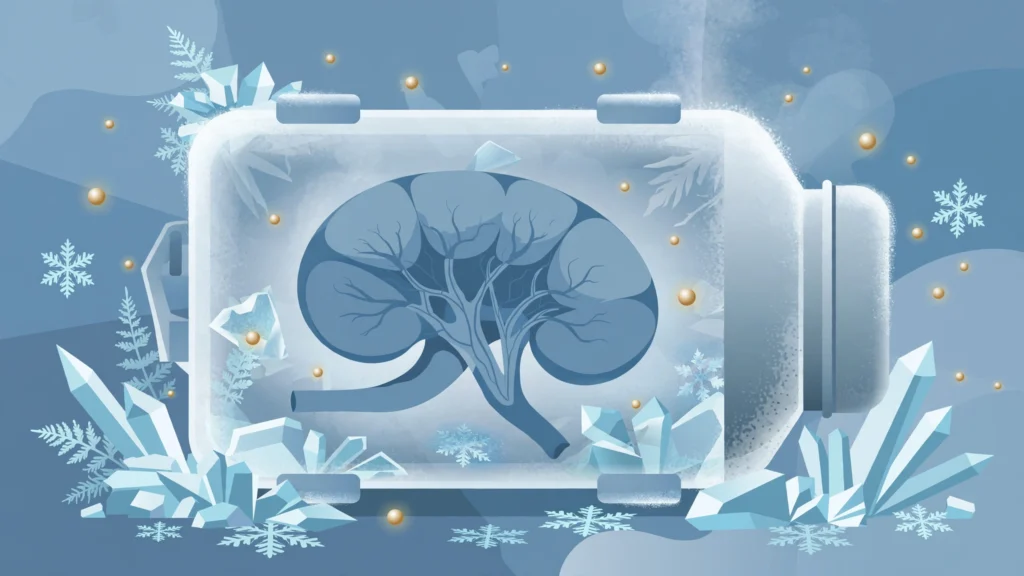
Scientists at the University of Minnesota have rewarmed pig kidneys that spent more than a year in a freezer at minus 150 degrees Celsius, and watched them work again.
The team used a process called vitrification, which cools tissue into a glass-like state instead of letting ice crystals form. The kidneys were loaded with cryoprotectants and iron oxide nanoparticles, cooled with nitrogen vapor, then rewarmed with an electromagnetic field that heats the particles from the inside out for even thawing.
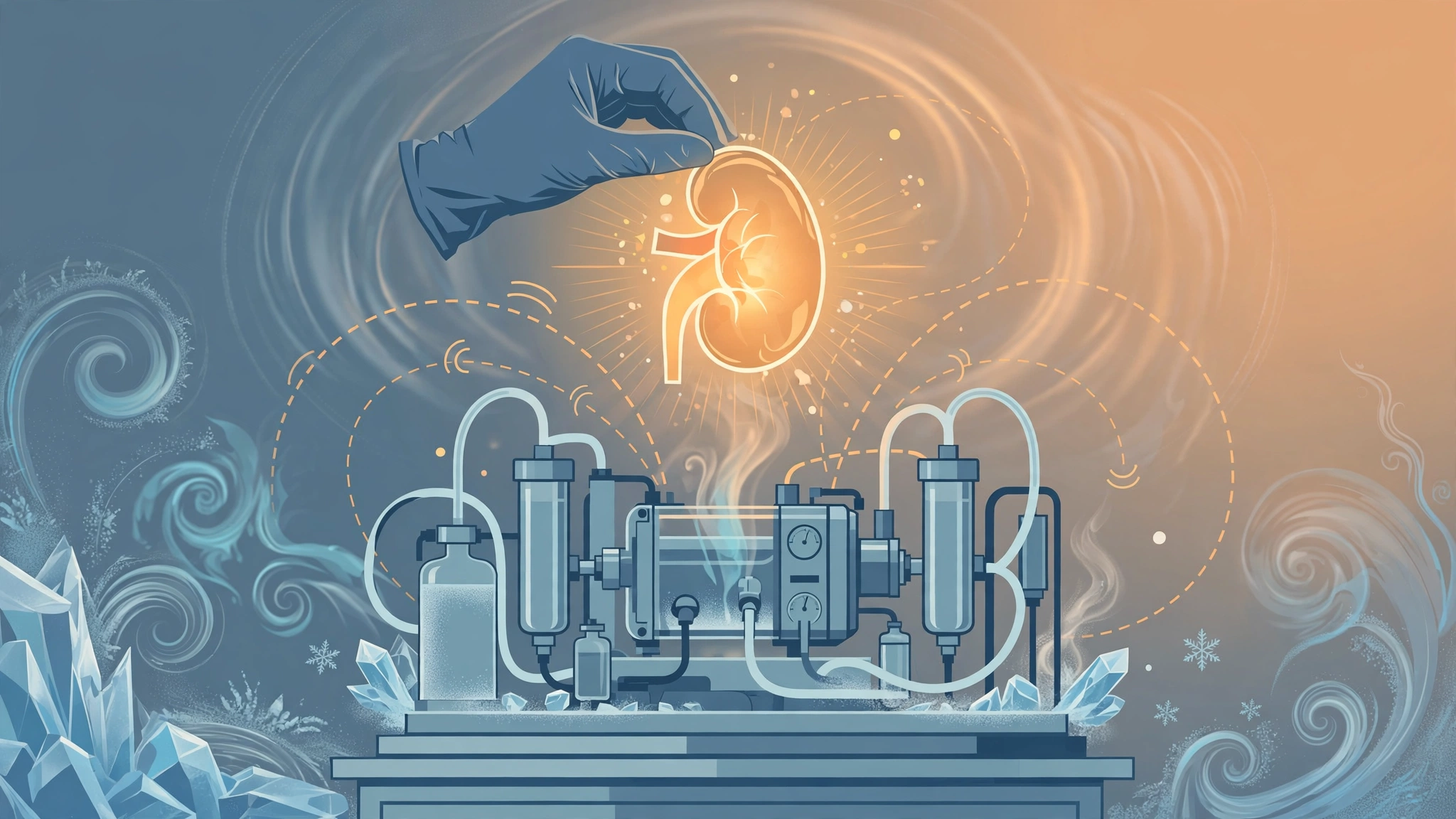
Once rewarmed, the kidneys went onto perfusion machines for testing, then were transplanted into pigs. They regained their color and produced urine within a minute, according to transplant surgeon Erik Finger, who co-led the work. He told MIT Technology Review the final result convinced him the field had reached a milestone.
The research was posted on the preprint server bioRxiv and has not yet been peer reviewed. The kidneys were not perfect, and the team has yet to show the organs can sustain life over the long term. But cryobiologists outside the study hailed the result as a step toward banking human organs for extended periods. Today, donated human organs last only about 24 to 36 hours before they must reach a recipient.
Source: MIT Technology Review