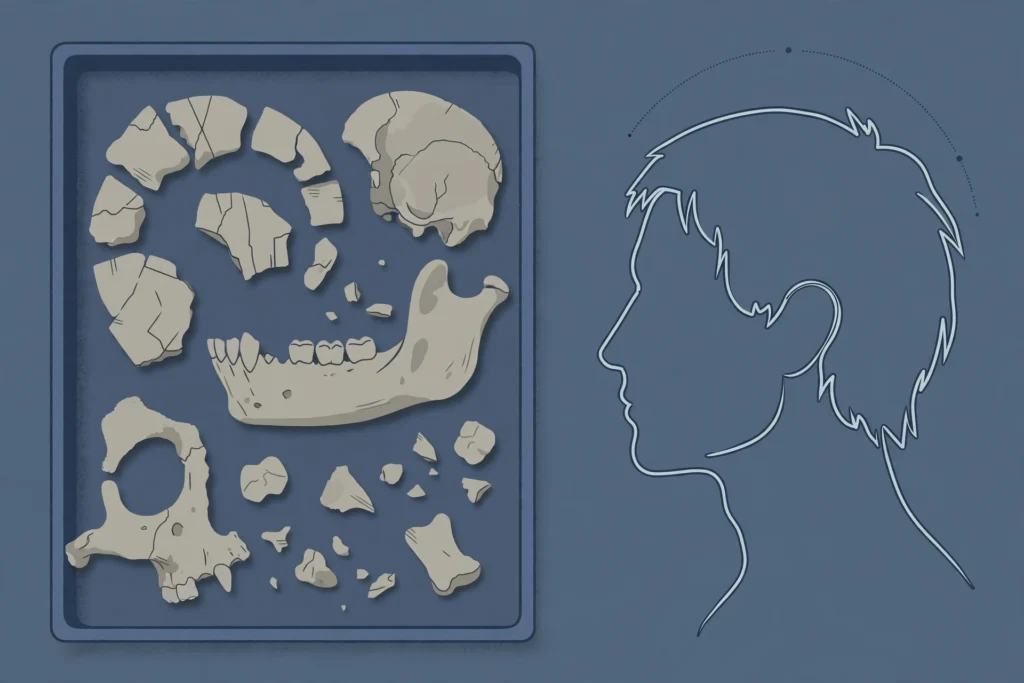
Scientists have revealed what the mysterious Denisovans looked like, after analysing 20 fossilised skull fragments, teeth and jaws found in northern China. The findings were published in the journal Nature on October 21.
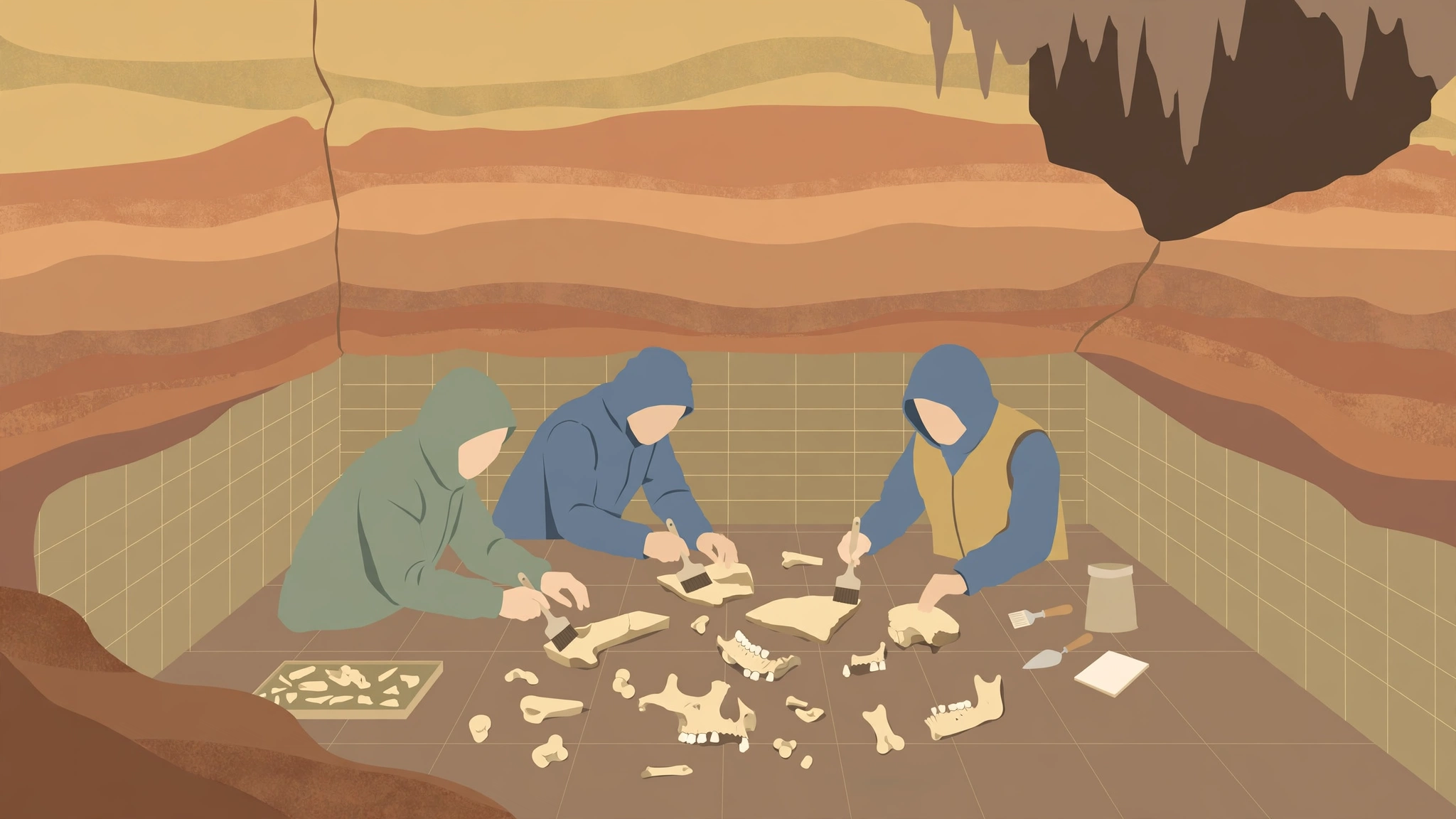
The remains, excavated in the 1970s at Xujiayao, are at least 130,000 years old. Researchers identified them as Denisovan by analysing ancient proteins, after decades of uncertainty about which human group they belonged to.
The team found a low, sloping forehead, a massive brow ridge that curves backwards, rectangle-like eye sockets, flat cheeks and a moderately elevated nose bridge. Together, the researchers say, these features mark the Denisovan face.
“We are finally starting to put a face to the Denisovan,” said Sally Wasef, a palaeogeneticist at the Queensland University of Technology in Brisbane, Australia.
Denisovans were first described in 2010, after researchers sequenced DNA from a finger bone found in a cave in Siberia. The Xujiayao fossils had previously been classified as a separate species, Homo juluensis. Qiaomei Fu, a geneticist at the Institute of Vertebrate Paleontology and Paleoanthropology in Beijing, led the protein analysis that reclassified them.
Source: Nature