
The full Beaver Moon turns full on Tuesday, November 24, and it brings company. The moon slides past the Pleiades star cluster, the Seven Sisters, in the hours before dawn.
EarthSky reports the moon reaches its full phase at 9:53 a.m. ET. Skywatchers who rise early can watch it drift in front of individual Pleiades stars between 3:21 a.m. and 8:44 a.m. ET, according to Star Walk predictions cited by Tech Times. The moon passes closest to Alcyone, the cluster’s brightest star, at about 7:06 a.m. ET.
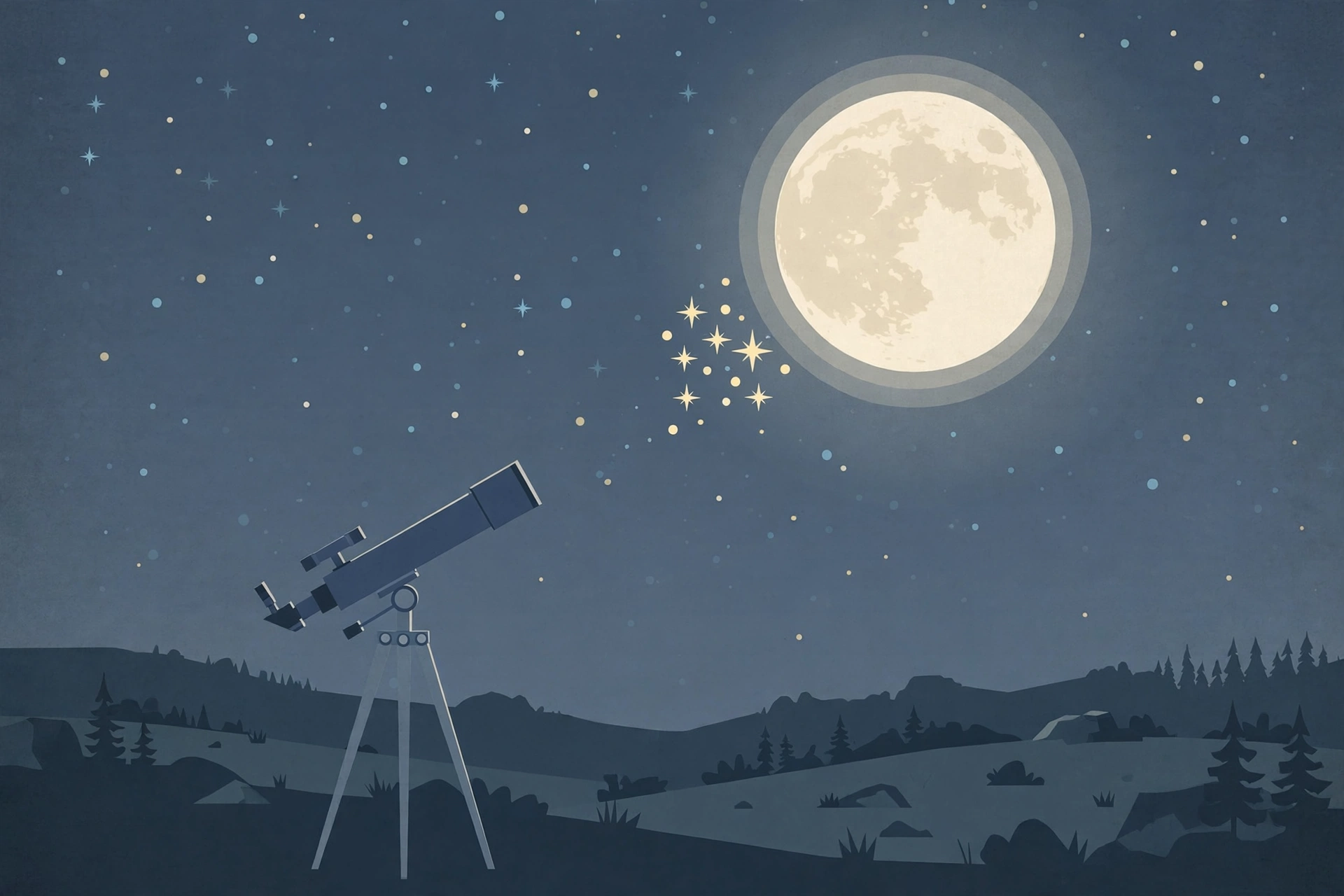
People who prefer sleep can still catch the show. The moon will look more than 99 percent lit on the evenings of November 23 and 24, shining near Aldebaran and the Pleiades. Binoculars help, since bright moonlight washes out the cluster’s fainter stars.
NASA counts this as the first of three supermoons in a row, with more to follow in December and January. The moon reaches perigee, its closest point to Earth, on November 25 at about 223,400 miles away. That makes it roughly 6.5 percent wider than an average full moon.
Source: EarthSky