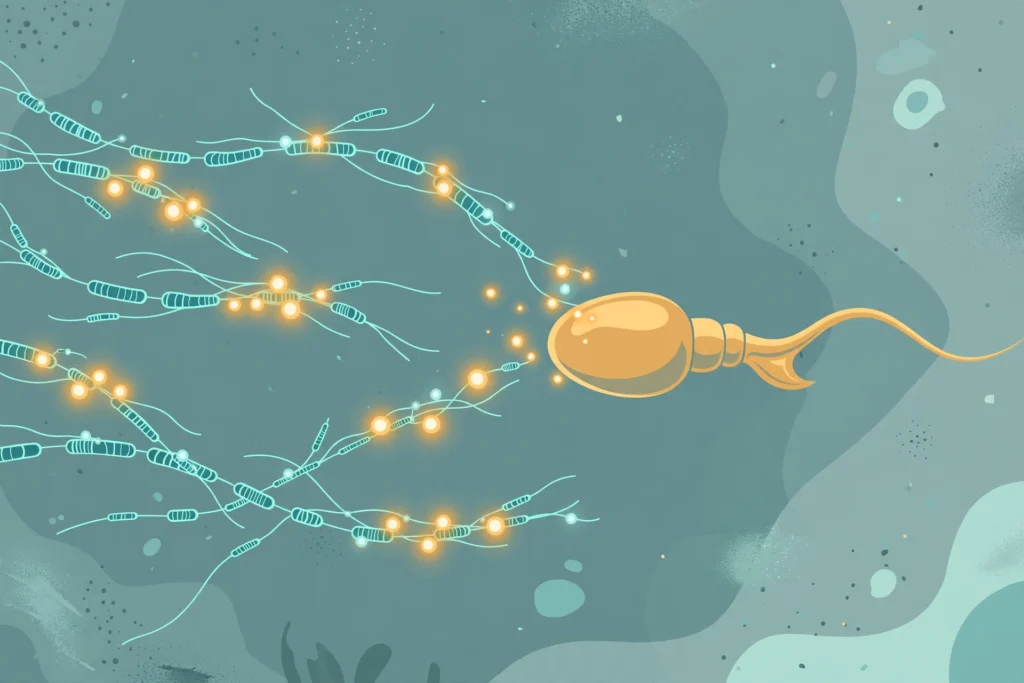
Protein fibres best known for their link to Alzheimer’s disease can carry genetic material into sperm and on into an embryo, scientists at Columbia University have found. The team showed the fibres, called amyloids, bind RNA in seminal fluid and ferry it inside sperm cells.
The work, published in the journal Molecular Cell, used cryo-electron tomography to build three-dimensional images of frozen sperm. Fibres labelled with flecks of gold showed up inside the cells, having travelled along the tail, through the midpiece and into the head.
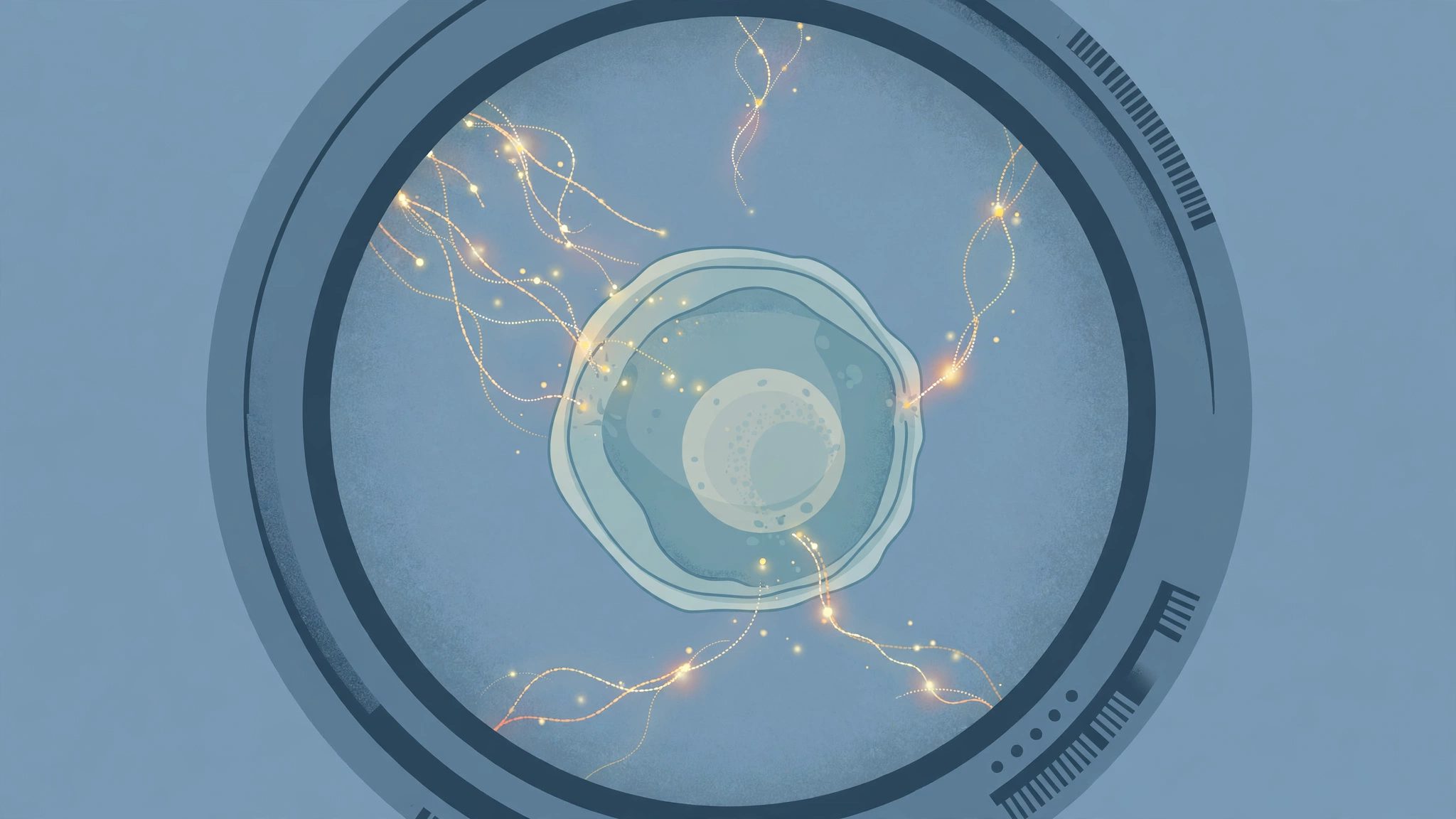
In mouse experiments, sperm exposed to fibres loaded with RNA passed that cargo to embryos after fertilisation. Embryos formed this way produced at least ten times as much of a test protein as embryos made with the same RNA but no fibres.
The researchers stressed the limits of the work. The delivery tests used laboratory-made fibres and added RNA in mice. The team has not yet shown whether naturally occurring fibres, carrying their usual RNA cargo, change anything in an embryo, and no human embryos were tested.
The finding could one day feed into gene-editing tools such as CRISPR, the researchers said, by offering a natural way to deliver RNA into cells. First they need to learn what the RNA carried this way actually does once it arrives. Amyloids are most often thought of as a hallmark of Alzheimer’s and Parkinson’s disease, but they also play useful roles elsewhere in the body, the team said.
Source: ScienceAlert