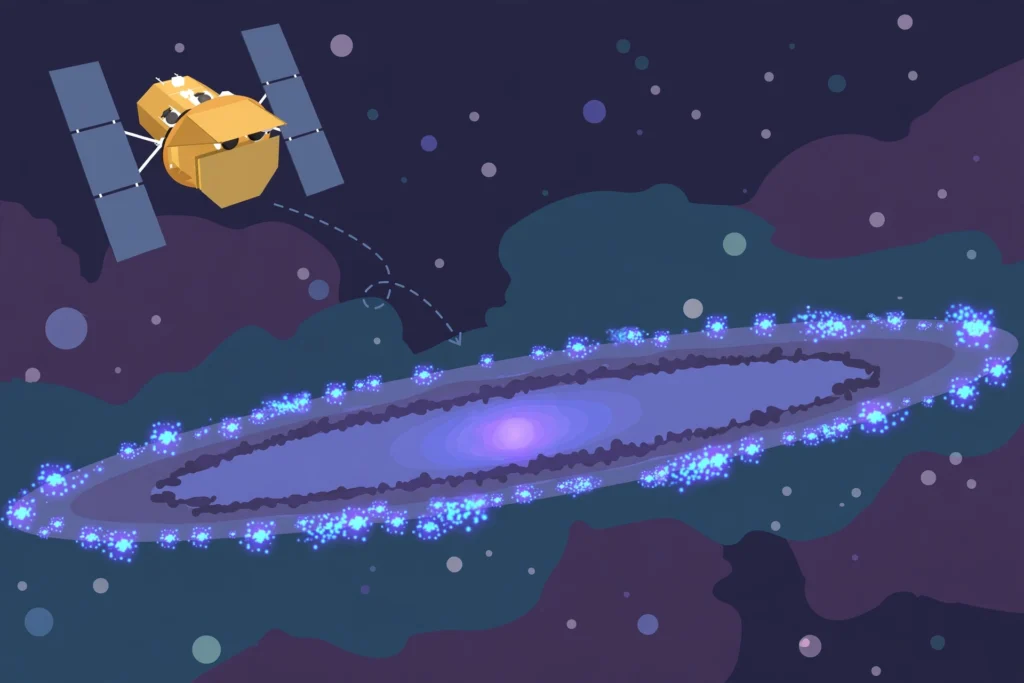
NASA’s Swift Observatory burned up in Earth’s atmosphere this week, ending a 22-year mission. One of its finest legacies is an ultraviolet portrait of the Andromeda Galaxy that still ranks among the best ever taken.
The observatory launched in 2004 on a two-year mission to chase gamma-ray bursts. It kept working for nearly 22 years, logging more than 2,000 gamma-ray bursts and over 1,400 supernova explosions before NASA shut down its science operations on 20 October, when its orbit had sunk too low for its telescopes to hold steady.
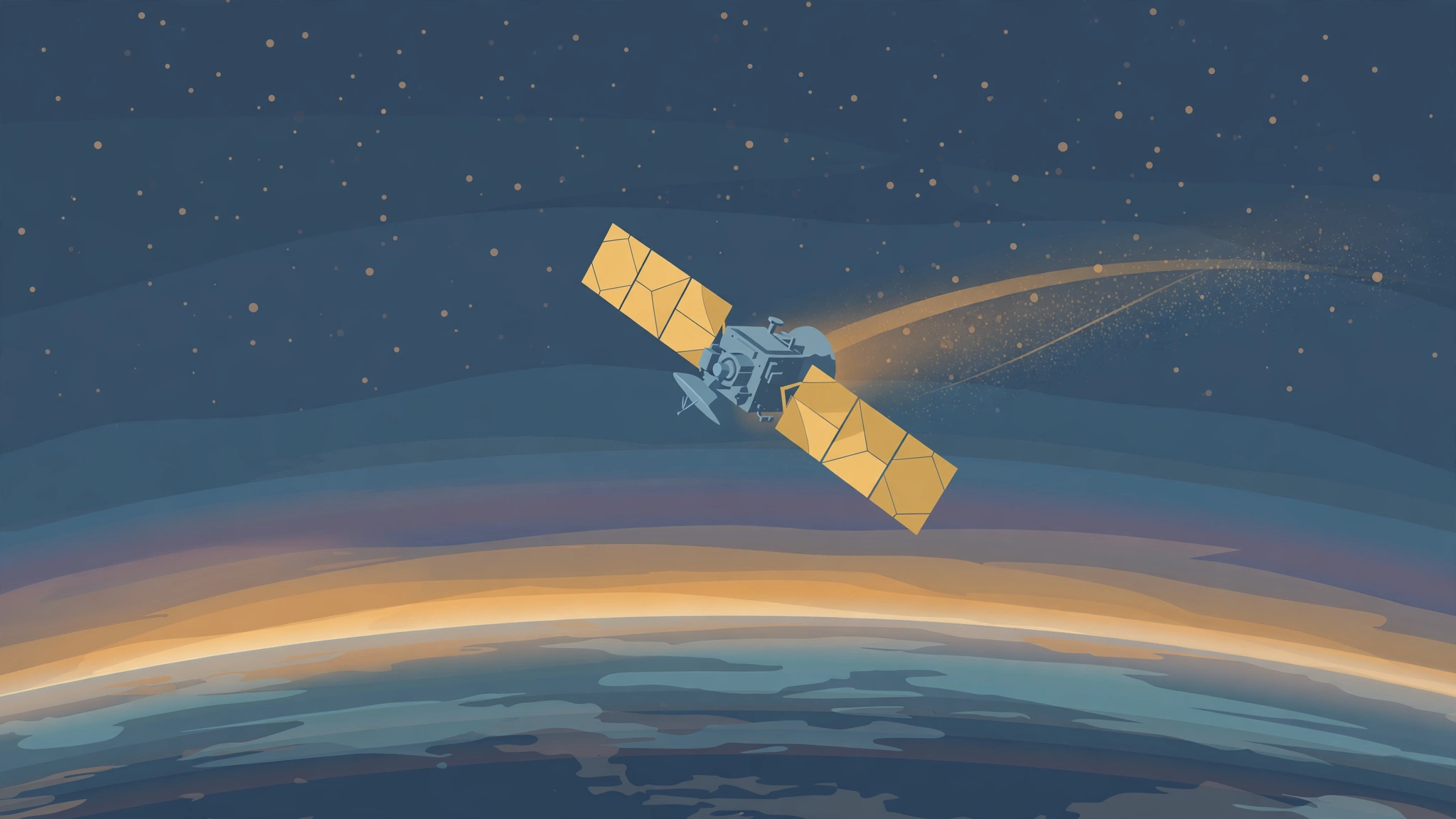
Swift re-entered the atmosphere on 4 November above North Sumatra in Indonesia and mostly burned up on the way down, NASA said. A few durable fragments may have reached the ground, but no damage or injuries were reported.
A rescue attempt failed over the summer. A commercial spacecraft built by Katalyst Space Technologies launched on 3 July to push Swift into a safer orbit, but NASA called the mission off in August after thruster problems.
Swift’s portrait of Andromeda, known as M31, came from 330 separate images taken between 25 May and 26 July 2008. Its ultraviolet telescope recorded the galaxy in three ultraviolet wavelengths, with 24 hours of total exposure. The mosaic picked out about 20,000 ultraviolet sources, mostly hot young stars and dense star clusters.
Andromeda sits 2.5 million light-years away and spans more than 220,000 light-years. It is the largest and closest spiral galaxy to our own. The mosaic was assembled by Erin Grand, then an undergraduate at the University of Maryland working with Swift scientist Stefan Immler at NASA’s Goddard Space Flight Center.
Swift also studied black holes shredding stars, monitored active galaxies and surveyed the whole sky in X-rays. Its archive holds millions of images that astronomers will keep mining for decades.
Source: Live Science