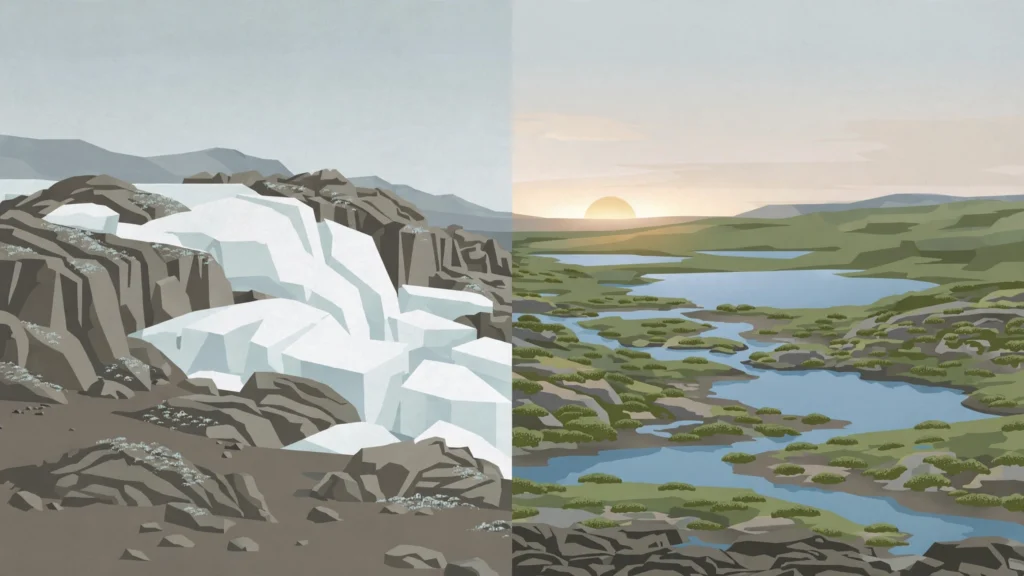
Two thousand years ago, the Arctic began sliding toward a new ice age. Then humans started burning fossil fuels, and the ice started melting instead.
That is the finding of a new study published in the journal Science. Researchers at Columbia University’s Lamont-Doherty Earth Observatory tracked the Barnes Ice Cap on Baffin Island, the last surviving remnant of the Laurentide Ice Sheet that once buried much of Canada and the northern United States under ice more than two miles thick.
Lead researcher Nicolás Young and his team pieced together the ice cap’s history from dead mosses buried in the tundra. After the last glaciation retreated, mosses colonized the exposed land, only to be killed and preserved when the ice crept back over them about 2,000 years ago. The team reads that re-expansion as the start of another glacial period, a new ice age arriving on schedule.
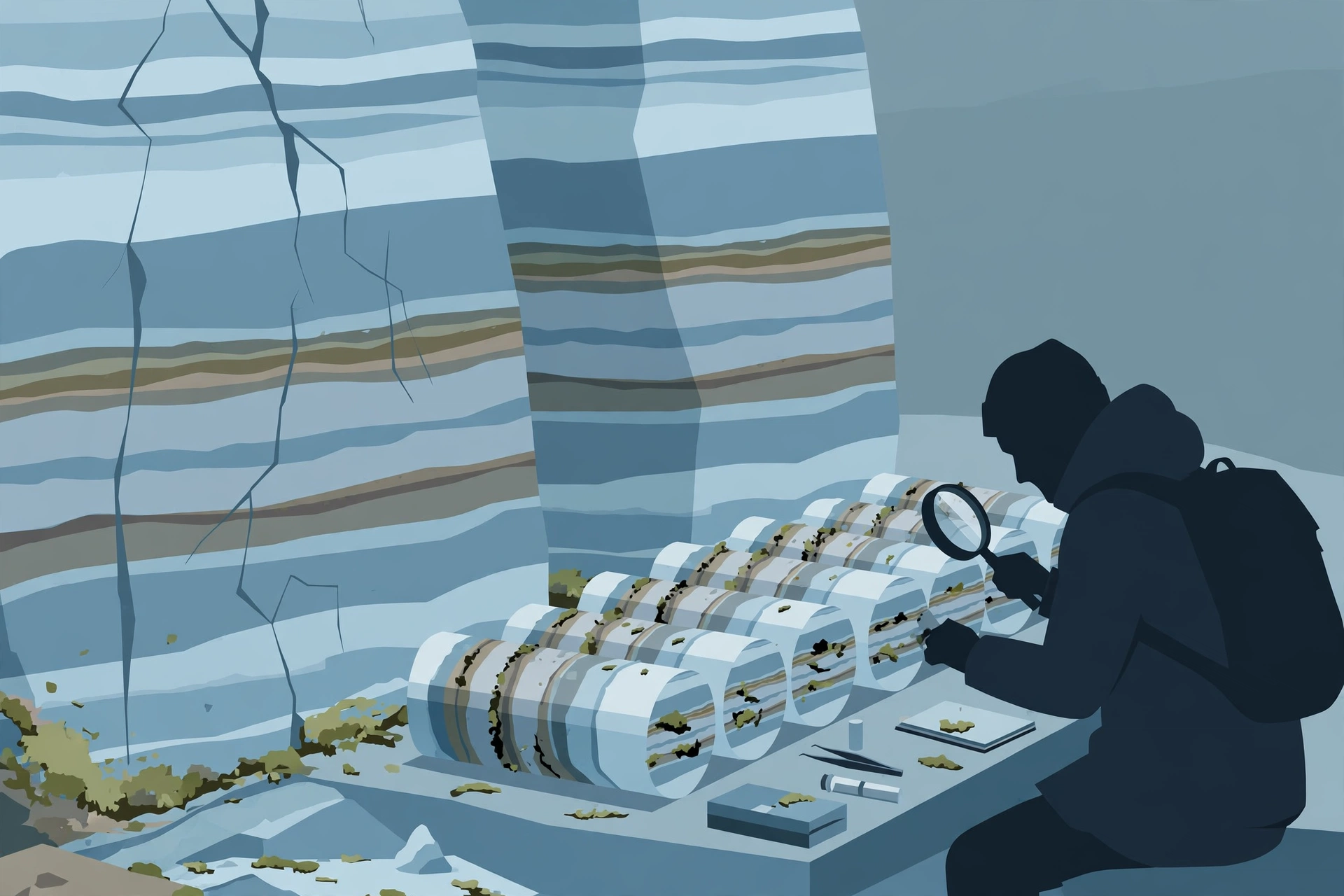
Starting in the 1960s, the ice reversed course. The Barnes Ice Cap has shrunk back from its margins by hundreds of meters since then, retreating an average of 4 meters per year since the 1980s. The researchers attribute the turnaround to rising summer temperatures driven by industrial greenhouse gas emissions.
“It was just getting started, everything was normal, the next glaciation was about to happen, and yet it stopped,” Young said. He called it a powerful example of how humanity has jolted the climate system.
Source: Phys.org