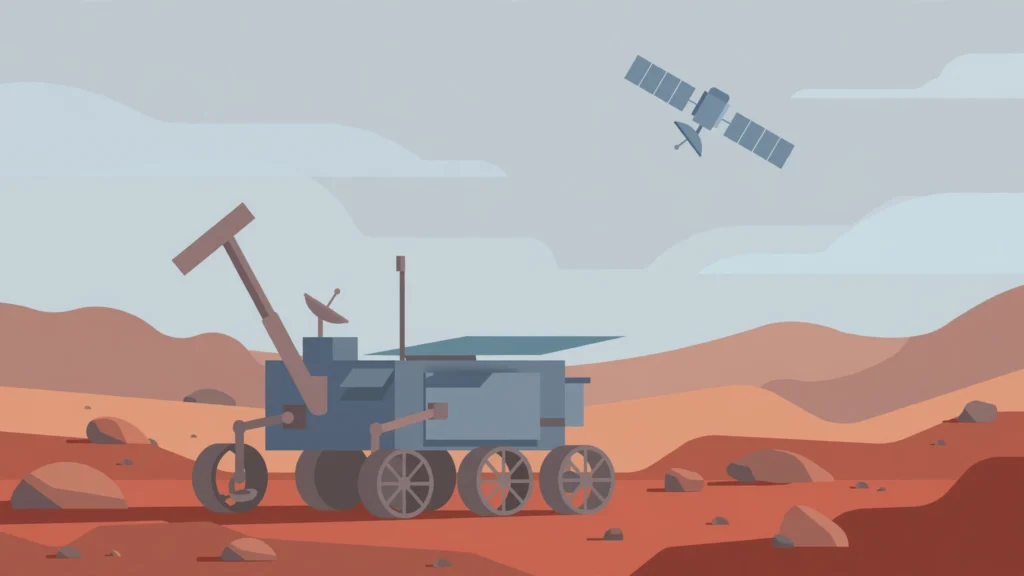
Two of NASA’s four working Mars missions have stopped doing science at the same time, after separate faults hit the Perseverance rover and the Mars Odyssey orbiter.
Perseverance ran into trouble on October 30, when its main ultra-high-frequency radio stopped sending its usual status signals. The rover switched to its backup radio, then found that one was transmitting at about half its expected power. Engineers have set both radios aside while they work out what went wrong.
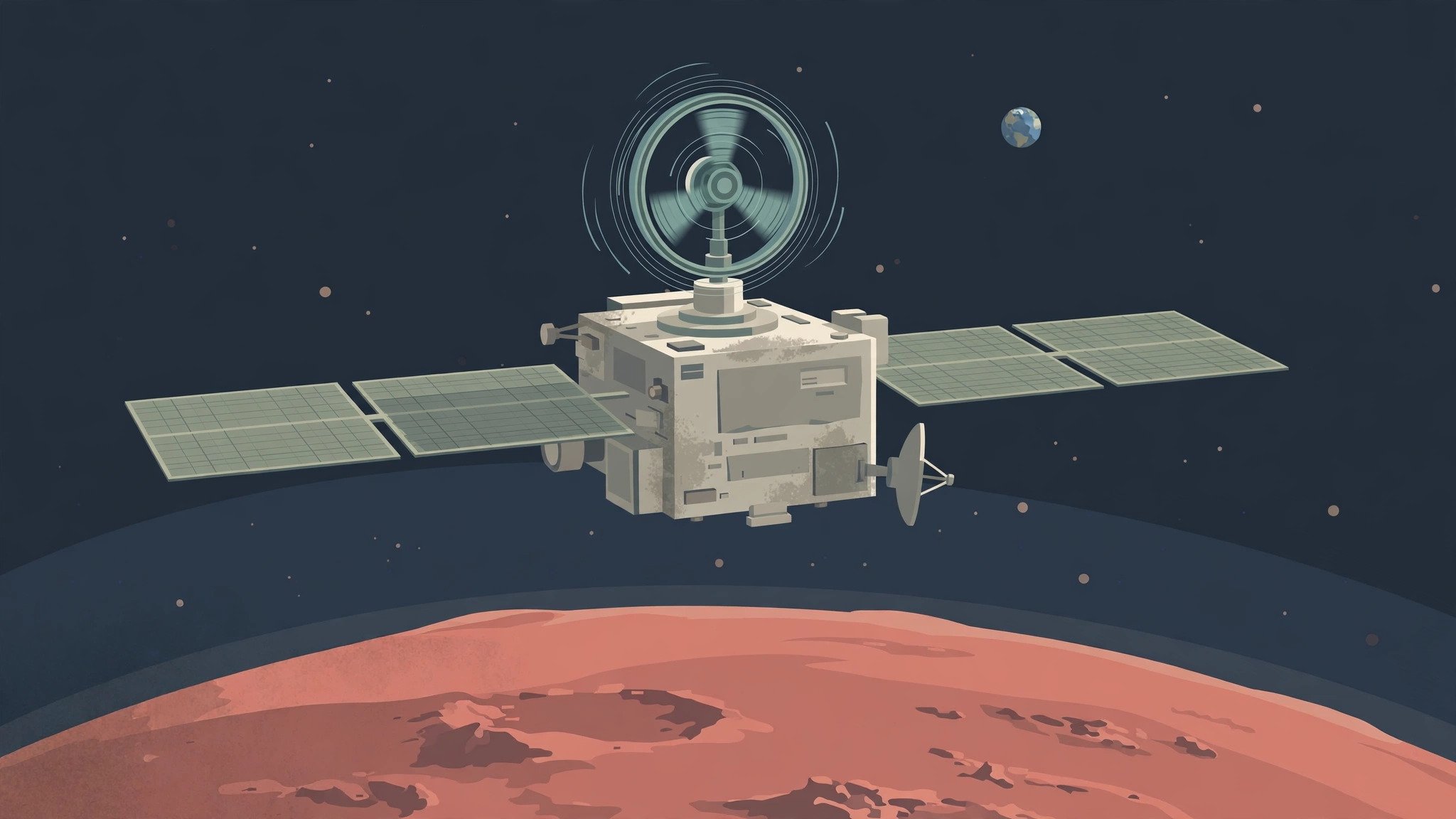
The rover still talks to Earth, but only through a direct X-band link to NASA’s Deep Space Network. That connection carries far less data than the usual relay through orbiters, so the team has paused science work and new images while it runs diagnostics.
Odyssey has a different problem. One of its reaction wheels, the spinning devices that steer the spacecraft, stopped turning in early November. The orbiter slipped into safe mode between November 4 and 6. It needs three working wheels to hold its position; one failed back in 2013, so only two remain.
Thrusters can do the steering instead, but they burn hydrazine fuel. NASA estimates the remaining fuel would last one to two months if thrusters take over the job entirely. A test showed the faulty wheel moving again, though engineers still need to confirm it can work reliably.
Both teams aim to get their spacecraft back to science by the end of November. Curiosity and the Mars Reconnaissance Orbiter keep working normally.
Source: iTech Post