Physicists working at CERN have found the first evidence of a particle decay so rare it happens only about once in every 10 billion beauty particles. The result, announced by the University of Manchester on 3 November, brings researchers closer to probing the “zeptoverse”, a realm at distances of a billionth of a trillionth of a metre where unknown particles and forces may hide.
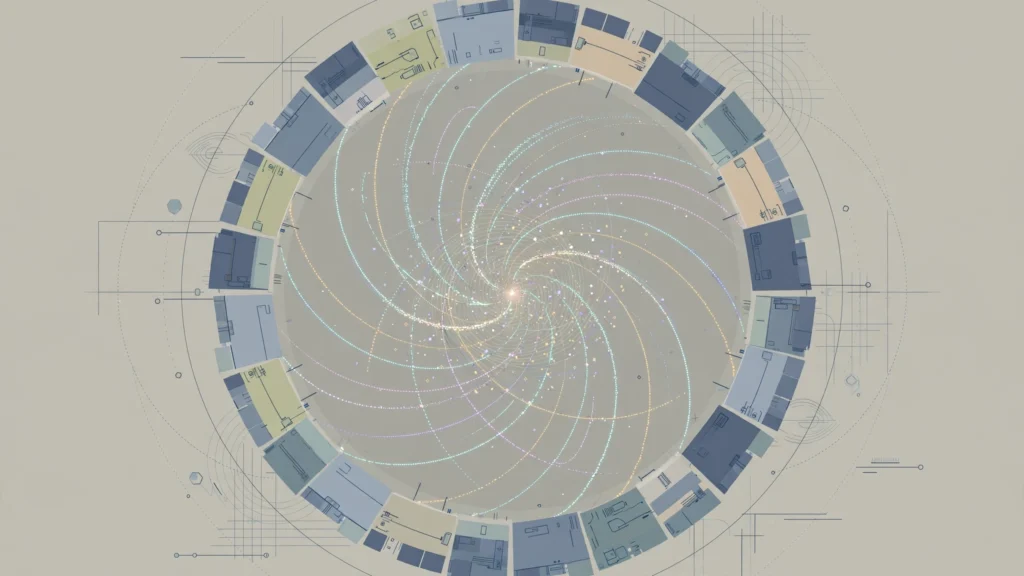
The decay, known as Bd to mu mu, sees a particle containing a beauty quark break down into two muons, heavier relatives of electrons. Scientists have hunted for it for more than 40 years, and no single experiment had found solid evidence for it until now.

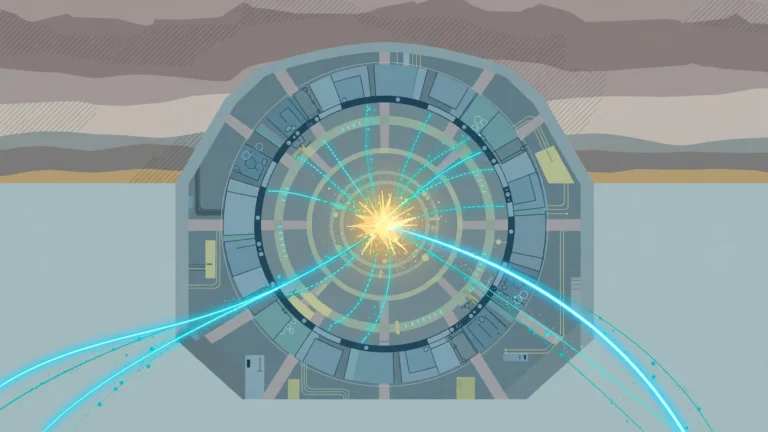
The measurement came from the upgraded LHCb experiment at CERN’s Large Hadron Collider, which can now collect data at up to five times its previous rate. A UK-built silicon pixel detector called the Vertex Locator sits just five millimetres from the LHC beams and tracks particle paths with extreme precision.
The result reached a statistical significance of 3.2 sigma. That counts as evidence in particle physics, but it falls short of the five sigma threshold required to claim a discovery, so more data will be needed. Professor Chris Parkes of the University of Manchester, who led the LHCb collaboration through the upgrade, said the team hopes measurements like this will open up the zeptoverse, where new particles and forces of nature could be hiding.
Source: University of Manchester