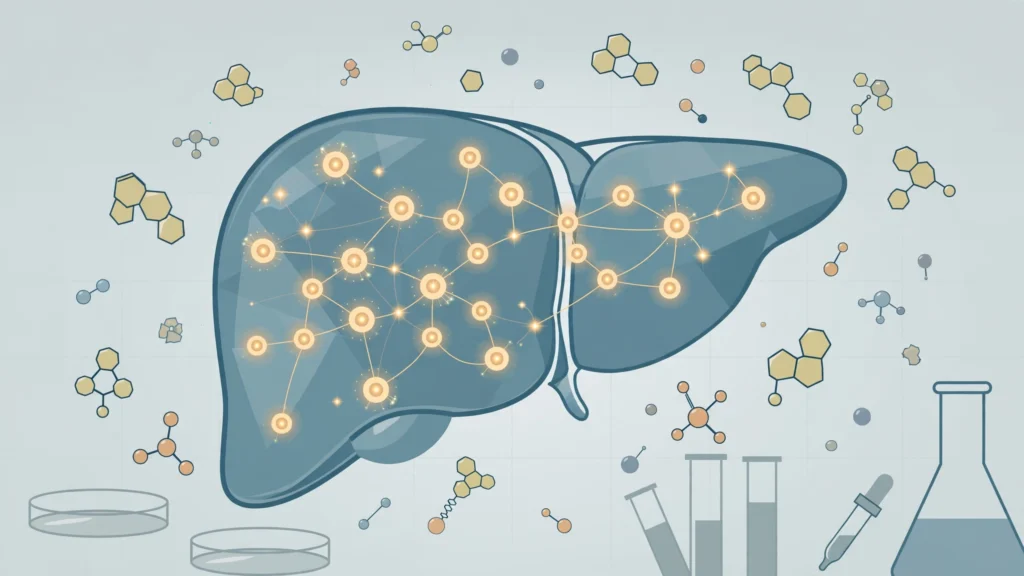
Researchers at the University of California San Diego School of Medicine have identified a previously unknown pathway that weakens the liver’s ability to clear harmful LDL cholesterol from the blood. The study, published in Nature, also points to an experimental drug that has already passed early safety testing in humans.
The pathway starts with dietary cholesterol. In experiments in mice and human cells, high cholesterol intake activated a protein called Ral. That activation set off a chain that reduced the number of LDL receptors on liver cells, leaving fewer receptors to pull cholesterol out of the bloodstream.
The team traced the receptor loss to an enzyme called cathepsin A, or CTSA. When researchers blocked CTSA with a small molecule inhibitor, LDL receptors stabilised and circulating LDL cholesterol fell sharply in mice.
Senior author Alan Saltiel said the pathway is separate from the mechanisms targeted by existing drugs, which gives researchers a new opening. Statins and PCSK9 inhibitors work through different routes, so a CTSA treatment could help patients who do not respond well enough to current medicines.
The drug angle shortens the usual timeline. A CTSA inhibitor was originally developed as a heart failure treatment and passed a Phase 1 safety trial in humans before the programme was shelved for strategic reasons, the researchers said. That safety record could allow the compound to move into a Phase 2 trial for high cholesterol, although its cholesterol-lowering effect has yet to be shown in people.
Source: SciTechDaily