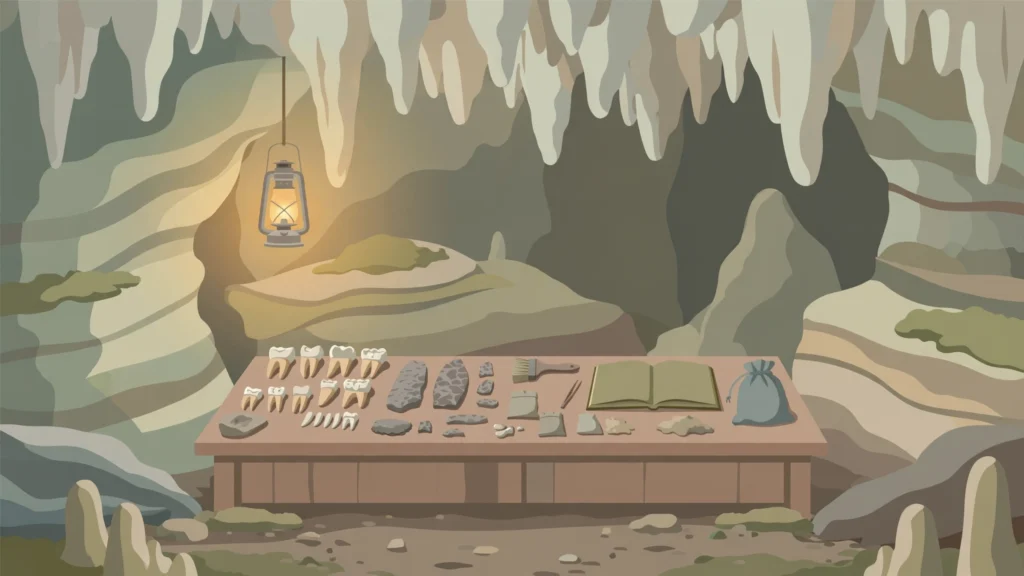
Four ancient teeth from two caves in southern China have given researchers their first evidence of Denisovans in the subtropical south, and a second set of teeth that fits no known human group. The study was published in Nature on November 25, 2026.
The teeth came from Chuanshandong cave in Long’an County and Longchuandong cave in Luzhai County, in Guangxi. Researchers from the Chinese Academy of Sciences recovered them in 2021 during surveys that began in 2015. The Longchuandong teeth date to 104,500 and 42,600 years ago. The Chuanshandong teeth are at least 100,800 years old.
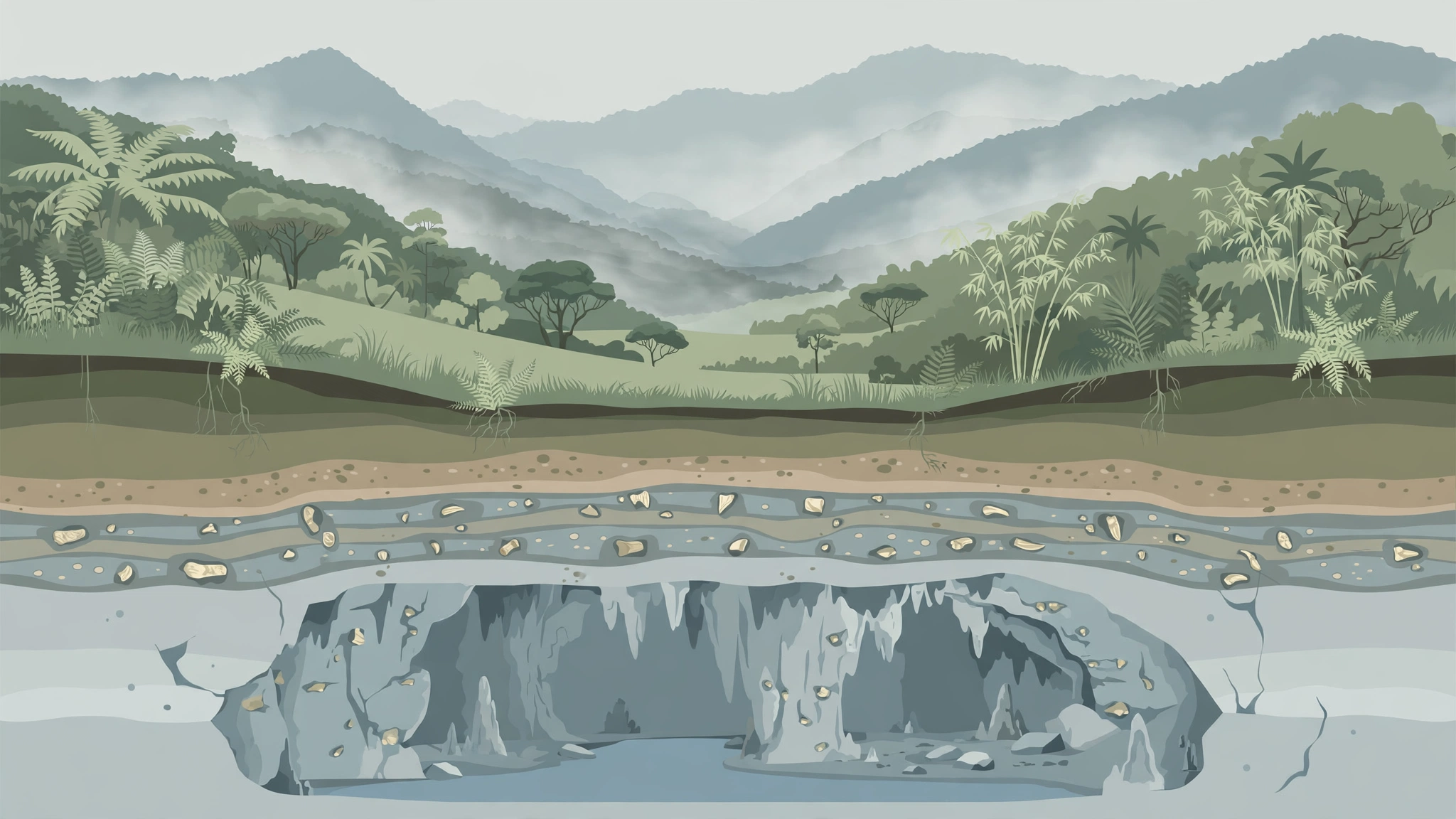
Warm, humid conditions in southern China destroy ancient DNA, so the team turned to paleoproteomics, the study of proteins preserved in tooth enamel. They recovered enamel proteins from three of the four teeth. All three belonged to males.
The Longchuandong teeth matched Denisovans. A molar closely resembles a fossil from Denisova Cave in Siberia, and the enamel proteins carry a variant found in other Denisovan remains. It is the first evidence of Denisovans in the Lingnan region, and it extends their known range from Siberia and Tibet to the tropical south.
The Chuanshandong teeth tell a different story. Their enamel carries variants seen in Homo erectus and Homo antecessor, but not in Denisovans, Neanderthals or modern humans. The team describes the owner as an unresolved archaic Homo, a lineage that may have survived in southern China as a refuge.
The authors call their family tree results preliminary. Only about 15 percent of each protein sequence came back, and three teeth is thin evidence. More fossils will be needed to pin down who the second lineage was.
Source: Archaeology News Online Magazine