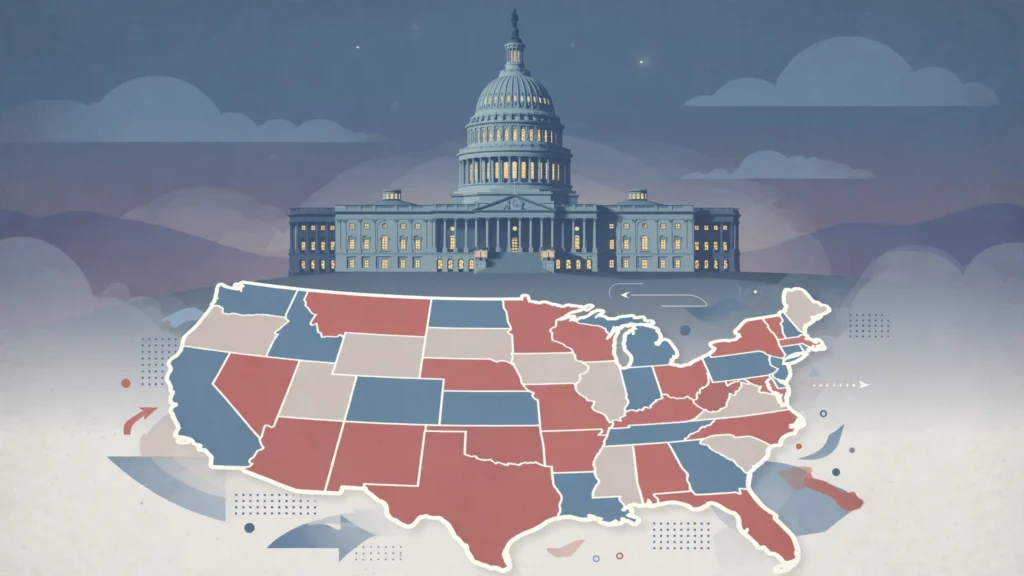
When the new Senate takes its seats in January, at least 10 states will send senators from more than one party to Washington. That is the most split delegations in eight years.
Heading into Election Day, only four states had split delegations. That was the fewest since senators started winning election by popular vote in 1914, according to a 2021 analysis by Pew Research Center.
The count could still rise to 12. Two Senate races remain unresolved, in Mississippi and Alaska, and Democratic candidates could win both.
Kansas delivered the starkest break with the past. Voters there elected a Democrat to the Senate for the first time since the Great Depression. Sen.-elect Adam Hamilton will be only the fourth Democrat to represent Kansas in the Senate since it became a state in 1861.
The split delegations include Vermont, where Senator Bernie Sanders sits as an independent who caucuses with Democrats, and Maine, where Democrat Troy Jackson will join independent Senator Angus King, who also caucuses with Democrats.
The new Congress will also set a record for women. A record 159 women from both parties will serve, seven more than sit in the current Congress, according to data from the Center for American Women and Politics at Rutgers University and CNN election projections. Women will hold 30 percent of seats when the 120th Congress convenes in January.
Source: CNN