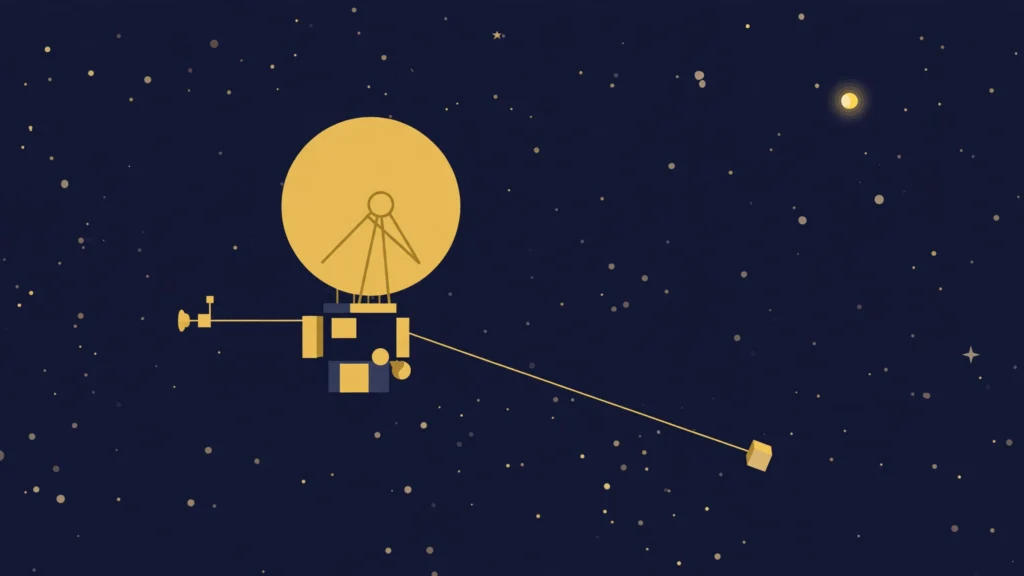
NASA’s Voyager 1 crossed one light-day from Earth early on Wednesday, becoming the first human-made object to travel that far. The probe passed the mark at 5:16 a.m. ET, when it sat about 16.1 billion miles from home.
A light-day is the distance light covers in 24 hours. A radio command sent from Earth now takes a full day to reach the spacecraft, and its reply takes another day to come back. NASA said the round trip for a question and an answer now runs about 48 hours.
“It’s never happened before, and it may never happen again, it’s that kind of extraordinary,” said Kareem Badaruddin, Voyager mission manager at NASA’s Jet Propulsion Laboratory in Pasadena, California. NASA Administrator Jared Isaacman called the milestone an extraordinary achievement for a spacecraft built by human hands and launched nearly 50 years ago.
Voyager 1 lifted off on September 5, 1977, on a mission planned to last five years and tour Jupiter and Saturn. It has held the title of farthest human-made object since 1998, when it passed Pioneer 10. In August 2012 it crossed the heliopause and became the first spacecraft to enter interstellar space.
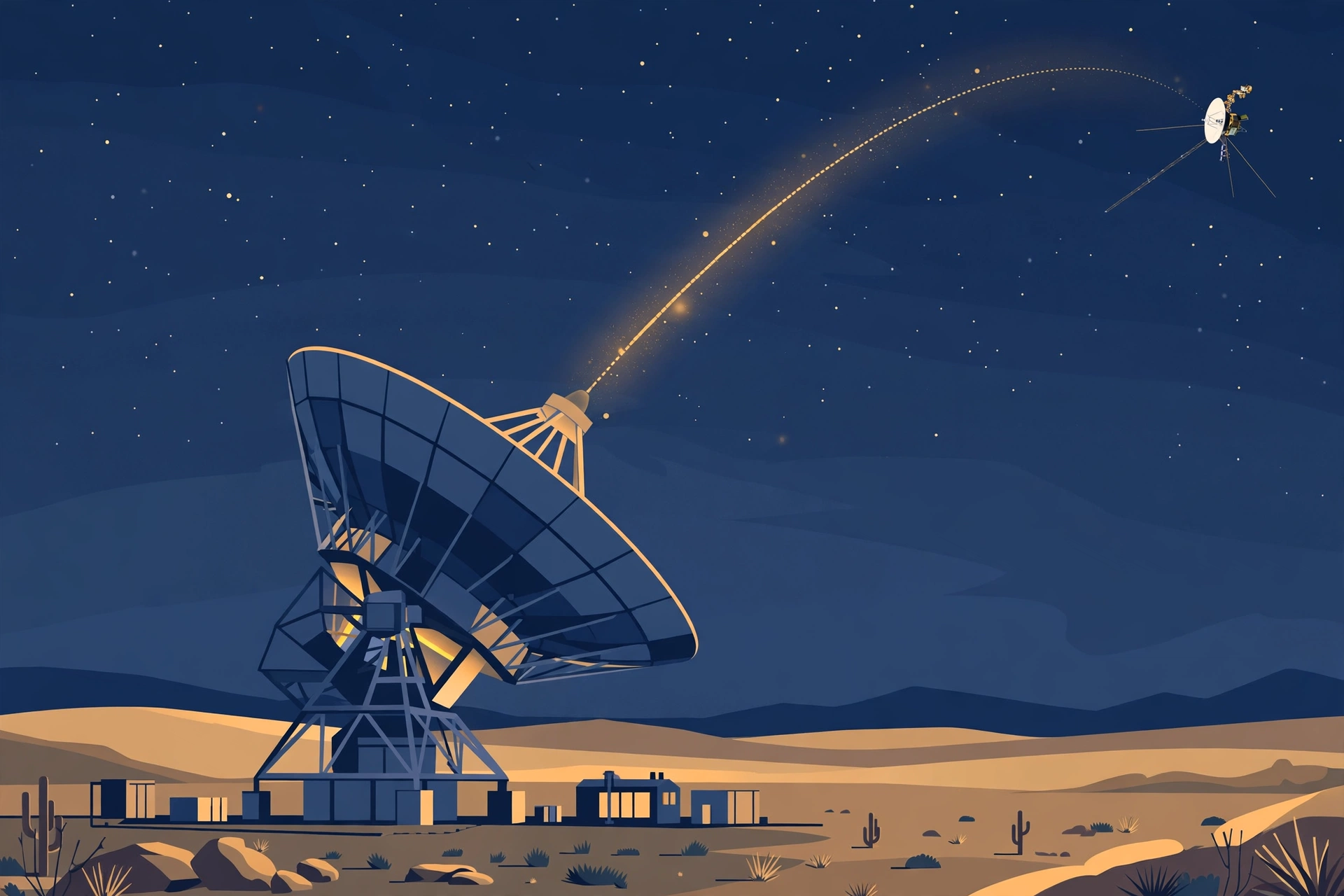
The probe still talks to Earth through NASA’s Deep Space Network, a set of large ground antennas. It is down to two working science instruments, and its power supply shrinks a little each year. Voyager 1 now heads toward Gliese 445, a star more than 17 light-years away. NASA estimates it will pass within about 1.7 light-years of that star in roughly 40,000 years.
Its twin, Voyager 2, trails behind and should reach the one light-day mark in 2035, according to NASA. Whether both spacecraft will still be operating and in contact by then is an open question.
Source: CNN