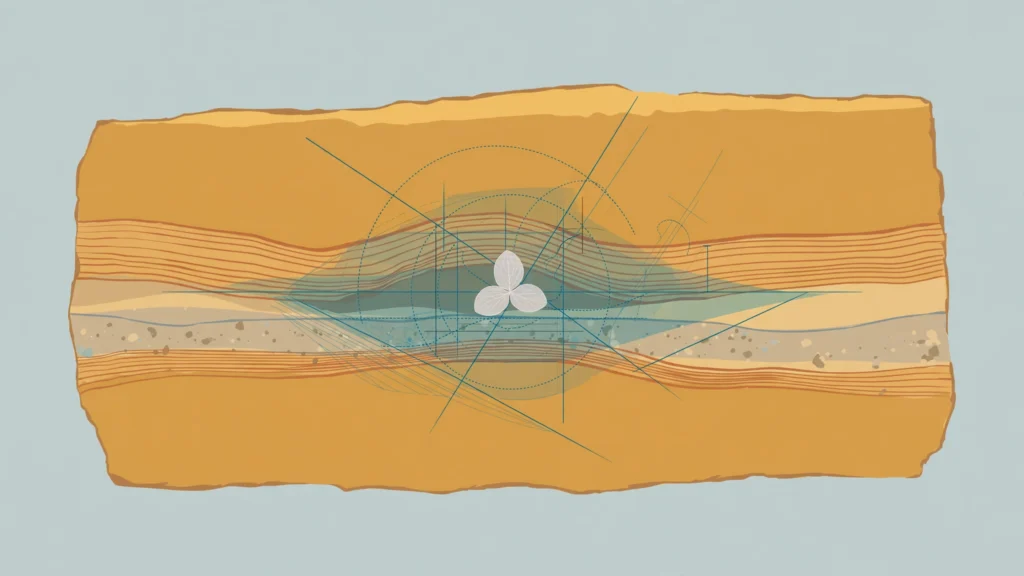
A flower no bigger than a grain of rice has turned up inside a rock that sat in a museum drawer for more than 130 years. Scientists found it by accident while X-ray scanning the sandstone, and their paper calls it the oldest palm flower ever found.
The flower, named Tomlinsoniella pedicellata, dates from the mid-Cretaceous, around 100 million years ago. It shows the classic pattern of a monocot flower: three sepals, three petals, six stamens and three carpels in five rings of three. Palms, lilies and orchids all belong to the monocot group.
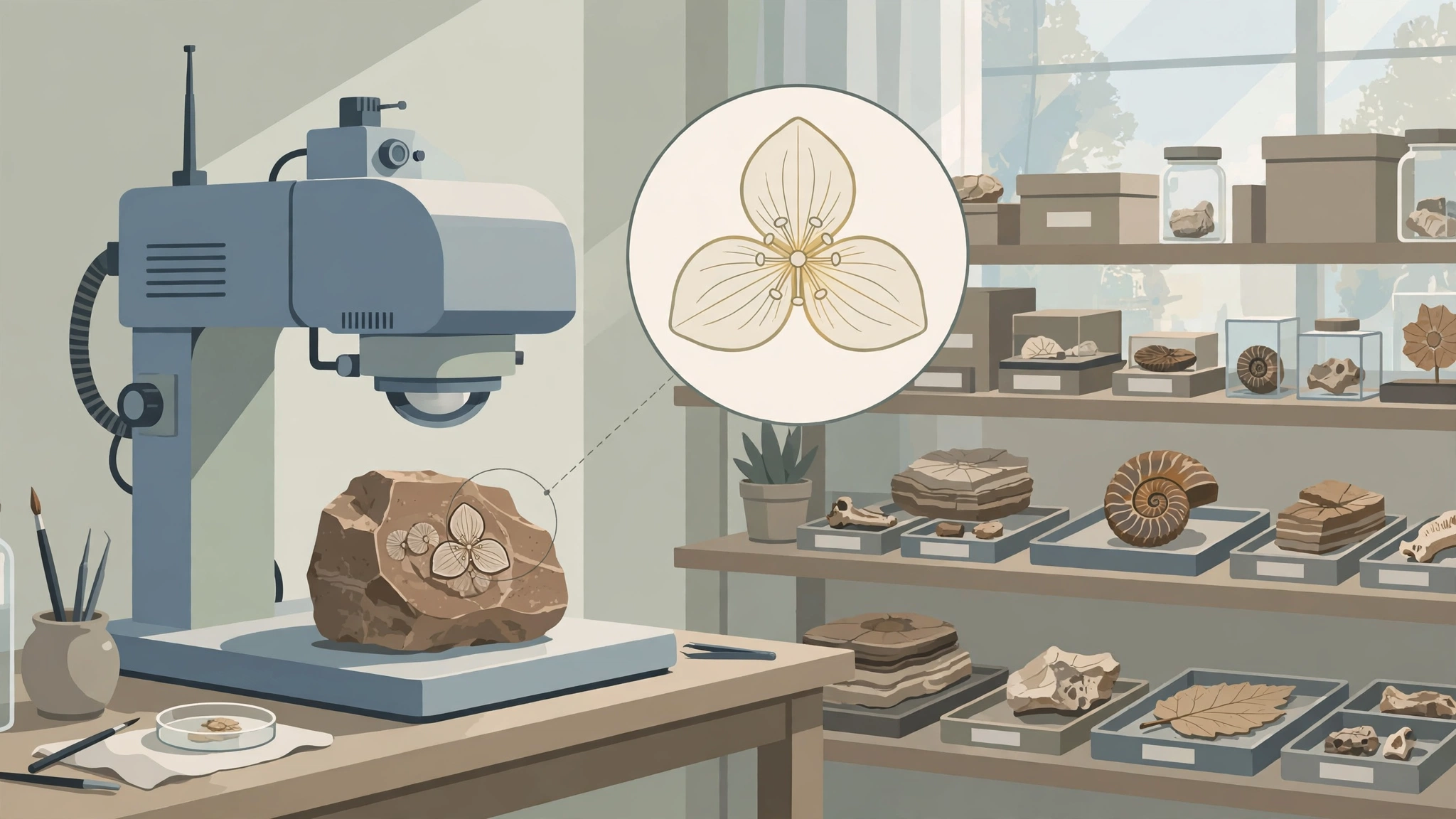
Paleobotanist Steven Manchester of the Florida Museum of Natural History spotted it while micro-CT scanning a specimen from the Dakota Formation in Kansas. He had borrowed the rock from the Smithsonian’s National Museum of Natural History to study a different fossil flower on its surface.
The rock came from samples collected in the 1870s to 1890s by Leo Lesquereux, a pioneer of American fossil plant research. Nothing on the outside gave the flower away. The flower itself is long gone. It fell into clay-rich sand, decayed, and left a cavity that kept its shape. The scan rebuilt that cavity in 3D, and the team inverted the model to study the bloom as a solid object.
The study, published in the American Journal of Botany, was led by Bruce Tiffney, professor emeritus of paleobotany at UC Santa Barbara, with colleagues in the US and UK. The team says the flower’s features fit most closely with the coryphoid palms, the lineage that includes fan palms. They also say more work is needed to place it exactly on the plant family tree.
Source: Phys.org