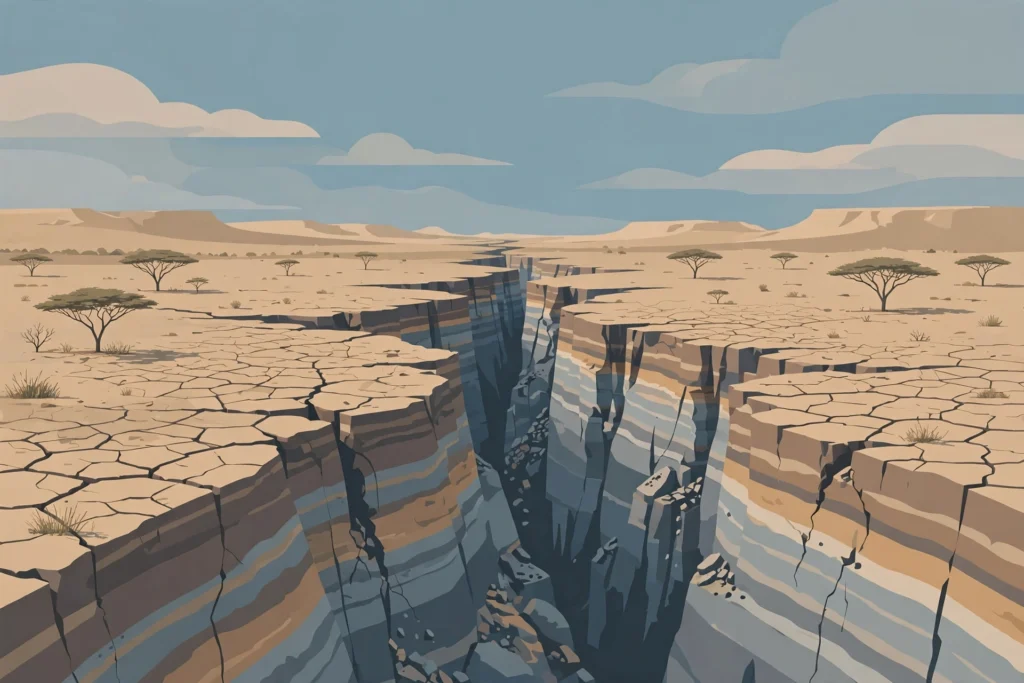
A fault beneath eastern Botswana that last moved about 180 million years ago is moving again, according to a new study. Researchers say the Khurutshe Fault shows signs of renewed activity, and the ground there may be in the earliest stages of splitting apart.
The study, published in the journal Tectonics, was led by Boniface Kgosidintsi of the Botswana International University of Science and Technology, working with researchers from Columbia University’s Lamont-Doherty Earth Observatory.
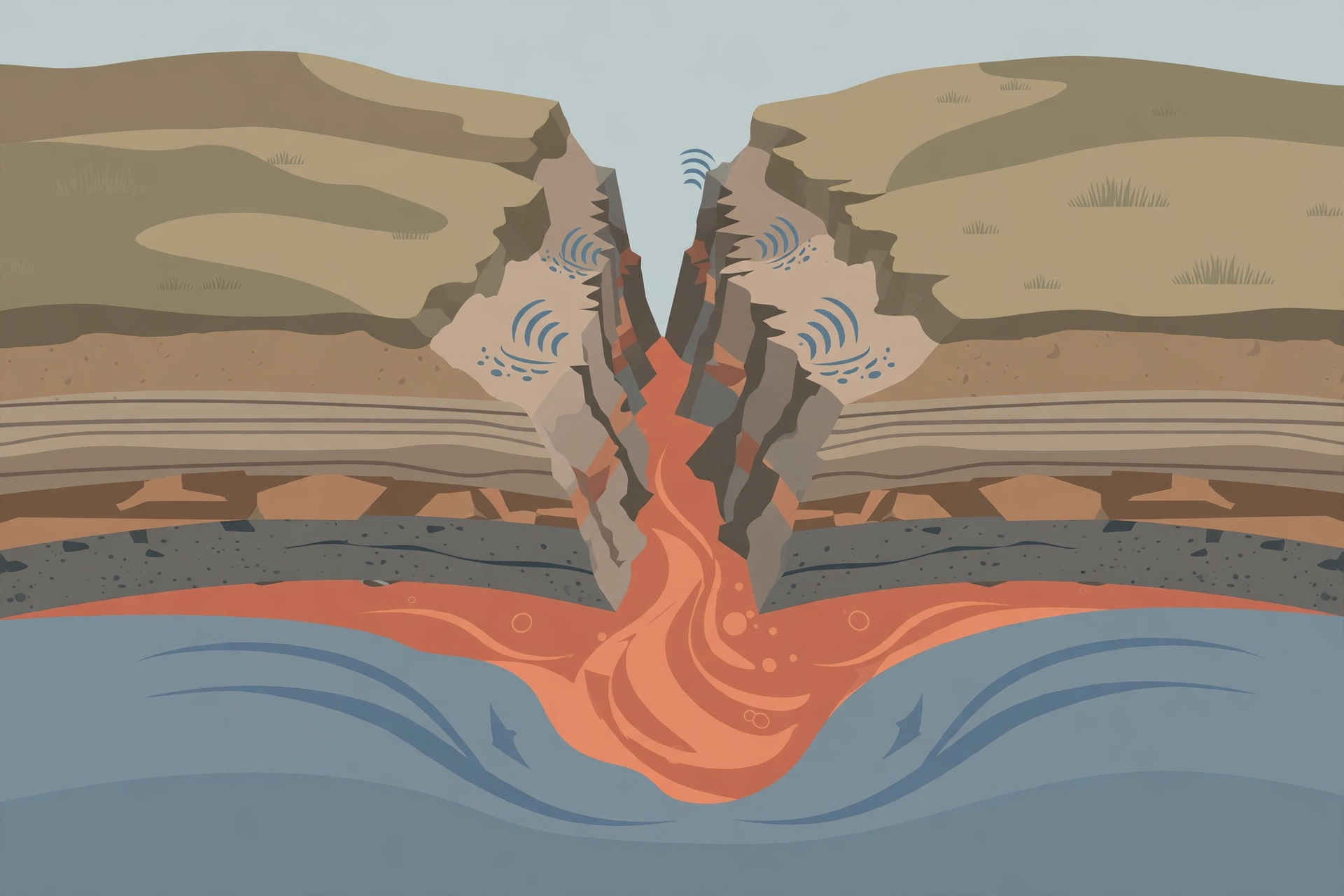
The clue came from a magnitude 6.5 earthquake in April 2017. It struck the middle of the Kalahari Craton, a block of crust up to 3.7 billion years old that geologists long considered too cold, thick and rigid to tear apart.
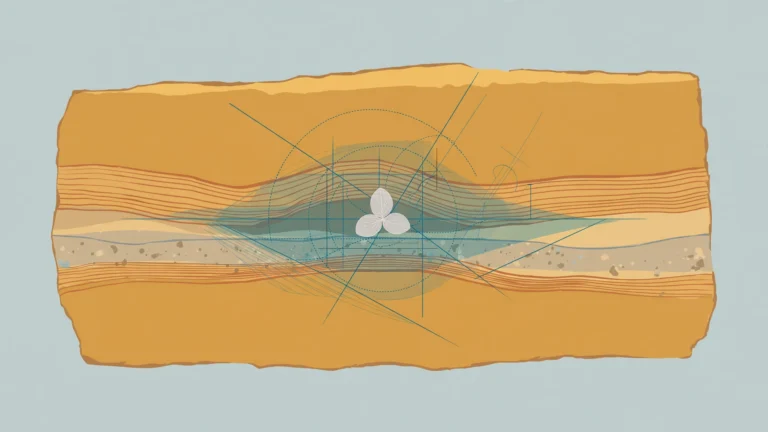
To find out what happened, the team dug trenches across the fault and imaged the rock below with electrical resistivity tomography, which sends currents through the ground and measures how easily they pass through different materials. They also examined borehole records and excavations dug for a government water pipeline.
The evidence showed sediment wedges pressed against the fault in two layers: young Kalahari sands, mostly laid down in the past 2.6 million years, and much older Jurassic rock from around 180 million years ago. The same fault moved in both periods, which means it was active in the Jurassic, went quiet, and is active again now.
The rift sits at the far southern tip of the East African Rift System, the slow stretching that is pulling eastern Africa apart. The researchers found it reaches nearly 200 miles farther south into the craton than the Okavango Rift Zone, long regarded as the system’s southern end.
The Khurutshe Fault forms a scarp about 50 miles long and up to 400 feet high. The team believes the rift first opened during continent-wide stretching in the Jurassic, then failed and lay dormant until the East African Rift began pulling on it again.
A full continental breakup, if it happens at all, would take millions of years. The researchers say this stretch of rift opens far more slowly than the segments farther north in Kenya, Malawi and Ethiopia. Still, the work gives geologists a rare live look at how a new plate boundary starts inside one of Africa’s oldest landmasses.
Source: Gizmodo